FR
FR  EN
EN  DE
DE  ES
ES 
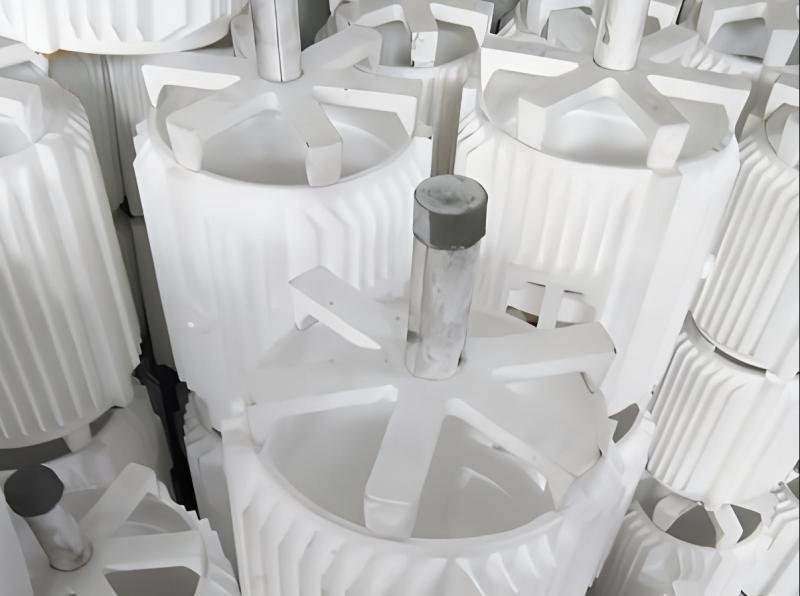
For manufacturers and engineers, moulage en mousse perdue offers numerous advantages. It allows for diverse part design possibilities, providing great flexibility and enabling the casting of complex shapes in a single operation. This process is cost-effective, requires less setup time, and produces less waste. The table below compares the cost and performance of lost foam casting and moulage en sable:
| Aspect | Lost Foam Casting Cost (RMB/ton) | Sand Casting Cost (RMB/ton) |
|---|---|---|
| Pattern Material Cost | 100 – 150 | Higher because it needs more materials |
| Coating Material Cost | 50 – 100 | Higher because it is more complex |
| Total Material Expenditure | Lower overall | Higher because it uses more parts |
| Opérations post-coulée | Less cleaning and burr removal | More cleaning is needed |
Principaux enseignements
- Lost foam casting can easily create complex shapes with minimal post-cast finishing.
- This process allows multiple parts to be joined into a single unit, resulting in stronger components and faster production.
- It produces highly precise shapes and smooth surfaces, meaning you can save significant time and materials on finishing.
- Lost foam casting is cost-effective because it uses less material and labor, helping businesses reduce expenses.
- This method is environmentally friendly, generating less waste and consuming fewer resources, making it a smart, green choice.
Lost Foam Casting Advantages
Design Flexibility & Complexity
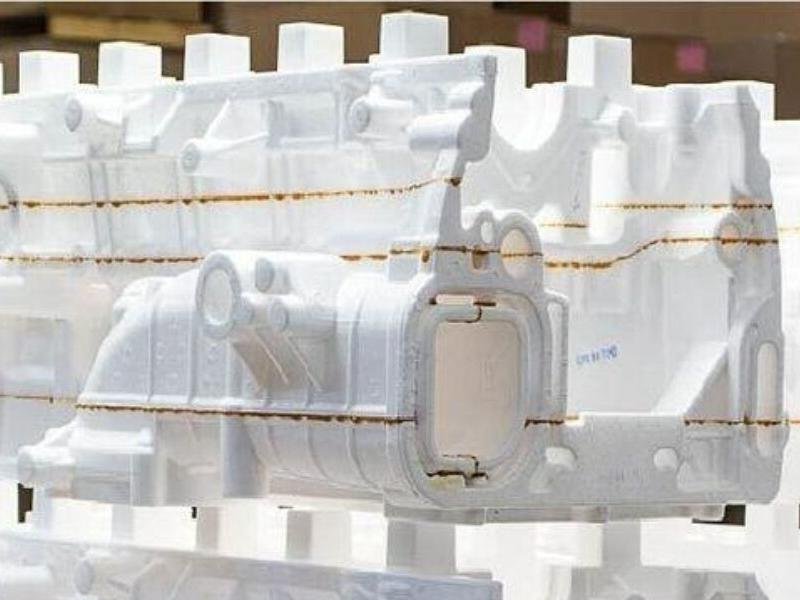
Lost foam casting allows engineers to design a wide variety of shapes. They can create parts with numerous fine details, something other casting methods struggle to achieve. The foam model is easily molded into various intricate shapes. The foam can replicate every detail of a metal part. Lost foam casting produces parts that closely resemble the final shape. This means less additional machining is required after casting.
Lost foam casting is ideal for creating parts with numerous reinforcing ribs and cores. It can also create shapes that are difficult to achieve with other methods. You don’t need to build complex molds. This makes it much easier to create parts with internal holes, thin walls, and complex shapes.
| Fonctionnalité | Moulage en mousse perdue | Coulée traditionnelle |
|---|---|---|
| Complexité de la conception | Can make very detailed parts | Needs more mold pieces for hard shapes |
| Assemblage du moule | No need for complicated mold setups | Often needs complex mold assembly |
| Parting Lines | No parting lines on the part | Parting lines are usually there |
| Angles d'ébauche | No draft angles needed | Draft angles are often needed |
| Finition de la surface | Very smooth and accurate | Not always as smooth or precise |
Integrated Parts
Lost foam casting technology can integrate multiple parts into a single unit. This means fewer seams and weld points. Automakers use this technology to manufacture one large part instead of multiple smaller parts. This not only saves time but also increases the strength of the part.
- Fewer seams make the parts stronger and more reliable.
- Because there are fewer weld points and fewer steps, production is faster.
| Bénéfice | Description |
|---|---|
| Reduced Failure Points | Fewer joints and welds make the part stronger. |
| Improved Manufacturing Efficiency | Less welding and fewer steps make production faster. |
High Precision and Surface Finish
Lost foam casting produces parts with extremely high precision. Dimensions and shapes are near perfect, surfaces are smooth and aesthetically pleasing, and parts fit perfectly. Compared to sand casting, dimensional stability is improved by 37%. Less excess metal needs to be removed, and processing time is reduced by 20%.
- Lost foam casting can produce thin-walled parts and parts with holes.
- The absence of parting lines means smooth surfaces and fewer problems.
- Further machining is required after casting.
| Méthode de coulée | Surface Roughness (µm Ra) | Post-Processing Needs |
|---|---|---|
| Moulage à la cire perdue | 1.6-3.2 | Needs very little extra work |
| Moulage en mousse perdue | 6.3-12.5 | Needs some extra work for smoothness |
| Moulage au sable | N/A | Needs a lot of extra work |
No Draft Angles or Parting Lines Required
Lost foam casting eliminates the need for draft angles or parting lines. Other casting methods require these to remove the mold, making it difficult to design special shapes. Lost foam casting uses a layered molding process, allowing for the creation of monolithic parts with complex internal shapes.
- No parting lines or draft angles mean less burrs.
- Dimensionally accurate parts with smooth surfaces.
- Processing time is reduced by nearly half due to reduced metal usage.
Lower Mold and Production Costs
Lost foam casting has lower mold manufacturing costs. The mold-making process is simple and cost-effective. This method is suitable for small-batch production of parts. It uses less material, resulting in less waste.
| Méthode de coulée | Coûts d'outillage | Rentabilité des volumes de production |
|---|---|---|
| Moulage à la cire perdue | Costs more to make molds | Better for making lots of parts |
| Moulage en mousse perdue | Costs less to make molds | Good for making a few parts |
Environmental Benefits
Lost foam casting is a more environmentally friendly process. It generates less waste and uses recyclable materials. This helps companies achieve their green goals.
- Reduced Waste: The part is nearly identical to its final shape after casting, resulting in less waste.
- Energy Saving: Fewer additional processes mean less energy consumption.
- Cleaner Air: Fewer post-casting processes mean less pollution.
| Méthode de coulée | Production de déchets | Recyclable Materials | Sustainability Rating |
|---|---|---|---|
| Moulage en mousse perdue | Makes little waste | Oui | Haut |
| Traditional Expendable | Makes lots of waste | Non | Faible |
Lost foam casting offers engineers a wealth of design options. Parts are highly precise and have a beautiful appearance. Businesses can save costs and reduce waste. This process is clean and efficient, producing robust and highly detailed parts.
Reduced Costs and Time
Fewer Process Steps
Lost foam casting involves fewer steps than traditional casting processes. Workers do not need to remove the mold. The foam disappears as the metal is poured. There is no need to make cores or assemble molds. After the foam melts, the metal fills all the spaces. This makes the part almost a finished product. Less additional work is required after casting.
- No need to remove the mold
- No need to make cores or assemble molds
- Fewer molds required
- Less work after casting
- Smoother surfaces, less finishing required
Reduced Material and Labor Costs
Lost foam casting helps businesses save costs. The foam mold is almost identical to the final part. This means less material is used. Workers spend less time making each part. This reduces labor costs. The process consumes less energy, thus being more efficient.
| Cost Savings Type | Percentage Savings |
|---|---|
| Économies d'énergie | 25%−30% |
| Économies de productivité du travail | 46% |
| Réduction de l'utilisation des matériaux | 7% |
| Réduction des coûts de production | 20%−25% |
These data demonstrate how cost and time savings can help businesses enhance their competitiveness.
Réduction de l'usinage et des déchets
Parts manufactured using the lost foam casting process require virtually no additional machining. The foam model is nearly identical in size to the finished part. Workers do not need to cut large amounts of metal. The need for polishing or surface finishing is also significantly reduced.
- High Precision Means Less Machining
- Smooth Surfaces Mean Less Polishing
- Reduced Waste, Cost Savings
Lost foam casting is a new method of parts manufacturing. Due to its extremely high precision, less material is used, resulting in lower costs. There are also fewer cutting and part assembly steps.
Businesses can save time, money, and materials. This process is beneficial to both businesses and the environment.
Impact environnemental de la coulée de mousse perdue
Reducing Waste Generation
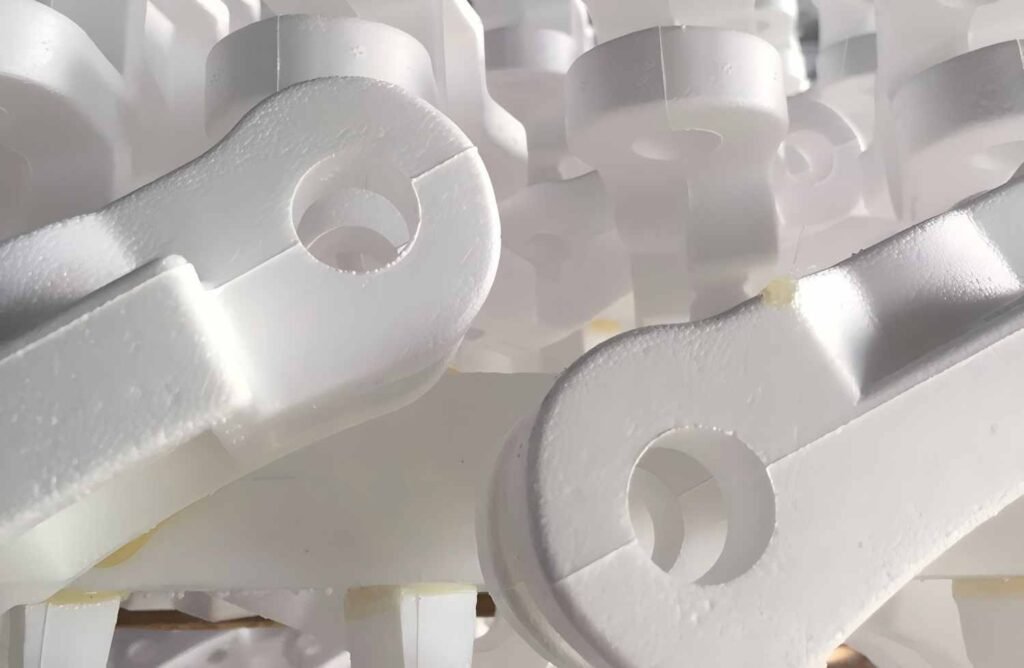
The lost foam casting process helps factories reduce waste. When hot metal is poured in, the foam mold disappears. Workers don’t need to remove as much excess material, resulting in less waste. Many companies employ clever methods to reduce waste. They recycle sand, use biodegradable foam, and recycle leftover materials. These measures help protect the environment and create a cycle.
| Stratégie | Impact on Waste Generation |
|---|---|
| Sand reclamation systems | Waste is cut by 30% |
| Use of biodegradable foam | Makes less harm to nature |
| Recycling residual materials | Cuts waste and saves resources |
Factories employing these processes generate less waste and conserve more resources, contributing to environmental protection.
Lower Energy Consumption
Compared to traditional processes, lost foam casting consumes less energy and water. The process involves fewer steps, resulting in shorter machine uptime. Reduced energy consumption translates to lower greenhouse gas emissions, helping to reduce a carbon footprint. Businesses that reduce energy consumption not only save costs but also contribute to addressing climate change.
Cleaner Production
Cleaner production means producing without polluting the air, water, and environment. Lost foam casting helps reduce waste and chemical usage, making it more environmentally friendly. The process eliminates the need for potentially polluting adhesives or additives. Workers are safer, and factory air is cleaner. Many companies choose this process because it generates less waste and consumes less energy. It’s a smart choice for the future.
Lost foam casting stands out in today’s factories. It can create parts of various shapes and intricate details. The process is highly precise and environmentally friendly. Many companies utilize it to create complex shapes with smooth sides and excellent fit between parts. The following table illustrates the advantages of this method:
| Key Advantage | Description |
|---|---|
| Flexibilité de la conception | Net shape casting copies small details better than other ways. |
| Fewer Steps | Saves time and work, needs less cutting. |
| Impact sur l'environnement | Uses less water and power, makes less trash. |
For parts requiring precise manufacturing, lost foam casting is the preferred choice. It’s also suitable for parts needing smooth sides and rigid shapes. Experts recommend extra care in mold making and controlling the flow of metal. This helps achieve optimal part quality. Lost foam casting can help businesses improve productivity and protect the environment.
FAQ
Which materials are best suited for lost foam casting?
Lost foam casting is suitable for metals such as aluminum, iron, and steel. Factories typically choose these materials because they melt easily and fill the foam mold well. This process helps create parts with high strength and rich detail.
How does lost foam casting help protect the environment?
Lost foam casting produces less waste and uses fewer chemicals. Many factories recycle sand and foam. The process saves energy and keeps the air clean.
Le moulage en mousse perdue permet-il de fabriquer des pièces de grande taille ?
Yes, lost foam casting can make both small and large parts. Engineers use it for car engines, mechanical parts, and even works of art. The process can handle parts of various sizes.
Is lost foam casting suitable for manufacturing large quantities of parts?
Lost foam casting is suitable for small to medium batch production, saving on mold and labor costs. Companies typically choose this process when they require a flexible and cost-effective production method.
What is the difference between lost foam casting and sand casting?
Lost foam casting uses a foam mold that disappears after the metal is poured in. Sand casting, on the other hand, uses a stationary sand mold. Lost foam casting produces a smoother surface and requires less finishing.