FR
FR  EN
EN  DE
DE  ES
ES 
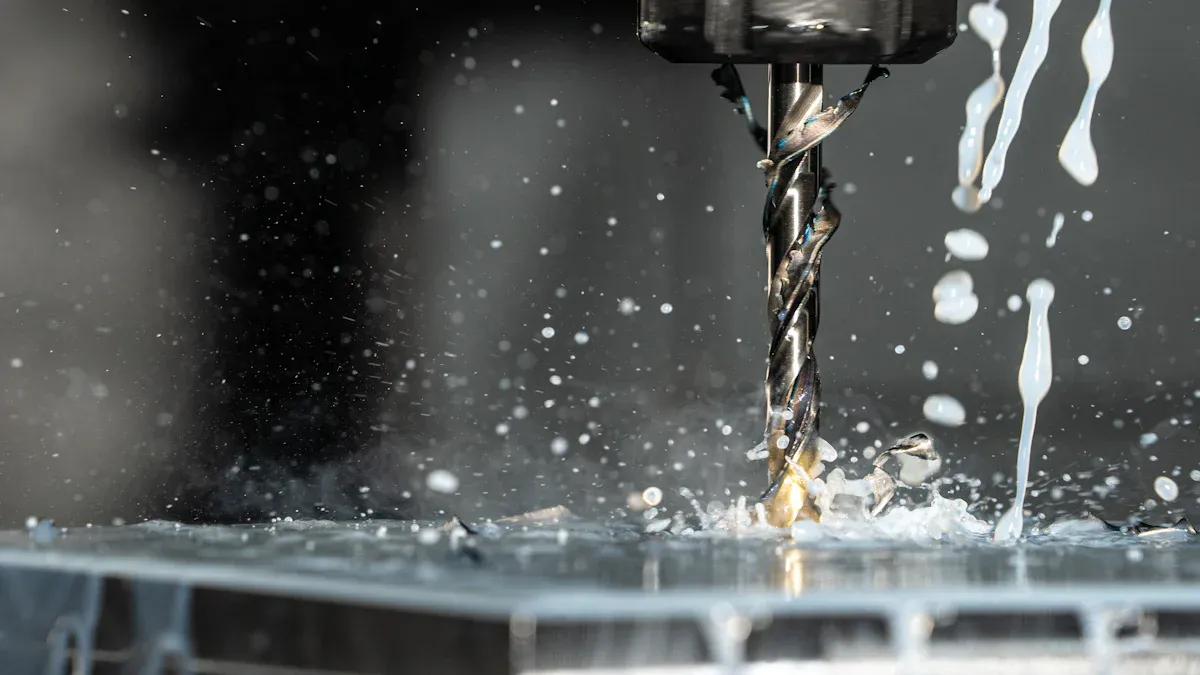
Les pièces usinées avec précision sont fabriquées pour s'adapter exactement à d'autres pièces. Les fabricants utilisent des machines spéciales telles que Fraisage CNC, tournantet la rectification. Ces machines les aident à fabriquer des pièces très précises. Ces pièces sont importantes dans de nombreux secteurs tels que l'automobile, la médecine et l'aviation. En 2023, les constructeurs automobiles avaient besoin de pièces usinées de précision pour les moteurs et les transmissions. KEMING utilise une méthode spéciale qui combine le moulage à la cire perdue et le moulage à l'arc. usinage de précision. Cela leur permet de fabriquer des pièces de très haute qualité.
Principaux enseignements sur l'aperçu des composants usinés de précision
Les pièces usinées de précision sont fabriquées pour s'adapter à d'autres pièces. Elles sont donc très précises et de grande qualité. Ces pièces sont utilisées dans les voitures, les avions et les outils médicaux.
Les tolérances dans l'usinage de précision sont très faibles. Dans les dispositifs médicaux, elles peuvent être de l'ordre de 1 à 3 microns. Cela permet d'éviter les pannes et d'améliorer le fonctionnement des produits.
L'état de surface modifie la façon dont les pièces se déplacent et s'usent. Les finitions plus lisses réduisent les frottements et permettent aux pièces de durer plus longtemps.
L'usinage CNC et le moulage sont des moyens importants pour fabriquer des pièces usinées de précision. Ces méthodes nous permettent de créer des formes complexes et des finitions lisses.
Il est très important de choisir les bons matériaux, comme les métaux ou les plastiques. Il permet aux pièces de durer plus longtemps et de bien fonctionner.
Caractéristiques usinées avec précision
Tolérances dans l'usinage de précision pour des dimensions exactes
Les tolérances indiquent dans quelle mesure la taille d'une pièce peut changer. La pièce fonctionne toujours si elle reste dans ces limites. Les ingénieurs définissent ces limites pour chaque pièce. Cela permet de s'assurer que chaque pièce s'adapte et fonctionne correctement. En pièces usinées de précisionLes tolérances sont très faibles. La plupart des ateliers CNC utilisent une tolérance standard de +/- 0,005 pouce (0,13 mm). Certaines industries ont besoin de tolérances encore plus petites. Les fabricants d'appareils médicaux veulent des tolérances de 1 à 3 microns. Les entreprises du secteur aérospatial peuvent avoir besoin de pièces avec des tolérances de 2 microns ou moins.
L'industrie | Plage de tolérance typique |
|---|---|
Usinage général | +/- 2-5 millièmes de pouce |
Fabrication de dispositifs médicaux | 1-3 microns |
Aérospatiale | 2 microns ou moins |
Usinage CNC | +/- 0,005 pouces (0,13 mm) |
Micro-usinage CNC EDM | +/- 0,010mm à +/- 0,025mm |
Usinage laser à fibre CNC | +/- 0,0127mm à +/- 0,0254mm |
Usinage laser femto CNC | +/- 0,001mm à +/- 0,010mm |
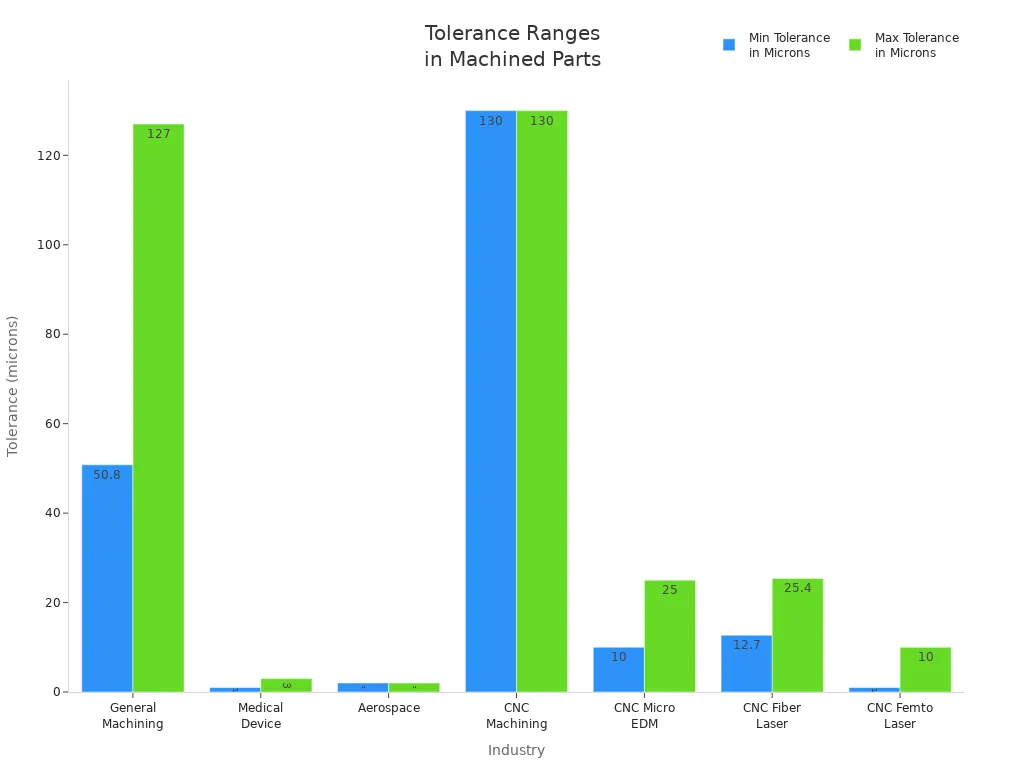
Les petites tolérances permettent aux pièces de bien s'emboîter. Cela réduit le risque de pannes. Elles permettent également d'améliorer les produits. Même de minuscules erreurs de tolérance peuvent entraîner de gros problèmes. C'est le cas pour les voitures et les avions. KEMING utilise des machines avancées pour maintenir des tolérances serrées et stables.
Niveaux de précision atteints dans les pièces usinées de précision
La précision signifie que la taille et la forme d'une pièce sont proches de la conception. Pièces usinées avec précision doit correspondre exactement au dessin. Les ouvriers utilisent des outils spéciaux pour vérifier la précision. Ces outils comprennent des machines à mesurer les coordonnées, des comparateurs optiques et des jauges de précision. Le balayage laser et les systèmes automatisés permettent également de mesurer les pièces rapidement et correctement.
Plage de tolérance | Exemples d'application | Industries typiques |
|---|---|---|
±0,0025 mm (±0,0001″) | Instruments chirurgicaux, roulements de précision | Dispositifs médicaux, aérospatiale |
±0,0076 mm (±0,0003″) | Composants hydrauliques, montures optiques | Défense, instrumentation |
±0,0127 mm (±0,0005″) | Boîtiers de raccordement, corps de vanne | Automobile, électronique |
±0,0254 mm (±0,001″) | Composants structurels, boîtiers | Fabrication générale de précision |
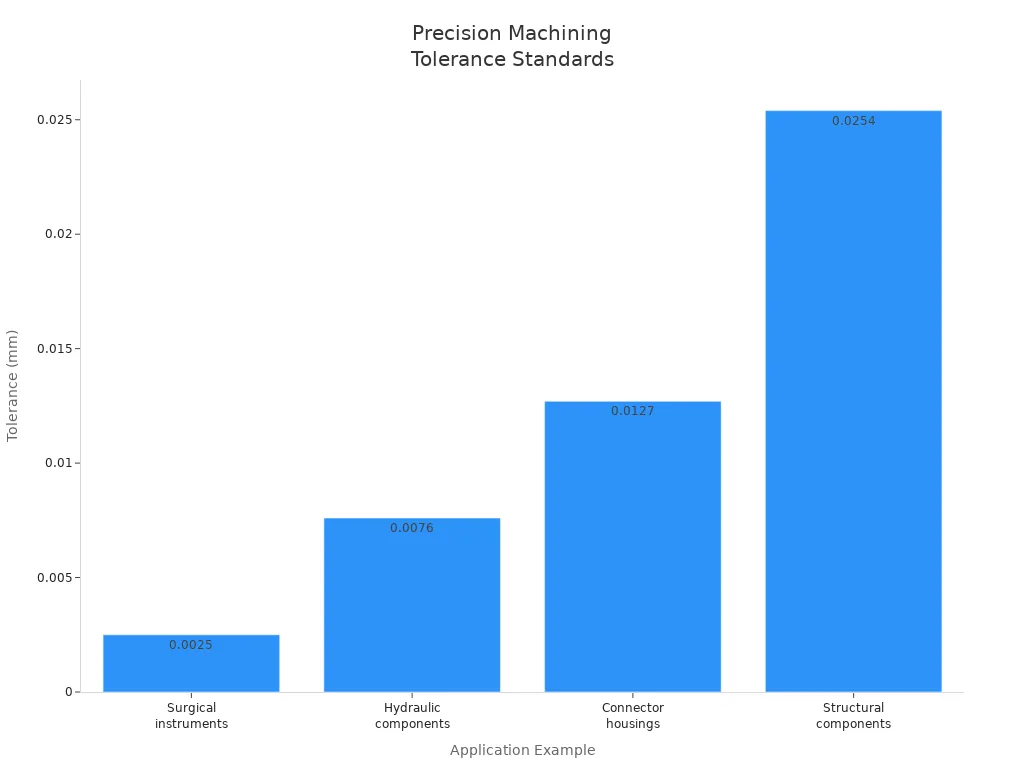
Des contrôles de qualité sont effectués en permanence. Le contrôle du premier article vérifie la première pièce fabriquée. Le contrôle en cours de fabrication surveille les pièces au fur et à mesure qu'elles sont fabriquées. Le contrôle statistique des processus permet de détecter les problèmes à un stade précoce. Les normes de certification telles que ISO 9001:2015 et AS9100D garantissent que les pièces respectent des règles strictes. KEMING utilise ces méthodes pour offrir à ses clients pièces usinées de précision qui répondent à leurs besoins.
Qualité de l'état de surface des composants usinés de précision
L'état de surface indique dans quelle mesure une pièce est lisse ou rugueuse au toucher et à l'œil. L'état de surface influe sur le mouvement, l'usure et l'étanchéité des pièces. Les ingénieurs mesurent l'état de surface à l'aide des valeurs Ra. Les valeurs Ra indiquent la rugosité moyenne en micromètres (µm). Les finitions plus lisses permettent aux pièces de durer plus longtemps et de mieux fonctionner.
Finition de la surface Grade | Valeur Ra (µm) | Caractéristiques | Utilisations |
|---|---|---|---|
RGN 3.2 | 3.2 | Surface modérément rugueuse | Fréquent dans les pièces moins critiques comme le matériel général et les éléments de construction. |
RGN 6.3 | 6.3 | Texture de surface plus rugueuse, visible à l'œil nu | Convient aux applications moins raffinées, comme certains équipements industriels et produits de consommation. |
RGN 12,5 | 12.5 | Surface nettement rugueuse | On le trouve souvent dans les composants qui nécessitent une friction ou une adhérence accrue. |
RGN 25 | 25 | Surface très rugueuse | Utilisé dans les applications où l'état de surface n'est pas critique, comme dans certaines pièces moulées et pièces forgées brutes. |
RGN 50 à RGN 800 | 50 à 800 | Des surfaces de plus en plus grossières | Ils conviennent aux applications très rugueuses et grossières, souvent dans les machines lourdes, les équipements agricoles et les composants non esthétiques. |
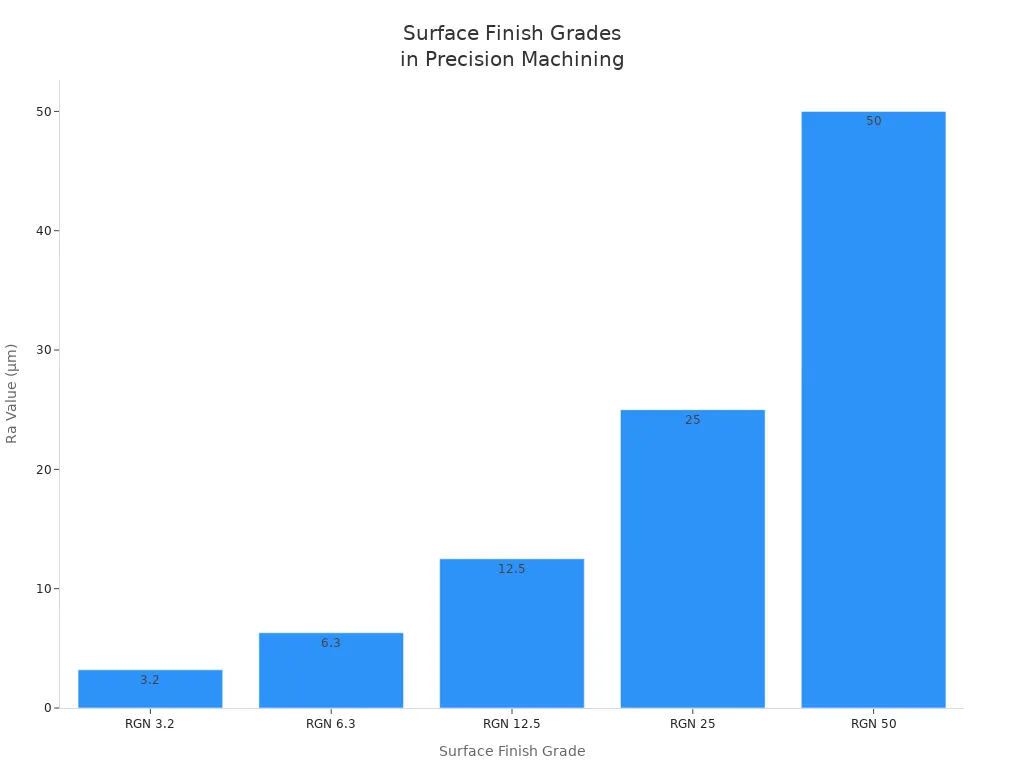
L'état de surface est important pour de nombreuses raisons :
Des surfaces plus lisses réduisent le frottement et l'usure.
De bonnes finitions permettent aux joints de mieux fonctionner.
Les finitions brillantes sont esthétiques et peuvent favoriser la circulation de l'électricité.
Les surfaces rugueuses favorisent l'adhérence de la peinture et de la colle.
Dans un roulement à billes, une surface lisse réduit le frottement. Cela permet au roulement de durer plus longtemps. Si la finition est mauvaise, le roulement peut s'user rapidement. Cela peut se produire même si sa taille est correcte.
KEMING utilise des méthodes avec et sans contact pour mesurer l'état de surface. La vision industrielle et les capteurs à ultrasons permettent de vérifier les finitions pendant la production. Leur processus hybride combine le moulage et l'usinage CNC. Cela permet d'obtenir des pièces avec d'excellents états de surface et des tolérances serrées.
Procédés de fabrication utilisés pour les pièces usinées de précision
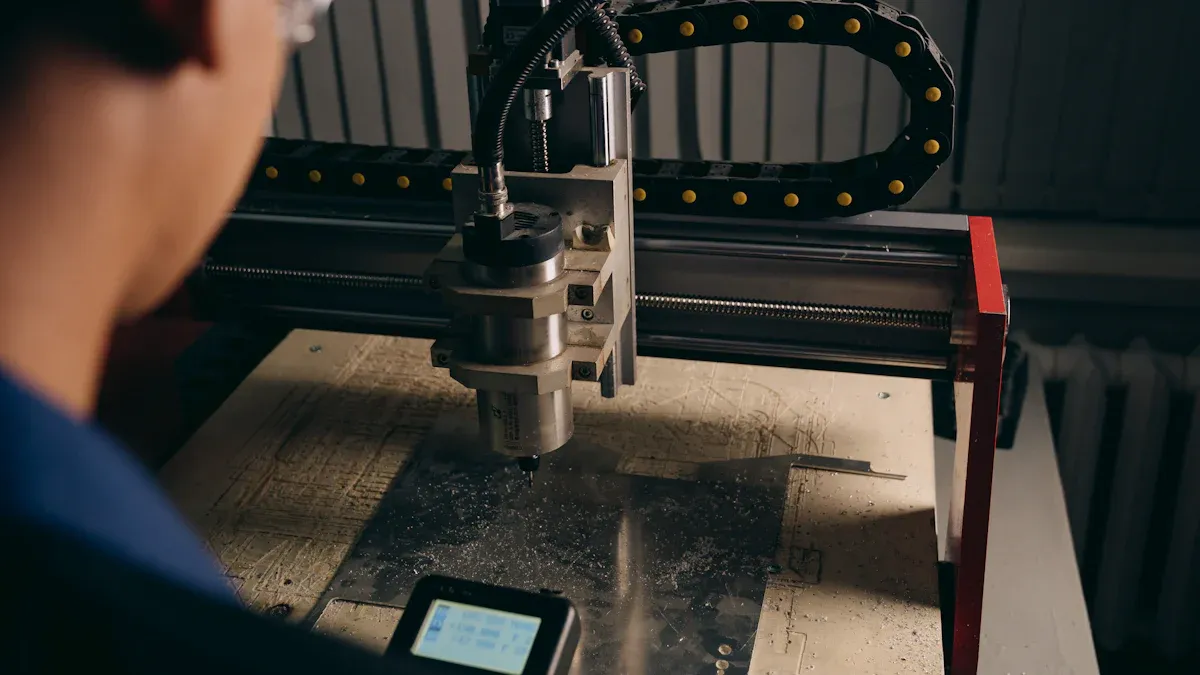
KEMING utilise de nombreuses méthodes avancées pour pièces usinées de précision. Chaque méthode permet de façonner, d'améliorer et de finir les pièces. Ces pièces sont nécessaires dans les industries qui recherchent une grande précision.
Processus d'usinage CNC pour la fabrication de haute précision
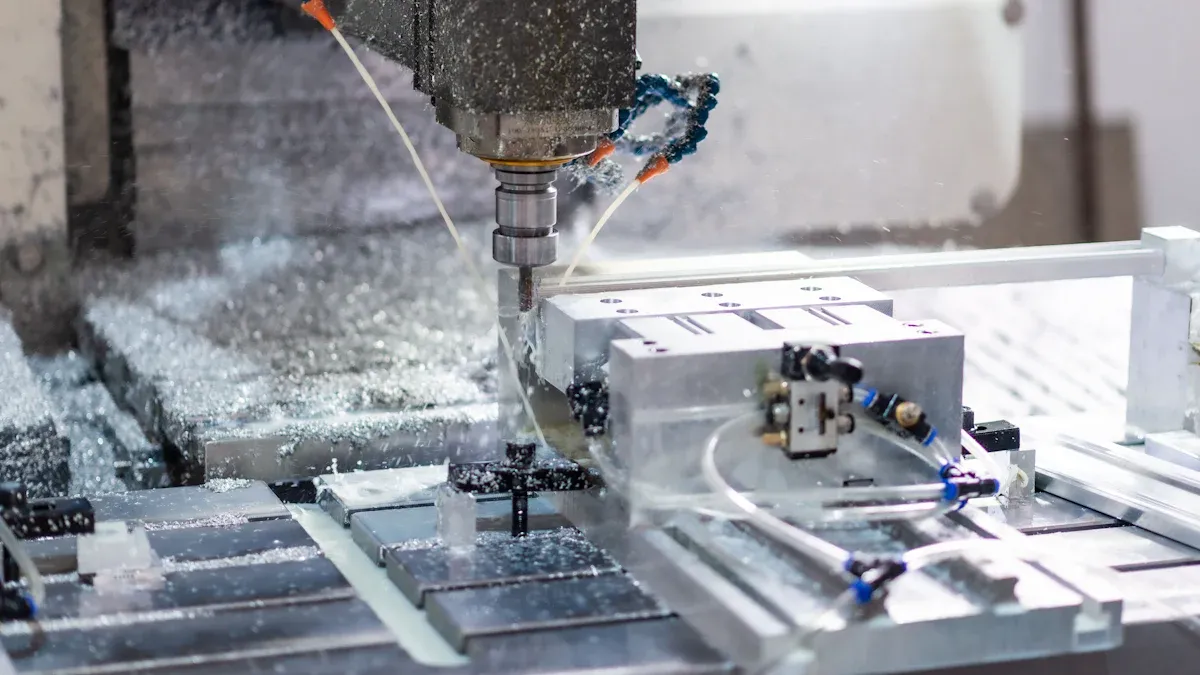
L'usinage CNC signifie usinage à commande numérique par ordinateur. Cette méthode utilise des ordinateurs pour contrôler les machines. Les machines découpent, façonnent et finissent les pièces en métal ou en plastique. Elles suivent les plans exacts d'une conception numérique. Cela permet de fabriquer des pièces avec des tolérances serrées et des surfaces lisses.
Principales étapes de l'usinage CNC :
Définir : Les ingénieurs choisissent la fonction et l'aspect de la pièce.
Faisabilité : Ils vérifient si les machines peuvent fabriquer la pièce.
Développer : Les concepteurs et les fabricants construisent des modèles numériques à l'aide de la CAO ou de la FAO.
Valider : Chaque pièce est vérifiée pour correspondre à la conception.
Mettre en œuvre : La machine CNC fabrique la pièce.
Évaluer : Les équipes testent la pièce et cherchent à l'améliorer.
L'usinage CNC présente de nombreux avantages :
Il fabrique des pièces de haute précision et aux tolérances serrées.
Les machines peuvent fonctionner longtemps avec peu d'aide.
Le processus réduit les erreurs et les déchets en utilisant moins de travail humain.
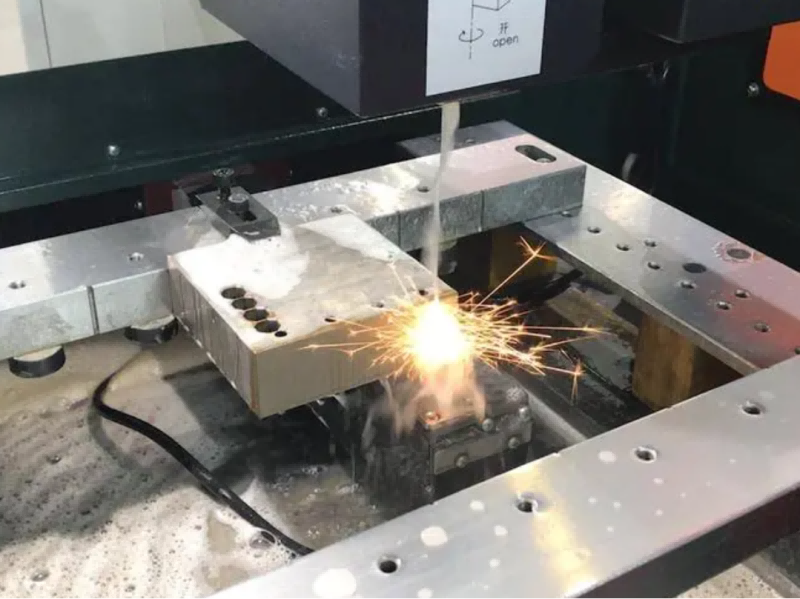
KEMING utilise le fraisage, le tournage, le perçage et l'électroérosion à commande numérique pour fabriquer des formes complexes. L'atelier dispose de plus de 50 machines CNC. Cela leur permet d'honorer les petites et les grandes commandes.
Techniques de moulage combinées à des procédés d'usinage de précision
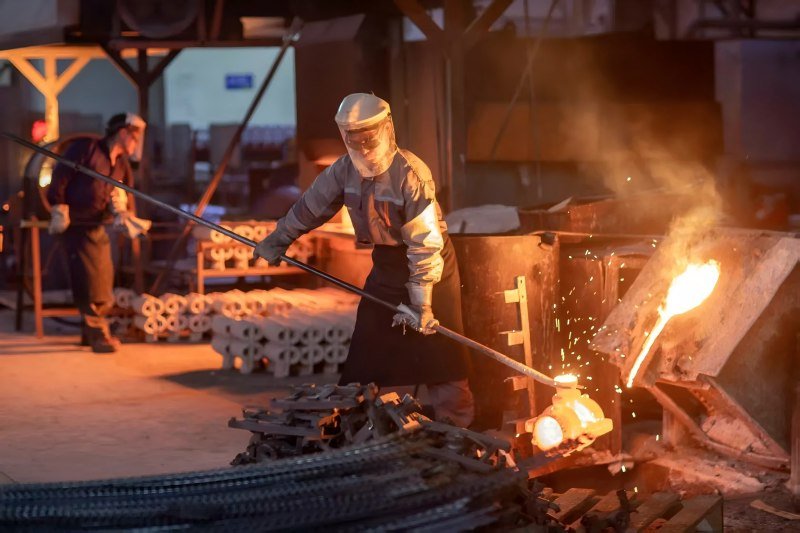
Le moulage façonne le métal en le coulant dans un moule. KEMING utilise le moulage à la cire perdue pour fabriquer la forme principale d'une pièce. L'entreprise commence par créer un modèle en cire qu'elle recouvre de céramique. Lorsque la céramique durcit, la cire fond. Il reste alors un espace pour le métal. Le métal chaud remplit l'espace et refroidit pour fabriquer la pièce.
Le moulage à la cire perdue permet de fabriquer des pièces très détaillées et précises. Il convient parfaitement aux pièces qui doivent être solides ou résister à la rouille. Cette méthode est idéale pour fabriquer des pièces résistantes et de haute qualité.
Processus | Tolérances réalisables |
|---|---|
Usinage CNC | Jusqu'à +/- 0,0002" (0,005 mm) |
Casting | Tolérances généralement plus faibles |
L'usinage CNC donne des surfaces plus lisses que le moulage. Le moulage laisse des surfaces plus rugueuses. KEMING utilise l'usinage CNC pour rendre les pièces moulées plus précises et plus lisses.
La méthode spéciale de KEMING commence par le moulage à la cire perdue et se termine par l'usinage CNC. Cette méthode combine les meilleurs éléments des deux méthodes. Cela permet de pièces usinées de précision avec beaucoup de détails et de qualité de surface.
Opérations de rectification pour une meilleure qualité de surface et un meilleur ajustement
La rectification est une méthode de finition qui rend les pièces plus précises et plus lisses. KEMING utilise la rectification CNC pour répondre à des règles strictes en matière de planéité, de parallélisme et de douceur.
Les méthodes de broyage les plus courantes sont les suivantes :
Meulage de surface : Rend les surfaces planes lisses et précises.
Rectification cylindrique : Façonne et termine les surfaces rondes.
Meulage sans centre : Affine les petites pièces rondes sans les tenir.
Broyage par gabarit : Réalise des formes complexes avec une grande précision.
Broyage d'avance rampante : Travaille avec des matériaux résistants et des conceptions délicates.
Meulage des filets : Permet de réaliser des filetages exacts pour les vis et les boulons.
La rectification permet aux pièces de mieux s'emboîter et de durer plus longtemps. Elle permet d'obtenir des finitions brillantes pour réduire les frottements et améliorer l'aspect des pièces. Le meulage permet également d'éliminer les arêtes vives pour rendre les pièces plus sûres.
La rectification est nécessaire pour les fixations aérospatiales, les appareils médicaux et les surfaces de roulement. Elle aide à pièces usinées de précision répondent aux normes les plus strictes en matière de qualité et de fiabilité.
Contrôle de la qualité et personnalisation
KEMING utilise des outils avancés pour contrôler chaque pièce. Ils utilisent des MMT pour des mesures exactes. Les comparateurs optiques détectent les défauts. Les testeurs de surface vérifient la douceur. Les testeurs de dureté vérifient la résistance du matériau. Les tests non destructifs comme les ultrasons et les rayons X recherchent les problèmes cachés.
KEMING modifie ses méthodes pour s'adapter aux besoins de chaque client. Ils sélectionnent les meilleurs matériaux, conçoivent les pièces à l'aide de la CAO et choisissent les bonnes méthodes d'usinage. Leur compétence et leur technologie leur permettent de donner pièces usinées de précision qui correspondent aux attentes des clients.
Matériaux couramment utilisés dans les composants usinés de précision
Métaux Matériaux pour les pièces industrielles usinées avec précision
Les métaux sont très utilisés pour les pièces usinées de précision. Ils sont solides et durent longtemps. Les ingénieurs choisissent les métaux en fonction de la fonction de la pièce. Les métaux les plus courants sont l'aluminium, l'acier inoxydable, le laiton, le titane, l'acier allié, la fonte et le magnésium. Chaque métal possède ses propres caractéristiques pour des utilisations différentes.
Métal | Propriétés |
|---|---|
Aluminium | Léger, résistant à la corrosion, facile à usiner, rentable |
Acier inoxydable | Excellente solidité, résistance à la corrosion |
Laiton | Bonne usinabilité, finition lisse, bonne tenue des tolérances |
Titane | Rapport résistance/poids élevé, résistance à l'oxydation et à la chaleur |
Acier allié | Solide, durable, adapté à de nombreuses applications |
Fonte | Bonne résistance à l'usure, bonne usinabilité |
Magnésium | Léger, bon rapport résistance/poids |
Le métal choisi détermine la facilité d'usinage. Les métaux durs peuvent user les outils plus rapidement et nécessitent une coupe lente. Les métaux plus tendres sont plus faciles à découper, mais nécessitent un travail minutieux pour rester précis. Les traitements de surface, tels que l'anodisation et le placage, permettent d'arrêter la rouille et de rendre les métaux plus durs.
Les ingénieurs pensent à la conception, aux règles et aux normes lorsqu'ils choisissent des métaux. Le bon métal permet aux pièces de durer plus longtemps et de mieux fonctionner.
Matières plastiques pour les composants légers usinés de précision
Les plastiques sont importants pour l'usinage de précision. Ils conviennent aux pièces qui doivent être légères ou résister aux produits chimiques. Parmi les plastiques utilisés, citons le polyéthylène (PE), le polyétheréthercétone (PEEK), l'acrylonitrile butadiène styrène (ABS), le polyamide (PA) et le polyacétal (POM), qui ont un poids moléculaire très élevé. Ces plastiques sont résistants et sûrs, notamment pour les pièces médicales et alimentaires.
Propriété | Métaux | Plastiques |
|---|---|---|
Résistance et dureté | Résistance et dureté élevées | Faible résistance et dureté |
Vitesse d'usinage | Difficile à usiner | Des vitesses d'usinage plus rapides |
Usure des outils | Usure rapide de l'outil | Moins d'usure des outils |
Poids | Poids élevé | Poids léger |
Résistance à la corrosion | Mauvaise résistance à la corrosion | Bonne résistance à la corrosion |
Qualité de surface | Excellente qualité de surface | Sensible aux rayures et aux bavures |
Résistance à la température | Bonne résistance aux températures élevées | Mauvaise résistance à la température |
Les plastiques coûtent moins cher que les métaux et sont plus légers à expédier.
Ils ne nécessitent pas de finition supplémentaire et résistent aux produits chimiques.
Les plastiques peuvent être usinés plus rapidement et n'usent pas autant les outils.
Les ingénieurs utilisent les plastiques pour les pièces qui doivent être sûres, légères et faciles à nettoyer. Ces matériaux permettent de respecter les règles de conception et de sécurité dans de nombreux domaines.
Applications usinées avec précision
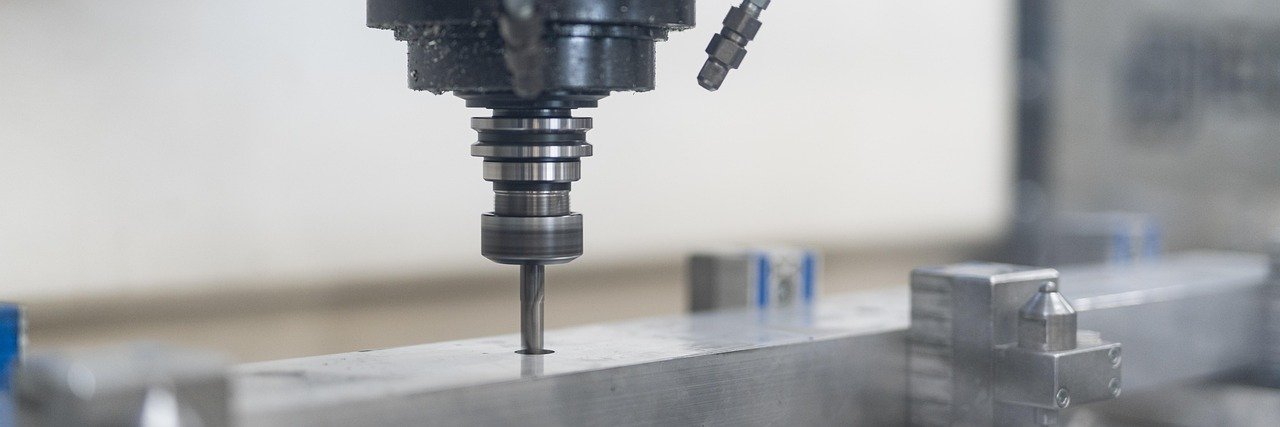
Utilisations industrielles de l'usinage de précision dans la fabrication
Pièces usinées avec précision sont importantes dans de nombreux domaines. Ces domaines ont besoin de pièces exactes, solides et sûres. Parmi les plus grands utilisateurs, on peut citer
Aérospatiale: Nécessite des pièces très précises pour les moteurs et le train d'atterrissage.
Automobile: utilise ces pièces dans les moteurs, les transmissions et les systèmes de sécurité.
Dispositifs médicaux: Nécessite de petites limites pour les outils et les implants.
Électronique: Nécessite des pièces minuscules et détaillées pour les circuits imprimés et les connecteurs.
Défense: Besoin de pièces métalliques solides et précises pour les armes et les véhicules.
Pétrole et gaz: Utilise des pièces résistantes pour les pompes et les vannes dans des endroits difficiles d'accès.
L'énergie: A besoin de pièces qui fonctionnent bien dans les turbines et les systèmes d'alimentation.
Transformation des aliments: Besoin de pièces sûres et faciles à nettoyer pour les machines.
Le marché de l'usinage de précision connaît une croissance rapide. En 2024, il représentait environ 114,58 milliards de dollars. Les experts pensent qu'il doublera d'ici 2033, car de plus en plus de domaines ont besoin de pièces de qualité.
Exemples de composants usinés de précision couramment utilisés
L'usinage de précision permet de fabriquer de nombreux types de pièces. Ces pièces doivent être bien ajustées et fonctionner dans des conditions difficiles. En voici quelques exemples :
Type de composant | L'industrie | Description |
|---|---|---|
Engrenages | Automobile | De bons engrenages facilitent la transmission de la puissance |
Composants de la transmission | Automobile/Aérospatiale | Nécessaire pour les voitures et les avions électriques |
Composants aérospatiaux | Aérospatiale | Fabriqué avec des machines CNC pour une grande précision |
Composants du moteur | Automobile | Découpe au laser pour un meilleur travail et une plus grande confiance |
Dispositifs médicaux | Médical | Outils et implants à petites limites |
Composants de la batterie | Électronique | Des pièces minuscules et détaillées pour stocker l'énergie |
Systèmes d'éclairage | Automobile/électronique | Pièces sur mesure pour les nouveaux systèmes d'éclairage |
KEMING fabrique ces pièces à l'aide de machines CNC et de moulages de pointe. L'équipe suit des règles strictes en matière de précision et de finition.
Avantages des pièces usinées de précision dans la production
Pièces usinées avec précision apportent beaucoup de bonnes choses aux fabricants et aux utilisateurs :
Une grande précision permet aux produits de mieux fonctionner et d'être plus sûrs.
Les petites limites permettent de s'assurer que les pièces s'adaptent et fonctionnent correctement.
L'usinage CNC permet de réduire les déchets et d'économiser les matériaux.
Les machines réduisent les risques de blessures au travail.
Les pièces sur mesure permettent de répondre à des formes et à des besoins particuliers.
De bonnes pièces signifient moins de temps d'arrêt et moins de réparations.
Le processus spécial de KEMING permet d'obtenir des pièces de qualité supérieure et des résultats réguliers. Leurs compétences aident les clients dans des domaines difficiles tels que l'aérospatiale et les appareils médicaux à obtenir les meilleurs résultats.
Les pièces usinées de précision sont importantes dans de nombreuses industries. Elles permettent aux machines de bien fonctionner et de durer plus longtemps. Les entreprises utilisent ces pièces pour respecter les règles de sécurité. Elles réduisent ainsi les risques de casse.
L'usinage de précision améliore le fonctionnement des systèmes dans l'aérospatiale et dans d'autres domaines.
Les pièces solides se cassent moins souvent et contribuent à la sécurité des personnes.
Des économies sont réalisées parce qu'il y a moins de gaspillage et moins de réparations.
Les conceptions personnalisées permettent aux ingénieurs de développer de nouvelles idées.
KEMING fournit des pièces de qualité supérieure en utilisant des outils avancés. Les fabricants qui choisissent l'usinage de précision obtiennent de meilleurs produits et des résultats plus solides.
FAQ
Que signifie "pièce usinée de précision" ?
Une pièce usinée avec précision est fabriquée avec des dimensions exactes. Les machines la façonnent de manière à ce qu'elle s'adapte aux autres pièces. Ces pièces permettent aux produits de bien fonctionner et de durer plus longtemps.
Pourquoi les industries ont-elles besoin de tolérances serrées ?
Des tolérances serrées permettent de s'assurer que les pièces s'emboîtent sans discontinuité. Cela permet aux machines de fonctionner en douceur. Les secteurs de l'aérospatiale et de la médecine ont besoin de tolérances serrées pour des raisons de sécurité.
Quels sont les matériaux les plus adaptés à l'usinage de précision ?
Les métaux comme l'aluminium, l'acier inoxydable et le titane donnent de bons résultats. Les plastiques comme le PEEK et l'ABS sont également utilisés. Les ingénieurs choisissent les matériaux en fonction de leur résistance, de leur poids et de leur utilisation.
Conseil : Le choix du bon matériau permet à la pièce de durer plus longtemps et de mieux fonctionner.
Comment KEMING assure-t-il la qualité de chaque pièce ?
KEMING utilise des machines de pointe et des contrôles stricts. Les ouvriers mesurent chaque pièce à l'aide d'outils spéciaux. Ils suivent des règles pour s'assurer que chaque pièce répond aux besoins.
Les pièces usinées de précision peuvent-elles être personnalisées ?
Oui, les ingénieurs peuvent concevoir des pièces pour des travaux spéciaux. KEMING propose des formes, des tailles et des finitions personnalisées. Cela permet aux clients d'obtenir ce dont ils ont besoin pour leurs projets.