EN
EN  DE
DE  ES
ES  FR
FR  PT
PT  RU
RU 
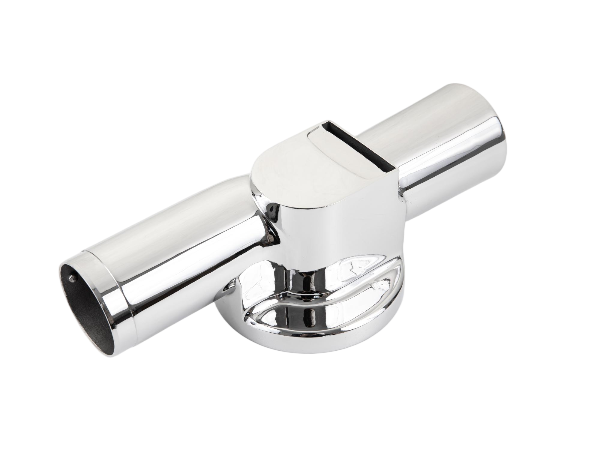
Stainless steel investment casting is a precision lost-wax manufacturing process used to produce high-tolerance, complex-shaped stainless steel components with excellent surface finish. Differing from conventional sand casting, this process eliminates extensive secondary machining, delivering dimensionally stable, corrosion-resistant parts that comply with mainstream industrial manufacturing standards. It is widely adopted in precision industries requiring high structural accuracy and durability.
Key Takeaways
- Stainless steel investment casting, based on the standard lost-wax process, produces high-precision, smooth-surface components suitable for high-standard automotive, aerospace, and medical industrial scenarios.
- Standardized multi-step process inspection ensures component mechanical stability and corrosion resistance, meeting international industrial quality specifications.
- Process selection and supplier evaluation should focus on process standardization, alloy adaptation capability, precision control, and full-process quality compliance.
Stainless steel investment casting process
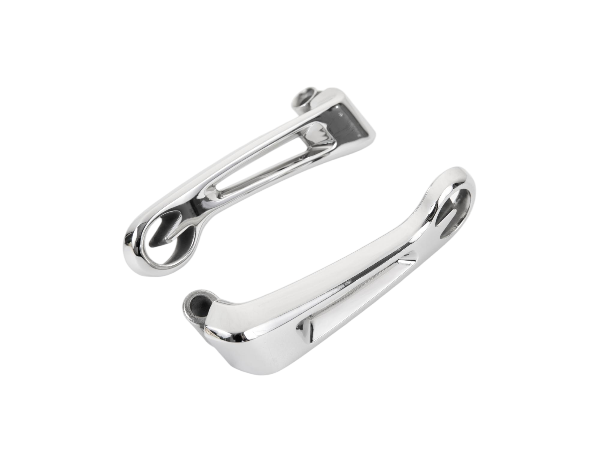
Lost-wax method steps
Stainless steel investment casting relies on standardized lost-wax ceramic shell technology to manufacture high-precision alloy components. The complete industrial workflow covers wax pattern fabrication to final finishing, with strict process control ensuring dimensional accuracy and structural integrity of stainless steel parts. The standardized process steps are as follows:
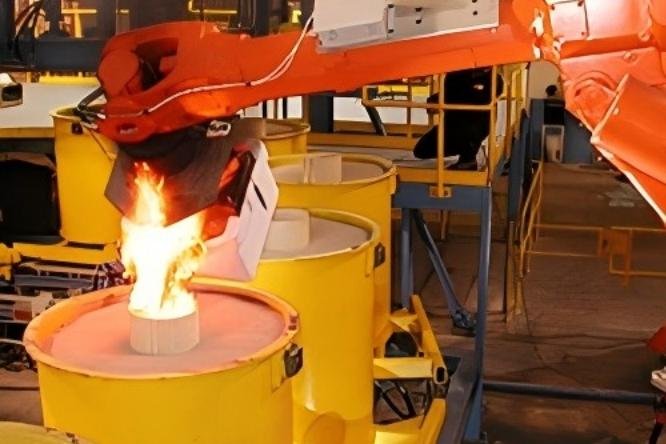
- Wax Pattern Creation: Precision wax injection molding is adopted to produce high-fidelity wax patterns that fully replicate the structural dimensions of the final component.Assembly (Wax Tree): Multiple qualified wax patterns are orderly assembled onto a sprue tree to form a unified casting unit for batch production.Ceramic Shell Application: The wax tree is repeatedly dipped in high-purity ceramic slurry and covered with refractory stucco to form a dense, high-temperature resistant multi-layer ceramic shell.Dewaxing (Lost Wax): The sealed shell is treated via high-pressure autoclave dewaxing to completely remove internal wax patterns and form a smooth hollow mold cavity.Preheating: The hollow ceramic shell is sintered at high temperature to eliminate moisture, enhance refractoriness, and stabilize mold structure.Metal Pouring: Molten stainless steel alloy is poured into the preheated shell under controlled temperature and flow rate to ensure full cavity filling.Cooling and Shakeout: The alloy is naturally cooled and solidified, then the brittle ceramic shell is mechanically removed to separate rough castings.Finishing Operations: Rough castings are cut from the sprue tree, followed by grinding, polishing, precision machining, and surface treatment to meet final dimensional and surface requirements.
Tip: Standardized precision equipment and standardized process control effectively ensure consistent surface finish and dimensional stability of stainless steel castings in batch production.
Key stainless steel grades
Stainless steel investment casting supports a wide range of industrial-grade stainless steel alloys, which are categorized into three core series: austenitic, martensitic, and duplex stainless steel. Each grade has unique mechanical properties and corrosion resistance, matching different industrial working conditions and application requirements.
| Stainless Steel Grade | Equivalent | Key Properties | Typical Applications |
|---|---|---|---|
| CF8 | SS 304 | Good corrosion resistance, excellent ductility and toughness | Food processing equipment, pump casings, valve bodies |
| CF8M | SS 316 | Better corrosion resistance, good performance in chloride environments | Oil and gas components, marine hardware, pharmaceutical machinery |
| CA6NM | N/A | High tensile strength, good corrosion resistance | Turbines, impellers, valve trim |
| CD4MCu | N/A | High resistance to stress corrosion cracking, excellent strength | Offshore oil & gas equipment, chemical pumps |
Austenitic stainless steel contains high chromium and nickel content, providing outstanding corrosion resistance and ductility for flexible structural applications. Martensitic stainless steel features high chromium and low nickel composition, prioritizing high hardness and tensile strength. Duplex stainless steel combines the advantages of the former two series, balancing excellent structural strength and stress corrosion resistance for harsh industrial environments.
| Stainless Steel Grade | Typical Applications |
|---|---|
| 304 | General industrial parts, food equipment, architectural hardware |
| 316 | Marine applications, pharmaceutical systems, chemical processing equipment |
| 17-4 PH | Aerospace brackets, precision gears, oilfield equipment |
These mainstream stainless steel alloys cover most customized precision casting demands in automotive, marine, and oil and gas industries.
Quality control in casting
Full-process quality control is the core guarantee for qualified stainless steel investment castings. Standardized inspection procedures run through the entire production process to eliminate dimensional deviation, surface defects, and internal structural flaws, ensuring compliance with international industrial standards.
- Incoming Material Inspection: Workers check the raw materials to make sure they are correct.
- In-Process Inspection: Technicians watch each step to find problems early.
- Final Product Testing: They measure the parts and use special tests to check for hidden problems.
- Surface Quality Checks: Inspectors look at the surface to check for smoothness, roughness, sharp edges, and clean corners.
- Non-destructive Testing: X-rays look for inside flaws. Spectrometry checks the chemical mix. Mechanical tests check strength, bending, and hardness.
Qualified investment casting manufacturers adopt precision CNC processing equipment and standardized production lines, and comply with international mainstream standards including ASTM, DIN, JIS, and AAR to ensure global universal compatibility of products.
| Standard Type | Country/Region |
|---|---|
| GB | China |
| ASTM | USA |
| AISI | USA |
| DIN | Germany |
| NF | France |
| BS | UK |
| JIS | Japan |
| AS | Australia |
| AAR | USA |
Note: Systematic full-process testing and standardized inspection mechanisms ensure the structural stability and long-term reliability of stainless steel investment castings.
Stainless steel investment casting delivers excellent dimensional stability and tight tolerance control, with standardized dimensional error ranges for different component sizes, meeting high-precision assembly requirements.
| Dimensions | Normal Tolerance of Investment Casting |
|---|---|
| Up to 1” | +/- .010” |
| Up to 2” | +/- .013” |
| Up to 3” | +/- .016” |
| Up to 4” | +/- .019” |
| Up to 5” | +/- .022” |
| Up to 6” | +/- .025” |
| Up to 7” | +/- .028” |
| Up to 8” | +/- .031” |
| Up to 9” | +/- .034” |
| Up to 10” | +/- .037” |
| > 10” | allow +/- .005” per inch |
Post-casting treatments including heat treatment, precision machining, and surface polishing are adopted to repair minor process flaws, optimize surface finish, and further enhance the corrosion resistance and mechanical properties of stainless steel components.
KEMING’s investment casting process makes parts that are strong and the right size. Their quality control system makes sure every part meets what industries need all over the world.
Benefits and uses of investment casting
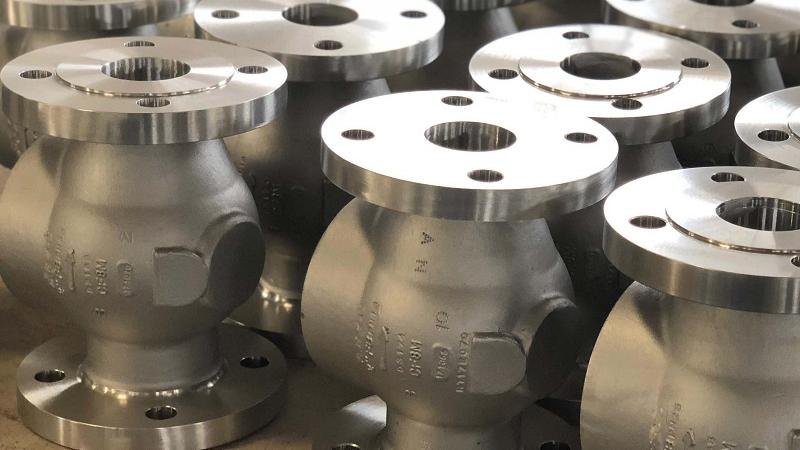
Main advantages
Stainless steel investment casting features outstanding precision and process flexibility. It achieves a surface finish of Ra 3.2μm, supporting fine structural details such as engraved logos and textured surfaces, which greatly reduces secondary processing procedures. Compared with forging and die casting, this process has lower initial tooling costs and no subsequent mold maintenance pressure. It is compatible with multiple stainless steel alloy grades, with low defect rate and material waste rate far lower than traditional sand casting. It can fabricate complex hollow structures and special-shaped parts without damaging structural integrity, effectively reducing machining allowance and overall manufacturing costs.
| Advantage | Description |
|---|---|
| Surface Finish | Gets 3.2μm Ra, allows small details, needs less extra work |
| Quality | Less waste, fewer mistakes, better parts |
| Cost-Effectiveness | No extra cutting needed, saves money |
| Production Efficiency | Makes many parts that are all the same |
| Complex Shapes | Can make tricky shapes and inside spaces |
With a precision tolerance of ±0.005” per inch, the process is significantly more accurate than traditional sand casting. Standardized ceramic shell molds feature high repeatability, requiring minimal adjustment for batch production, ensuring consistent dimensional and structural uniformity of finished parts.
Industry applications
Stainless steel investment casting is widely applied in automotive, marine, railway, agricultural, food processing, medical, petroleum, aerospace, and defense industries. It is the preferred manufacturing process for thin-walled, complex-shaped precision components with high durability requirements.
| Industry | Notable Parts Produced |
|---|---|
| Automotive | Exhausts, turbochargers, pump bodies, valve parts, bearings |
| Marine | Boat drains, anchors, rail fittings |
| Medical | Surgery tools, implants, drug equipment |
| Aerospace | Engine brackets, turbine blades, supports |
| Food | Food machines, valve bodies, pump cases |
This process perfectly meets the strict precision, strength and durability standards of high-end industrial manufacturing fields.
Choosing the right casting partner
Selecting a professional investment casting supplier requires comprehensive evaluation of core technical indicators and service capabilities. Key evaluation dimensions include component mechanical properties, corrosion resistance, weight adaptability, high-temperature resistance, complex structure design capability, precision tooling level, full-process communication efficiency, and complete post-processing supporting capacity.Mechanical properties: How strong, bendy, hard, and easy to weld the part is
- Corrosion resistance: Lots of chromium keeps parts from rusting
- Weight: How heavy the part is matters for shipping
- Temperature resistance: Can the part work in high heat?
- Engineering expertise: Can they design hard shapes?
- Tooling quality: Do they use good tools for making parts the same?
- Communication and service: Do they help you during the project?
- Post-processing: Can they heat, cut, and polish the parts?
KEMING uses new CNC machines, checks quality, and works fast. They finish most jobs in 2 to 4 weeks after the tools are ready. They can handle both small and big jobs. They use special ways to make tricky shapes. KEMING helps from the start to the end, making sure you get good parts every time.
Stainless steel investment casting makes parts that fit very well. The parts have smooth surfaces and look nice. KEMING makes strong parts with hard shapes. This process uses less material, so there is less waste. Many types of businesses use this method.
| Benefit | Description |
|---|---|
| High Accuracy | Each part has the right size |
| Versatility | Works for lots of different jobs |
FAQ
What makes investment casting different from other methods?
Investment casting uses its own special steps. Workers make wax shapes. They cover these shapes with ceramic shells. Then, they pour metal inside. This way, parts come out very exact and smooth.
How does the process ensure strong parts?
The process checks materials carefully. Metal is poured with care. Quality is checked at every step. Technicians look for mistakes. This makes sure parts are strong and last long.
Which industries benefit most from investment casting?
Automotive, marine, medical, and aerospace companies use investment casting. The process makes tricky shapes and exact sizes. These industries need parts that follow tough rules.