EN
EN  DE
DE  ES
ES  FR
FR  PT
PT  RU
RU 
According to 2026 global manufacturing industry surveys, CNC routing service hourly rates typically stand between $35 and $150, with the final quote determined by project complexity, machine setup, workpiece material, part dimensions and suppliers’ technical strength; intricate designs, hard-to-cut materials and large workpieces usually drive up costs, while bulk orders greatly lower the unit price, and extended machine operating time as well as additional post-processing work will also raise total expenses. The global CNC routing market sees stable growth, whose size was $735.5 billion in 2024 and is expected to reach $1146.7 billion by 2035, driven by growing demand for high-precision CNC routing services in various sectors.
Key Takeaways
- The standard hourly rate for CNC routing services is $35–$150 (2026 industry reference), determined by project complexity, raw material and machine type.
- Bulk production effectively lowers unit cost, making large orders more cost-efficient.
- Providing complete technical specifications enables suppliers to issue accurate quotes and avoid unexpected extra fees.
Typical CNC Routing Service Cost
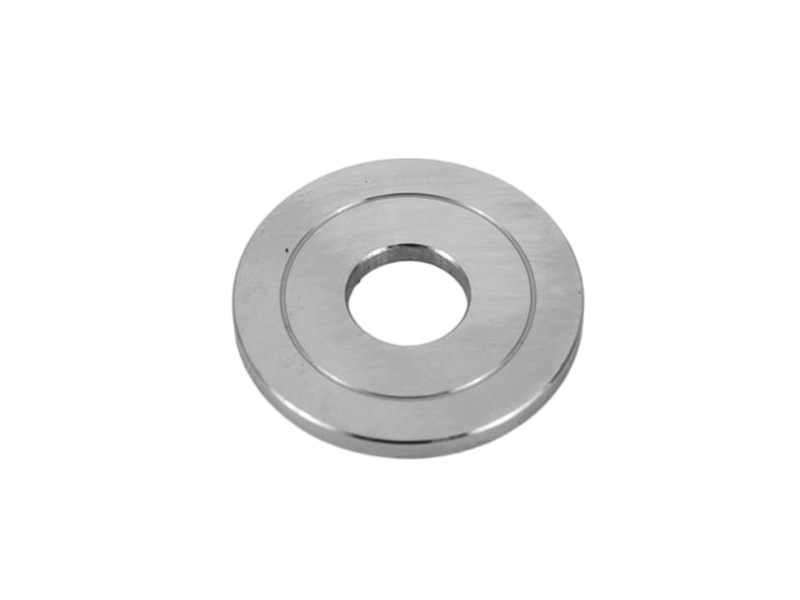
Understanding the cost composition of CNC routing helps clients make reasonable budget plans. Regional differences, equipment models and project difficulty are core factors causing price fluctuations. Many professional manufacturers integrate CNC routing with other processing technologies to provide one-stop industrial solutions.
Average Hourly and Project Rates
Most service providers adopt hourly billing or fixed project pricing. Regional labor costs and equipment grades directly affect quotations. The table below lists 2026 reference hourly rates across major regions:
| Region | Hourly Rate Range |
|---|---|
| USA | $35 – $150 |
| Europe | $35 – $50 (3-axis equipment) |
| Asia (China) | Cost-competitive pricing |
| India | Lower average rates compared to the USA |
Equipment configuration is another major cost driver. Basic 3-axis routers are applied to conventional tasks with lower fees, while 5-axis and multi-axis routers handle complex machining with higher hourly rates.
| Machine Type | Hourly Rate Range |
|---|---|
| 3-axis machine | $35 – $50 |
| 5-axis machine | $70 – $300+ |
| Multi-axis machine | $75 – $120 |
Practical Tip: 5-axis routers excel at complex machining tasks. Despite higher hourly rates, they shorten overall processing time and improve comprehensive efficiency.
Apart from core machining fees, additional charges are commonly listed in formal quotes: setup fees ($50–$200), programming fees ($50–$150 per hour) and material markup fees (18%–35%).
CNC Routing Cost Examples
Practical cases help clients better understand the billing rules. The following cases are reference quotations for the US market. A basic 3-axis task charged at $40/hour will cost $160 for 4 working hours, excluding setup and programming fees. Complex work on 5-axis equipment is priced at $100 or above per hour, so a 4-hour project may range from $400 to $800 based on project requirements.
| Example Project | Machine Type | Hours | Hourly Rate | Total Cost (Estimate) |
|---|---|---|---|---|
| Simple sign cutting | 3-axis | 2 | $40 | $80 + fees |
| Custom bracket | 3-axis | 4 | $50 | $200 + fees |
| Aerospace prototype | 5-axis | 4 | $150 | $600 + fees |
| Complex mold pattern | Multi-axis | 6 | $100 | $600 + fees |
Cost structures differ greatly between prototype development and mass production. One-time setup and programming expenses are allocated to a small number of samples for prototypes, leading to higher unit prices. In mass production, these fixed costs are spread across thousands of parts to reduce unit expenditure.
| Cost Factor | Prototype (per unit) | Production (per unit) |
|---|---|---|
| Setup Costs | High | Low |
| Programming | High | Low |
| Material | Premium | Discounted |
| Machine Time | Longer | Optimized |
| Inspection | Detailed | Sampled |
Professional manufacturers provide integrated solutions for both prototyping and mass production, helping clients control overall costs while maintaining stable product quality. As a reliable supplier, KEMING delivers customized and efficient CNC routing services with transparent pricing.
Factors Affecting CNC Routing Cost
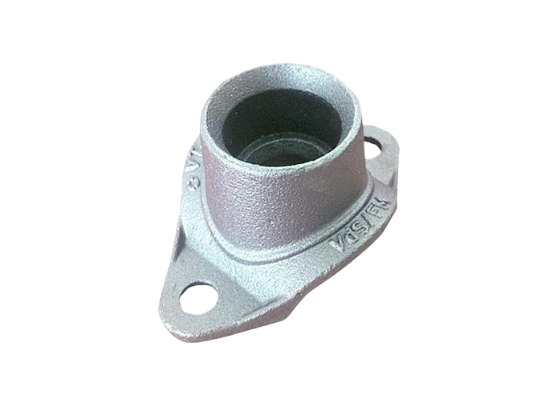
Knowing about cnc routing service cost helps buyers choose wisely. Many things can change the final price of cnc routing service. Every project is different, so companies like KEMING look at these things to give fair prices and keep quality high.
Project Complexity and Design
Project complexity is one of the biggest cost drivers. Designs requiring narrow cavities and micro-details demand high-precision equipment and experienced operators. Industries such as aerospace and medical devices have strict tolerance requirements, which raise service fees due to special tooling and full-range inspection. Early design optimization can effectively reduce rework risk and cut extra costs.
Professional manufacturers maintain strict processing standards, with a standard dimensional tolerance of ±0.005 inches for high-precision projects, supported by full inspection before delivery. Components with irregular geometries and dense details require longer processing time and dedicated tooling, resulting in higher costs.
Material and Part Size
Workpiece material directly affects processing difficulty and overall cost. Hard materials such as ebony require more processing time than soft woods like maple and oak. In general, premium metal materials carry higher costs, while common wood and plastic materials are more economical.
CNC routing is widely applied to wood, MDF, foam, acrylic and composite materials. For ultra-hard metal workpieces, professional CNC milling is a more suitable option. Selecting cost-effective eligible materials is an effective way to control budgets, especially for customized small-batch orders.
Larger workpieces consume more machine runtime and auxiliary materials, which increases total costs. Although single small parts take little processing time, repeated setup and programming will raise unit prices for small-quantity orders.
| Production Volume | Setup Cost Impact | Machining Cost Impact | Unit Cost |
|---|---|---|---|
| 1-10 Parts (Prototype) | Very High | High | Very High |
| 100-500 Parts (Low-Vol) | Medium | Medium | Moderate |
| 1000+ Parts (Production) | Low | Optimized | Low |
Qualified suppliers provide tailored processing solutions for diverse materials and part sizes, and implement consistent quality control for all orders.
Quantity and Machine Time
Order quantity is a decisive factor for unit price. Fixed setup and programming costs are shared across all products, so unit cost declines obviously with larger order volumes. The table below shows reference unit prices for different order sizes:
| Quantity | Cost per Part |
|---|---|
| 1 | $460 |
| 10 | $350 |
| 1,000 | $9.05 |
Single-piece orders bear full fixed costs, leading to high unit prices. Bulk orders deliver the most prominent cost advantages, especially for projects with complex setup procedures.
Machine configuration determines hourly billing standards. Below are the mainstream market hourly rates for common processing equipment:
| CNC Machine Type | CNC Machine Hourly Rate |
|---|---|
| Desktop CNC Router | $10 – $30/hr |
| Benchtop CNC Router | $20 – $50/hr |
| 3-Axis CNC Router | $40 – $100/hr |
| 5-Axis CNC Router | $100 – $250+/hr |
| Horizontal CNC Mill | $80 – $150/hr |
| CNC Laser/Plasma Cutting | $50 – $200/hr |
Modern CNC routing equipment achieves high operational efficiency and can stably undertake orders of all batch sizes.
Additional Services and Setup Fees
Value-added services will generate extra charges, including post-processing, assembly, performance testing and other customized work. Common supporting services are listed as follows:
CNC fiber laser cutting, CNC turning, CNC press brake, progressive die stamping, robotic welding, product testing, prototyping, assembly, electroplating and powder coating.
The cost of surface finishing varies by process complexity. Raw finished parts have the lowest fees, while polishing, electroplating and other sophisticated treatments require more labor and materials, thus costing more.
Setup fees and minimum order rules also affect total expenditure. Standard setup fees range from $50 to over $1,000, based on project difficulty. For bulk orders, one-time setup costs are shared by numerous products to lower unit price. Due to exclusive setup fees and unoptimized processes, the unit cost of prototypes is usually 3 to 5 times higher than mass-produced parts.
How to Estimate CNC Machining Costs
Preparing Specifications for Quotes
To get a good quote, you need to give clear project details. Suppliers need all the right information to give the best price. Technical drawings show things like thread sizes and tolerances. These drawings help workers understand the job and make quoting faster. Most factories like technical drawings because they are simple to read.
A good project file should list the material, size, tolerances, and finish. CAD models help show what the part looks like, but they might miss small things. Full engineering documents make sure the part is made right. When customers give all this info, they help lower cnc machining costs by stopping mistakes.
Here are some steps to follow:
- Collect all details, like material, size, and finish.
- Check what machines and workers are needed.
- Make a plan and leave time for changes.
- Talk with the supplier and ask for quality checks.
KEMING is a custom CNC machining factory that likes clear talk. Their team looks at CAD files and drawings to find problems early. They give detailed cost lists and suggest ways to save, like changing tolerances.
Comparing Providers and Saving Money
Picking a CNC routing service is about more than price. Buyers should look at skills, experience, and value. The table below shows what to check:
| Criteria | Description |
|---|---|
| Capabilities | Make sure the provider’s machines and skills fit the job. |
| Experience | More years in business means less risk and better quality. |
| Price | Look at the total value, not just the lowest price, for good results. |
To save on cnc machining costs, buyers can:
- Choose cheaper materials that still work for the job.
- Use smart cutting layouts to waste less material.
- Pick strong tools to avoid changing them often.
- Plan tool paths to use less machine time.
- Use the same setups to save on handling costs.
- Work with providers like KEMING for better prices on big orders.
Some customers forget about hidden costs, like tool wear or setup time. A full plan helps stop delays and keeps costs down. Talking often with the supplier helps the project stay on time and on budget.
Tip: Always ask for detailed quotes and compare a few providers to get the best mix of cost and quality.
Many things affect cnc routing service cost. These include the machine used, how hard the design is, the material, and setup steps. Giving clear project details helps suppliers make better quotes. This also helps lower cnc machining costs. If customers follow good steps, they can avoid surprise costs. Companies like KEMING give both cnc routing service and investment casting. This helps save money and work faster.
- Main things that change cost:
- Machine type and what it can do
- How hard the part is to design
- What material is picked
- Setup and tools needed
| Benefit | Description |
|---|---|
| Cost Reduction | Using both services cuts production and cnc machining costs. |
| Lead Time Reduction | Faster steps help parts arrive sooner. |
| Dimensional Accuracy | High accuracy means less extra work is needed. |
| Complex Geometries | Special methods make hard shapes easier to make. |
FAQ
How long does CNC routing usually take?
Most CNC routing jobs are done in a few hours. Big or tricky projects can take a few days. The supplier will tell you how long it will take before they start.
What files do manufacturers need for a CNC routing service?
Manufacturers need clear technical drawings or CAD files. These files show what the part looks like, its size, and what it is made of. Good files help the factory not make mistakes.
Can CNC routing handle custom designs?
Yes. CNC routing can make special shapes and sizes. The factory can change the machines to fit what the customer wants.