EN
EN  DE
DE  ES
ES  FR
FR  PT
PT  RU
RU 
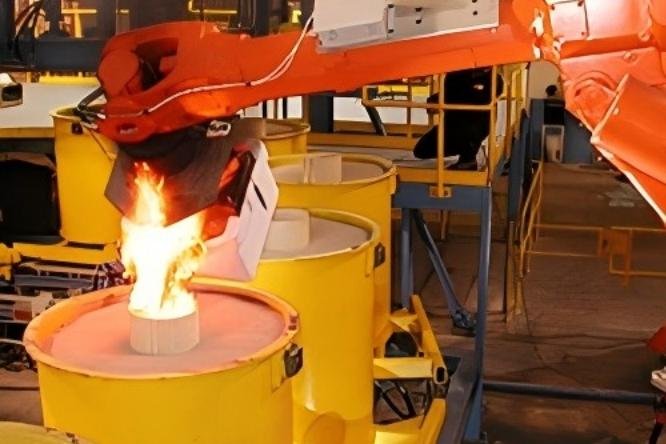
Lost foam casting (also written as lost-foam casting or evaporative-pattern casting, commonly called styrofoam casting by small foundries) is a near-net-shape metal casting process that uses expandable polystyrene EPS foam for lost foam casting patterns and unbonded dry sand to produce complex, high-precision metal components. First formalized in the 1950s, the lost foam casting process cuts production waste and improves dimensional stability, widely used to manufacture lost foam casting engine block, pump housings, automotive casings and general industrial machinery parts.
Key Takeaways
- Lost foam casting efficiently fabricates high-precision metal parts and cuts production waste, which is why applications of lost foam casting cover multiple heavy manufacturing sectors.
- The complete lost foam casting process breaks down into four core steps: foam pattern fabrication, lost foam molding preparation, molten metal pouring, cooling and finished component demolding.
- This forming technology supports intricate structural parts with superior surface finish, fitting mainstream production requirements from automotive to aerospace manufacturing.
- Recyclable dry foundry sand used in lost foam molds also makes the whole evaporative pattern casting eco-friendly with lower industrial waste output.
What is the lost foam casting process?
Also named evaporative-pattern casting or evaporative casting, lost foam casting relies on specialized foam for lost foam casting to produce dimensionally accurate castings with premium smooth surface finish.
How does the lost foam casting process work?
Most beginners searching how does lost foam casting work can learn the core operating logic below:
Production begins with fabricating prototypes from dedicated foam for lost foam casting, mainly expandable polystyrene EPS material, customizable via cutting and splicing for complex finished product outlines. After finishing the styrofoam-style foam pattern, operators fix the part inside a flask and fill surrounding space with unbonded dry sand to build complete lost foam molds.
After mold compaction, high-temperature molten alloy is poured into the pre-set cavity; extreme casting heat vaporizes the embedded EPS pattern instantly — the core principle behind evaporative pattern casting. Molten metal fills the vacant cavity left by vaporized foam and solidifies inside dry sand. Manufacturers separate recycled sand from cast blanks to get finished lost foam casting parts after full cooling.
Core Procedures of Lost Foam Casting
- Pattern Fabrication: Manufacture part-duplicate prototypes with standard foam for lost foam casting (EPS polystyrene); pre-coat surfaces with dedicated lost foam coating, also called refractory coating for lost foam casting to avoid sand adhesion defects.
- Mold Assembly: Embed coated foam patterns inside flasks and compact unbonded dry sand to finish lost foam molding setup.
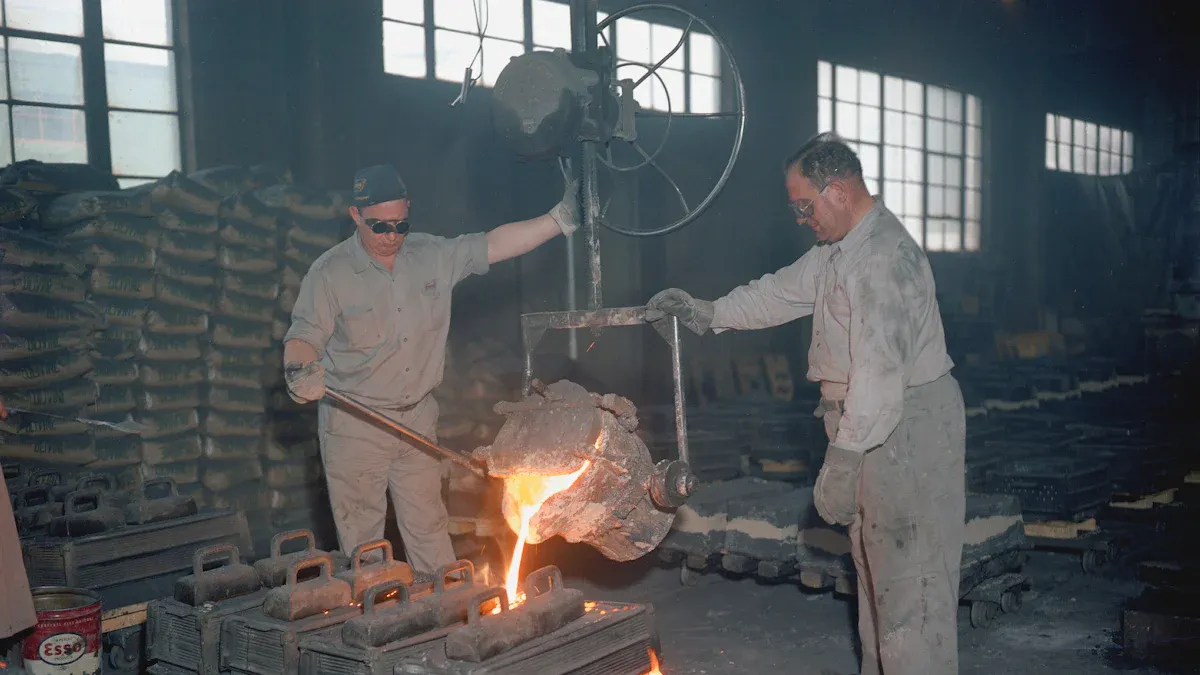
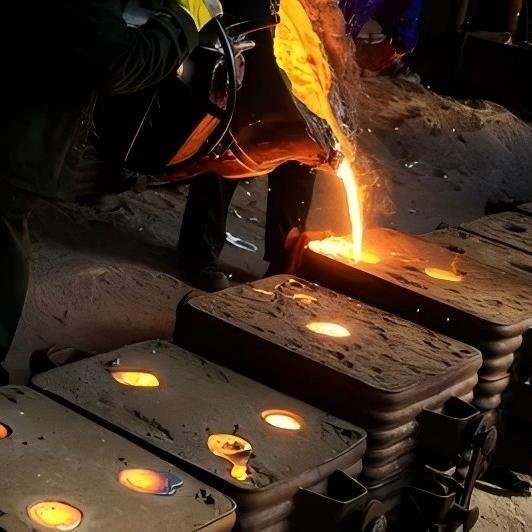
- Molten Metal Pouring: Feed high-temperature molten alloy into mold cavity; embedded EPS pattern vaporizes simultaneously with metal inflow.
- Cooling and Demolding: Keep molten alloy fully solidified before shake-out sand removal for raw castings.
Cooling and Demolding: Keep molten alloy fully solidified before shake-out sand removal for raw castings.
Expanded polystyrene remains the dominant raw foam for lost foam casting, vaporizing quickly under molten metal heat to form intact casting cavities. Unmanaged pyrolysis gas from foam breakdown easily triggers pinholes and poor surface texture, requiring strict parameter control throughout evaporative pattern casting.
Unlike conventional green sand casting with reusable split patterns, disposable vaporizable foam makes lost foam casting the preferred option for complex irregular industrial components across automotive, marine and agricultural machinery, one core reason for the fast-growing applications of lost foam casting.
Materials and Tools of lost foam casting
Foam Patterns
Most manufacturers adopt expanded polystyrene foam or copolymer particles to make casting patterns. Raw particles are heated and expanded inside aluminum molds to form integrated solid prototypes with fine details. For oversized workpieces, workers splice multiple foam modules to form complete models. All foam patterns will fully vaporize after molten metal pouring.
Dry Sand Molds
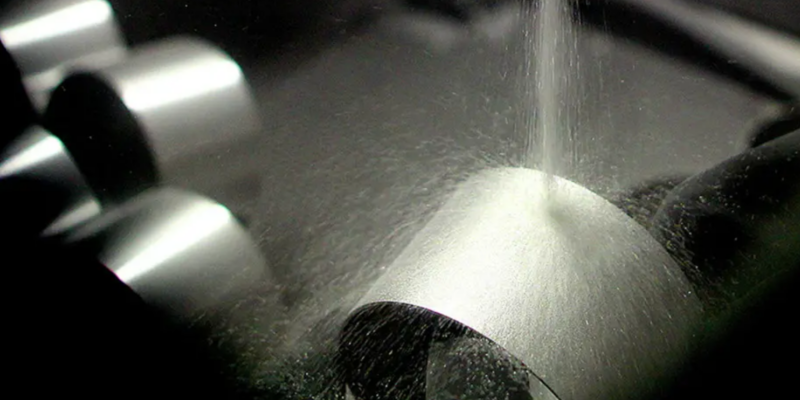
Unbonded dry sand is used to stabilize foam patterns during casting. The loose sand can flow freely to fill every corner around patterns after vibration compaction, requiring no extra binders or chemical additives. The sand mold maintains sufficient strength during metal pouring, and the used sand can be recycled repeatedly after demolding to cut production costs.
Applicable Metal Materials
Lost foam casting supports diverse raw alloys, with aluminum lost foam casting being the most mainstream commercial application:
| Metal Type | Applications |
|---|---|
| Aluminum Alloys | Engine blocks, cylinder heads, brackets |
| Cast Irons | Pump housings, valve bodies, machinery components |
| Cast Steels | Automotive parts, pipes, machinery parts |
| Specialty Alloys | Aerospace, electronics, electrical components |
Lost Foam Casting Process Parameter & Mold Commissioning
Pattern Design
As the initial stage of production, pattern design determines the overall precision of castings. Engineers need to take multiple practical factors into consideration: optimize sprue structure to realize rapid mold filling and avoid air entrapment; reserve reasonable exhaust channels to discharge decomposition gas smoothly; control metal filling speed to prevent forming flaws; adjust thermal gradient to guarantee smooth metal flow and complete shape forming.
Mold Commissioning
Reasonable mold setup is essential to avoid casting defects. The standardized operation specifications are as follows:
| Aspect | Recommendation | Rationale |
|---|---|---|
| Gating Design | Use bottom-pour with refractory sprue/runners | Reduces gas load, stabilizes flow, conserves heat |
| Pouring Temperature | Lower by 20-40°C relative to standard casting | Slows foam decomposition, syncs with metal advance |
| Negative Pressure | Moderate range (-0.035 to -0.025 MPa) | Prevents excessive gas ingress and mold instability |
| Pouring Speed | Slow-fast-slow sequence, no interruption | Ensures steady metal head and reduces turbulence |
| Coating Thickness | 1-1.5 mm, uniform application | Provides adequate permeability without weakening |
Technicians need to precisely regulate mold filling and metal solidification status to eliminate shrinkage cavities, air holes and folding defects, with thermal management specially optimized for large and thick-walled parts.
Molten Metal Pouring
Different materials correspond to matched pouring temperatures:
| Material | Pouring Temperature (°C) |
|---|---|
| General | 700 – 1600 |
| Aluminum | 660 |
| Iron | 1400 |
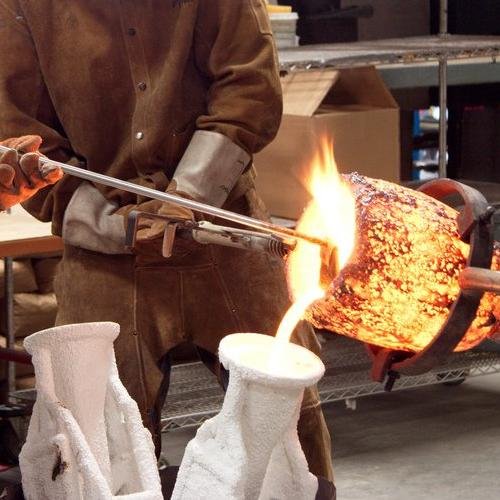
Metal is poured steadily, causing the foam pattern to evaporate. Controlled pouring ensures the molten metal reaches all areas of the mold.
Cooling & finishing
Cooling and finishing are the last steps in casting. The metal cools inside the sand mold. Cooling time changes the quality and strength of the part:
Water-cooled samples are stronger than air-cooled samples.
Faster cooling makes finer microstructures and better properties.
Higher solidification rates make smaller grains and stronger parts.
Rapid solidification can make parts stronger but may cause shrinkage in tricky shapes.
After cooling, workers take away the sand and clean the casting. They check size and surface finish:
| Attribute | Value |
|---|---|
| Surface Roughness (Ra) | 6.3 – 12.5 µm |
| Typical Dimensional Tolerance | ± 0.5 – 1.0 mm |
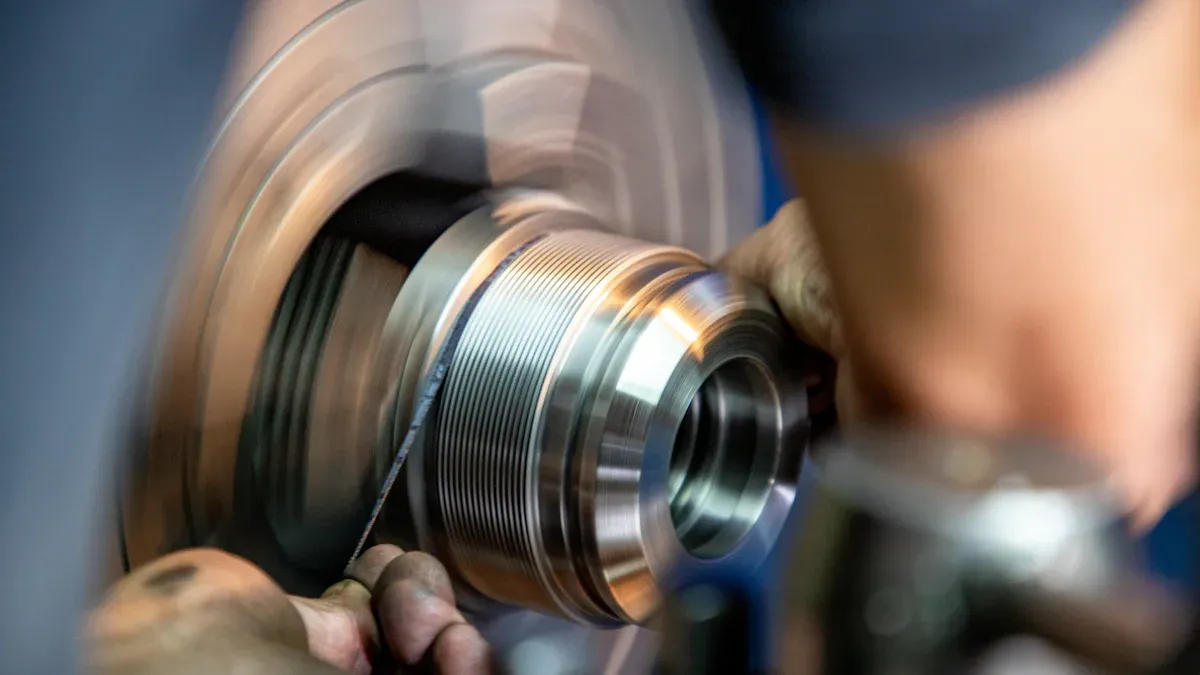
Finishing steps can include trimming, machining, or polishing. These steps make sure the casting meets the needed specs and is ready to use.
Pros & cons of lost foam casting
Advantages of Lost Foam Casting
Produces complex, one-piece parts without cores or parting lines High dimensional accuracy, reduces machining work Smooth surface finish Low material waste and high sand recycling rate Lower tooling cost vs investment casting Shorter production cycles and lead times Suitable for aluminum, iron, steel, and alloys
Disadvantages of Lost Foam Casting
Foam patterns are fragile and require careful handling High initial tooling cost (best for medium–high volumes) Requires strict control of pouring speed and temperature Foam decomposition gas may cause minor defects if not controlled
| Disadvantage | Description |
|---|---|
| Low Pattern Strength | Foam patterns can break or bend, so workers must be careful. |
| High Initial Investment | Aluminum molds are expensive, so this method is better for making lots of parts. |
| Stringent Process Control | Workers must control the process well to stop holes and folds. |
| Performance Limitations | Foam turning to gas can make tiny holes and weaker parts. |
Lost Foam Casting vs Other Processes
Lost foam casting is different from sand casting and investment casting. Sand casting costs less because it uses simple molds and fewer steps. Lost foam casting costs more because it needs special foam and skilled workers. But it is cheaper when making many parts. Investment casting costs even more for tools, so it is not good for big jobs. Lost foam casting uses less water and energy than green sand casting. It makes less waste and fewer bad fumes. The sand can be used again, and there are fewer gases. Lost foam casting needs fewer steps, saves time, and can make shapes that are hard with old methods. Professional casting foundries provide both evaporative pattern casting and investment casting to assist clients in selecting optimal production routes for custom components.
Techniques of the lost foam casting process
Safety
Safety is very important in lost foam casting. Workers need to protect themselves and their work area. They do several things to stay safe. They wear special clothes, gloves, face shields, and strong shoes when working with hot metal. Good air flow and fans help get rid of bad fumes. Workers read safety sheets before using pattern and coating materials. They keep the room full of fresh air. When handling dry sand, workers wear dust masks. They use ways to stop dust from getting in the air. Flammable things are kept in safe places. Fire extinguishers are close by. Everyone knows how to leave the building if there is a fire.
Tip: Training helps workers learn about dangers and how to stay safe.
Common mistakes
The table below lists some common errors, why they happen, and how to fix them:
| Mistake Description | Causes | Countermeasures |
|---|---|---|
| Inside does not melt well but looks fine | Not enough heating or low steam; beads too dry or too hot | Use more steam and heat; watch bead drying and heating |
| Inside is loose and does not stick well | Beads not filled evenly; not enough heat or time | Fill beads better; use more steam and heat for longer |
| Shape is not complete or clear | Mold not filled all the way; air holes not placed right | Fill mold better and change air pressure; fix mold design |
| Pattern melts too much | Too much steam or heated too long | Use less steam and heat for less time |
| Big shrink spots | Mold heated too long or too hot; cooled too fast | Heat for less time or lower heat; cool more slowly |
| Small shrink spots | Beads not fed evenly; mold not designed well | Feed beads evenly; make mold design better |
Advice for beginners
If you are new to lost foam casting, these tips can help you. Pick EPS foam because it holds its shape and is simple to use. Coat foam uniformly with refractory coating for lost foam casting before sand filling, a key tip for beginners researching lost foam casting coating usage. Add vents or risers so gas can get out when pouring metal. Clean the foam pattern before you use it. Choose EPS foam that can be used again to help the environment.
New ideas in lost foam casting help make better parts and use better materials. This method lets people make tricky shapes and cuts down on waste. That is why many factories like to use it.
Lost foam casting is special because it can make hard shapes. It does not need cores or parting lines. This way gives very smooth surfaces and good accuracy. Factories can make parts faster and spend less money. There is also less waste. Well-equipped foundries with automated production lines produce high-precision parts via mature evaporative casting and lost foam molding technology for cross-industry buyers.
| Benefit | Result |
|---|---|
| Complex shapes | Single-piece castings |
| Lower costs | 20-40% tooling savings |
| Faster production | 30-50% shorter lead times |
| High precision | Tight tolerances, less machining |
| Sustainable process | Less waste, less energy use |
FAQ
What makes lost foam casting different from sand casting?
Lost foam casting differs from sand casting in that the foam pattern evaporates during pouring, enabling more intricate shapes and smoother finishes.
Can lost foam casting make large parts?
Yes, lost foam casting can produce both small and large parts. Factories often use this method for engine blocks, pump housings, and other big components.
What metals work best with lost foam casting?
Lost foam casting works well with aluminum, cast iron, and steel. Some factories also use specialty alloys for aerospace and electronics.
How does KEMING ensure quality in lost foam castings?
KEMING uses strict quality checks. They test hardness, material strength, and surface finish. Their team uses advanced machines to make sure every part meets high standards.