EN
EN  DE
DE  ES
ES  FR
FR  PT
PT  RU
RU 
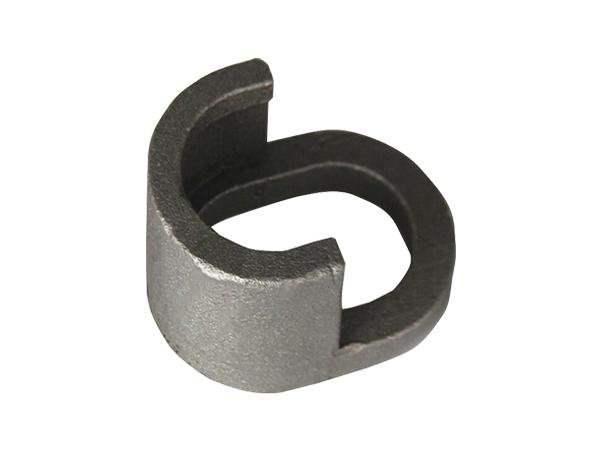
Sand mold casting — packing binder-treated sand around a pattern to form a disposable mold, then pouring molten metal into the cavity — is the most widely used metal casting process in the world. From the engine block in your car to the pump housing in an oil refinery to the bronze bell in a cathedral tower, sand castings form the structural backbone of modern industry.
This guide walks through every major decision point in the sand casting process — not just “what it is,” but what engineers and buyers actually need to know:
- How a sand mold is built: from pattern types (match-plate, cope-and-drag, sweep, skeleton) through core placement to mold closing
- Sand systems compared: green sand, no-bake resin, shell molding, sodium silicate — strength, cost, and surface finish trade-offs
- Gating and riser design: how molten metal enters the cavity and how risers prevent shrinkage porosity
- Alloy shrinkage and DFM rules: why wall thickness uniformity, draft angles, and fillet radii determine casting quality
- Common defects and fixes: gas porosity, cold shuts, hot tears, and sand inclusions — with root causes and remedies
If you’re evaluating whether sand casting fits your project, start with the Casting Process Comparison Matrix below. If you’re already committed and need to design for manufacturability, jump to the DFM Guidelines section.
Key Takeaways
- Sand mold casting is the most popular way to shape metal. It makes up 35% of all metal castings in the world.
- This casting method has the lowest tooling costs. It is great for small batches and custom designs.
- Cores are very important in sand casting. They help make complex shapes and hollow spaces in the final product.
Sand Mold Casting Process
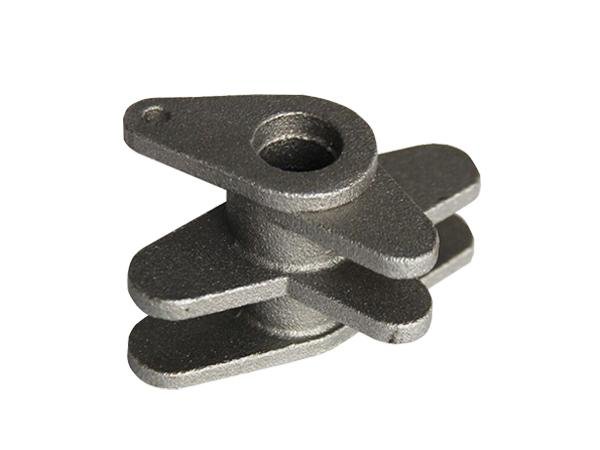
Step-by-Step: From Pattern to Finished Casting
Step 1: Pattern & Corebox Fabrication. A pattern — made from wood (low-volume, cheapest), plastic (medium-volume), or machined aluminum/steel (high-volume, tightest tolerances) — is an oversized replica of the finished part. Oversizing compensates for shrinkage during solidification, which varies by alloy (see Shrinkage Allowance table). Separate coreboxes are machined to form sand cores for any internal cavities.
| Pattern Material | Cost | Durability (cycles) | Best For |
|---|---|---|---|
| Wood (pine/mahogany) | Lowest | 100–1,000 | Prototypes, one-offs, low-volume iron castings |
| Plastic (epoxy, urethane) | Moderate | 1,000–10,000 | Medium-volume, moderate tolerances |
| Aluminum (machined) | Higher | 10,000–50,000 | Production runs, tighter tolerances |
| Steel / Cast Iron | Highest | 50,000+ | High-volume production with minimal wear |
Step 2: Mold Packing (Cope & Drag). Prepared sand is rammed around the pattern inside a two-piece flask: the cope (top) and drag (bottom). Compaction must be uniform — under-ramming causes erosion and dimensional drift; over-ramming reduces permeability, trapping gas that forms blowholes. Green-sand molds use 2–4% moisture-activated bentonite clay; no-bake systems use phenolic or furan resin catalyzed at room temperature.
Step 3: Pattern Removal & Core Setting. The flask is split, the pattern is drawn, and sand cores are positioned into the cavity on core prints (chaplets if needed). At this stage, the gating system is cut or molded: a pouring basin feeds a downsprue, which connects to runners delivering metal to multiple ingates. Risers (feeders) are placed at the heaviest sections to supply molten metal during solidification shrinkage.
Step 4: Mold Closing & Pouring. The cope is lowered, weighted or clamped, and molten metal is poured at a controlled rate. Pouring temperature is alloy-specific:
| Alloy | Pouring Temp (°C) | Shrinkage Allowance | Typical Minimum Wall (mm) |
|---|---|---|---|
| Gray Cast Iron (Class 30) | 1,350–1,450 | 0.8–1.0% | 4.0 |
| Ductile Iron (65-45-12) | 1,400–1,500 | 0.5–0.8% | 5.0 |
| Carbon Steel (1020/1045) | 1,550–1,620 | 2.0–2.5% | 6.0 |
| Aluminum (A356) | 680–750 | 1.3–1.6% | 3.0 |
| Brass / Bronze | 950–1,150 | 1.3–1.5% | 2.5 |
Step 5: Solidification & Shakeout. The casting cools inside the mold. Directional solidification is the goal — the thinnest sections freeze first, the thickest sections last, with risers continuing to feed liquid metal. Without proper riser design, shrinkage porosity forms in the last-to-freeze regions. Once the part is below its solidus temperature, the sand is broken away on a vibrating shakeout table for reclamation.
Step 6: Finishing & Inspection. Gates and risers are cut off, surfaces are blast-cleaned, and the casting undergoes dimensional inspection. For sand castings, typical as-cast tolerances are ±0.8 mm for small features and ±1.6 mm for larger dimensions (ISO 8062 Grade CT9–CT11). Surface finish typically ranges from 250–500 microinch RMS (6.3–12.5 μm Ra) for green sand and 125–250 microinch RMS for chemically bonded sand. Finish machining brings critical features to final tolerance.
Sand Casting Materials and Applications
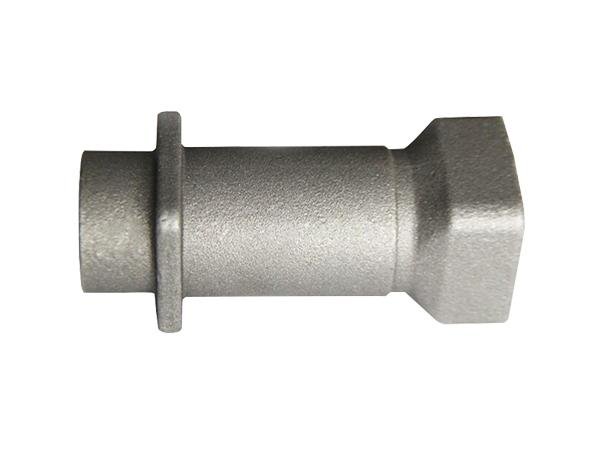
Sand System Comparison — Choose Based on Alloy, Size, and Surface Requirements
| System | Binder | Strength | Surface Finish (RMS) | Cost Index | Best For |
|---|---|---|---|---|---|
| Green Sand | Bentonite clay + H₂O (2-4%) | Moderate | 250-500 μin | ★ (lowest) | High-volume iron, aluminum, brass; fast cycle, reusable sand |
| No-Bake / Air-Set | Phenolic-urethane or furan resin | High | 125-300 μin | ★★★ | Steel, large parts, tight tolerances; room-temp cure, no baking |
| Shell Molding | Phenol-formaldehyde resin (heat-cured) | Very High | 100-200 μin | ★★★★ | Small-medium precision parts; automotive, excellent detail |
| Sodium Silicate (CO₂) | Sodium silicate + CO₂ gas | Moderate-High | 200-400 μin | ★★ | Medium-large steel/iron; fast hardening, low odor |
| Ceramic Sand | Various resins | High | 80-150 μin | ★★★★★ | Aerospace, military; near-zero thermal expansion, premium finish |
Industries and Their Sand Cast Components
| Industry | Typical Castings | Common Alloys | Key Requirement |
|---|---|---|---|
| Automotive | Engine blocks, cylinder heads, exhaust manifolds, flywheels, brake drums | Gray iron, ductile iron, Al A356 | Vibration damping, thermal cycling, machinability |
| Mining & Aggregate | Crusher mantles, jaw plates, mill liners, slurry pump housings | High-Mn steel, high-Cr white iron | Extreme abrasion resistance, work hardening |
| Pumps & Valves | Valve bodies, pump volutes, impellers, flanges | Ductile iron, 316 SS, bronze C95400 | Pressure integrity, corrosion resistance |
| Heavy Equipment | Gearbox housings, counterweights, track components, hydraulic bodies | Ductile iron, carbon steel | Structural strength, fatigue resistance |
| Marine & Offshore | Propellers, stern tubes, sea-water pump bodies, bollards | Ni-Al bronze, duplex SS, brass | Seawater corrosion, biofouling resistance |
| Energy | Turbine housings, generator frames, wind turbine hubs | Ductile iron, low-alloy steel | Large size capability, fatigue life |
FAQ
What metals can be sand cast — and which alloy grades are most commonly used?
and casting is the most alloy-agnostic of all casting processes — virtually any metal that can be melted can be poured into a sand mold. Common grades: Gray cast iron (Class 30/35/40 — engine blocks, machine bases, excellent vibration damping), Ductile iron (65-45-12/80-55-06 — crankshafts, gearboxes, pressure pipe; tensile strength approaching steel at lower cost), Carbon steel (1020/1045/4140 — structural components, weldable), High-Mn steel (ASTM A128 — crusher wear parts, work-hardens under impact), High-Cr white iron (15Cr-3Mo/25Cr — slurry pump parts, extreme abrasion resistance), Aluminum (A356/319 — lightweight structural, good thermal conductivity), Brass & bronze (C84400/C95400 — marine fittings, valve bodies, bearing properties). The alloy choice determines pouring temperature, riser design, and post-cast heat treatment — not just which metal “works.”
Can sand molds be reused — and what about sand reclamation?
The mold itself is destroyed during shakeout — each casting requires a new mold. But the sand is reclaimed and reused. In modern foundries, up to 85–95% of green sand is mechanically and thermally reclaimed: spent sand passes through magnetic separators (removing metal), crushers (breaking down lumps), and screens (classifying grain size), then fresh binder and water are added to restore molding properties. No-bake resin sand has lower reclaim rates (~60–80%) because the resin coating must be thermally stripped. Economic impact: sand is typically the foundry’s third-largest consumable cost (after metal and energy) — effective reclamation reduces new sand purchases by 80%+ and eliminates disposal costs. Environmental impact: the U.S. foundry industry recycles approximately 6–10 million tons of sand annually, making it one of the largest industrial material recycling streams. Spent foundry sand is also increasingly used as fill material in construction and road building (subject to local EPA regulations).
What are the typical tolerances and surface finishes achievable in sand casting?
Standard sand-cast tolerances per ISO 8062: Grade CT9–CT11 for green sand and chemically bonded sand. In practical terms: ±0.8mm (±1/32″) on features under 50mm, ±1.6mm (±1/16″) on features 50–150mm, ±2.5mm or wider on features above 300mm. Surface finish: 250–500 microinch RMS (6.3–12.5 μm Ra) for green sand as-cast; 125–250 microinch RMS for chemically bonded sand. These are as-cast values — finish machining on critical surfaces brings them to ±0.025mm or better. When comparing to investment casting (±0.1mm, 60–125 μin RMS), sand casting gives up precision for dramatically lower cost on large parts.