RU
RU  EN
EN  DE
DE  ES
ES  FR
FR  PT
PT 
В литье по выплавляемым моделям, materials such as polystyrene foam, castable resin, and 3D-printable plastics are gradually replacing traditional jewelry wax. This shift is driven by the demand for higher detail, faster prototyping, and easier operation, and offers significant advantages. This article compares these alternative materials to help you choose the best one for your metal casting projects.
Основные выводы
- Foam, resin, and 3D-printed plastics replace wax in lost wax casting.
- Resin offers the finest detail for jewelry and art pieces.
- Foam costs the least for large, simple parts.
Traditional Lost Wax Casting and Its Modern Alternatives
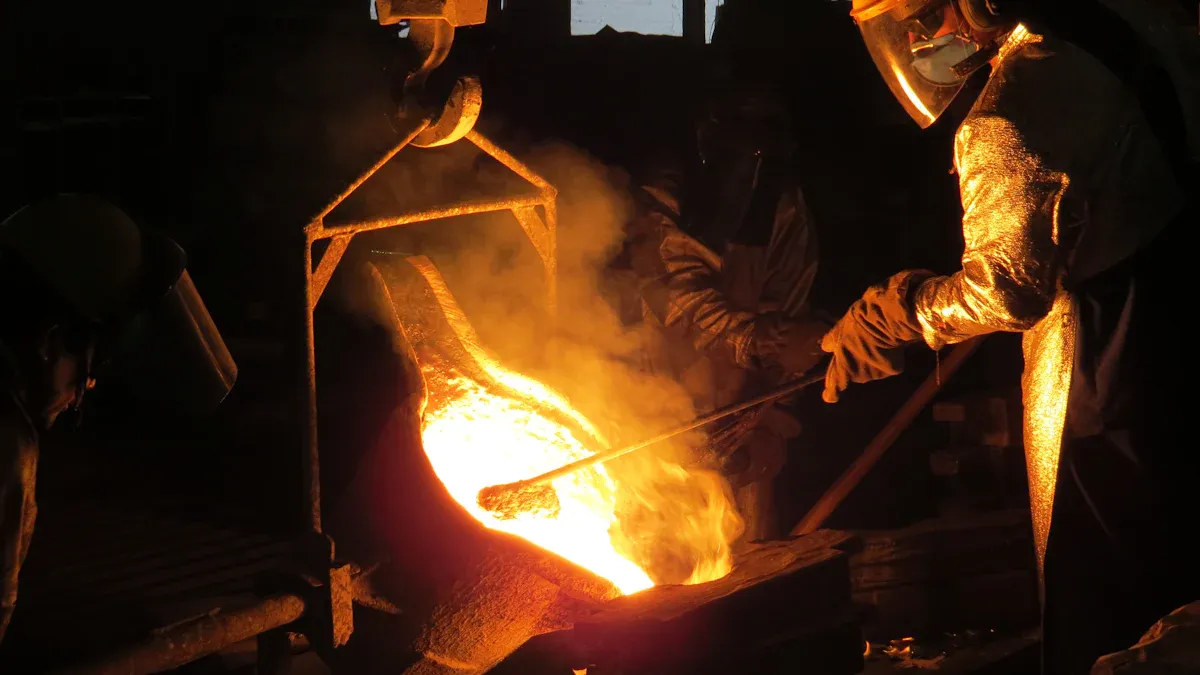
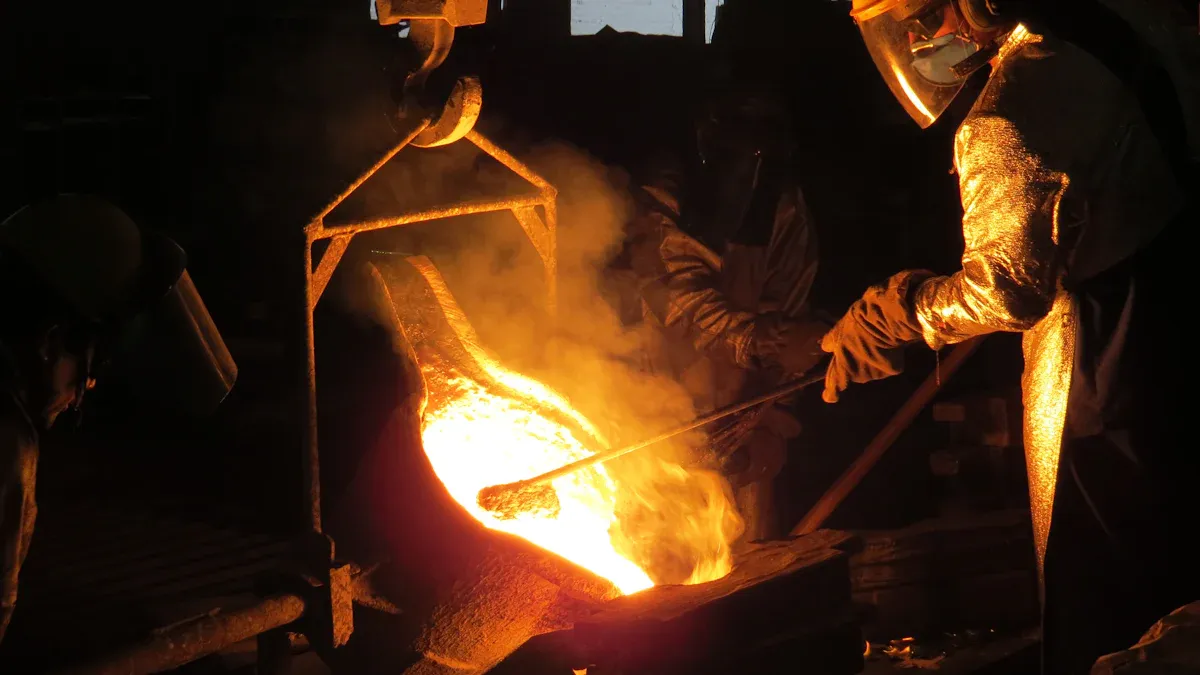
Every metal casting begins with a pattern—a replica of the final piece. In traditional lost wax casting, the pattern forms the center of a mold. Workers coat it with ceramic slurry, heat the assembly, and melt the pattern away. The empty cavity then receives molten metal. This casting process has existed for millennia. Gold artefacts from the Varna Necropolis in Bulgaria (4550–4450 BC) and copper objects from the Nahal Mishmar hoard in Israel (~3500 BC) prove its ancient roots. The Vishnusamhita (5th century AD) instructs: “if an image is to be made of metal, it must first be made of wax.” For most of history, that wax came from natural sources like beeswax, tallow, and tar.
Jewelry Wax: A Classic Choice
Jewelry wax has become a standard mold material for a reason. It burns cleanly during the dewaxing process, leaving almost no ash. Its surface finish is excellent, surpassing most other materials in practical applications. Furthermore, different types of wax offer diverse uses. Sheet wax is suitable for cutting and shaping, while wire and tube wax are flexible like metal and used for making hinges and fittings. Sculpting waxes vary in hardness: green wax maintains sharp edges, suitable for carving; purple wax is suitable for general uses; and blue wax has good flexibility, suitable for making circles.
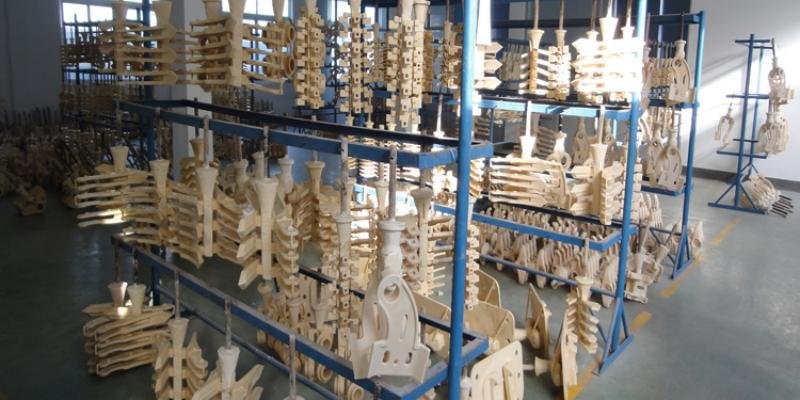
However, jewelry wax also has its limitations. It is relatively brittle, especially for intricate and complex shapes. Parts with complex geometries and thin cross-sections are prone to breakage during handling or mold making. The dewaxing process requires strict control. A typical cycle involves heating the mold to 200°C and holding for 30 minutes, then increasing the temperature to 400°C until most of the wax evaporates, followed by increasing the temperature to 500°C and holding for 30 minutes, and finally increasing the temperature to 650°C and holding for 1 hour—a total of approximately 4 hours. The wax also shrinks during cooling; microcrystalline wax shrinks by about 2% in volume from 40°C to room temperature.
Foam, Resin, and 3D Printing Plastics
Modern production is increasingly turning to alternative materials. Polystyrene foam used in литье по выплавляемым моделям significantly reduces costs. Its density is 42 kg/m³, while microcrystalline wax has a density of 795 kg/m³—significantly lower in both weight and material cost. Foam is suitable for large, simple parts where surface detail is not critical.
Castable resins offer high precision for jewelry and fine art pieces. SLA and DLP printers can achieve pixel sizes of 14 × 19 µm with a minimum layer thickness of 20 µm. These resins burn completely at their ignition point of approximately 350°C, leaving almost no residue. Their tensile strength reaches up to 16.8 MPa, far exceeding the brittleness of wax.
3D printing plastics enables rapid prototyping. FDM printers use lower-cost wax-based consumables, while SLA/DLP systems can produce extremely detailed castable resin models. However, the drawback lies in post-processing. Resin models require extensive manual cleaning, and rigid supports leave raised areas that need sanding. Wax models with dissolvable supports melt in a heated bath, eliminating the need for surface contact.
The choice of these materials depends on project priorities. Foam materials are less expensive for large parts. Resin excels at creating fine details. 3D printing plastics offers advantages such as speed and design flexibility. Each material brings unique advantages to the mold-making process, and understanding these differences helps foundries choose the right solution for their needs.
Selecting the Right Material for Lost Wax Casting
Key Factors: Detail, Burnout, and Cost
Three main factors guide the choice: detail resolution, burnout behavior, and cost. Each material performs differently in these areas.
Detail resolution clearly separates the options. Castable resins and 3D-printed plastics provide the finest details. High-resolution resins can create features as small as 0.3 mm, and special formulas like X-WAX FILIGREE go even smaller. Traditional jewellers wax allows skilled carving but has trouble with very intricate shapes. Polystyrene foam gives the least detail, especially expanded polystyrene, which has a bumpy surface.
Burnout properties show how cleanly the pattern disappears. Wax burns cleanly and quickly, leaving almost no residue. Modern castable resins burn almost as cleanly but need longer cycles and careful temperature control. Foam also burns out easily. The recommended schedule for most patterns follows a similar path: let the invested flask cure at room temperature for 1-2 hours, keep it at 250-300°F for 1.5-3 hours to remove bulk material, raise the temperature slowly at 4°F per minute, then hold at 1350°F for 3-5 hours until the mold looks clean and white. Traditional wax reaches peak temperatures of 700-750°C, while high-temperature alloys may need up to 800°C with phosphate-bonded investment.
Стоимость varies a lot. Foam costs the least, especially for large parts. Wax sits in the middle. Resins cost the most per volume but remove tooling expenses. 3D-printed patterns cut production costs by eliminating expensive tooling that can cost tens to hundreds of thousands of dollars. The technology also shortens production timelines by weeks.
| Материал | Подробнее | Burnout Ease | Relative Cost |
|---|---|---|---|
| Polystyrene foam | Низкий | Easy | Самый низкий |
| Jewellers wax | Средний | Easiest | Низкий |
| Castable resin | Высокий | Умеренный | Самый высокий |
| 3D-printed plastic | Высокий | Умеренный | Средний |
Choose the right material based on project requirements.
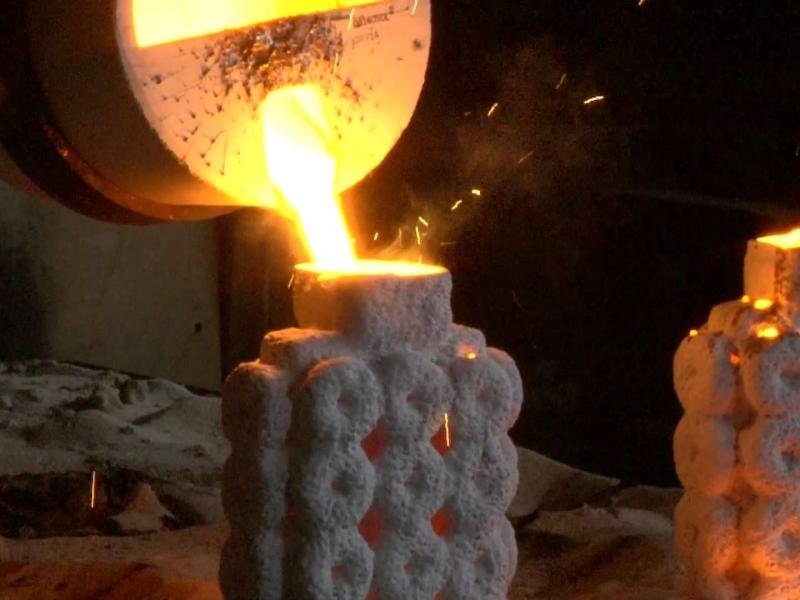
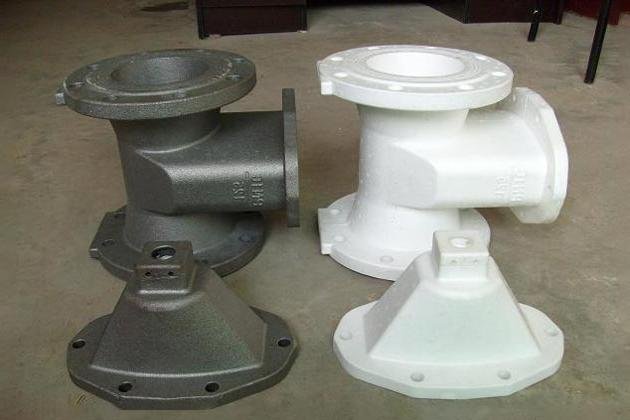
The final choice depends on the specific circumstances. For large, simple parts, such as industrial housings or building components, polystyrene foam (EPS) is the best choice. EPS is suitable for large blocks of material and striking shapes, while XPS maintains sharper lines for creating intricate models. Both materials can be easily cut with a hot wire cutter.
For jewelry or fine art pieces, castable resin provides the required high precision. Silicone molds capture fingerprints and subtle textures well, while lost-wax casting allows designers to create undercuts while keeping them shallow and open. Resin models produce castings with smooth surfaces, high precision, and minimal shrinkage.
For rapid functional prototyping, 3D printing plastics offers unparalleled speed advantages. CAD files can be converted into finished castings within 24 hours, enabling rapid design modifications. This process breaks through the limitations of molds and supports complex shapes up to 1.5 meters in length.
Environmental factors are also important. Wax is derived from natural resources and burns cleanly. Resin, being a synthetic material, has a significant environmental impact. However, 3D printing technology can reduce material waste, and biodegradable materials are gradually emerging.
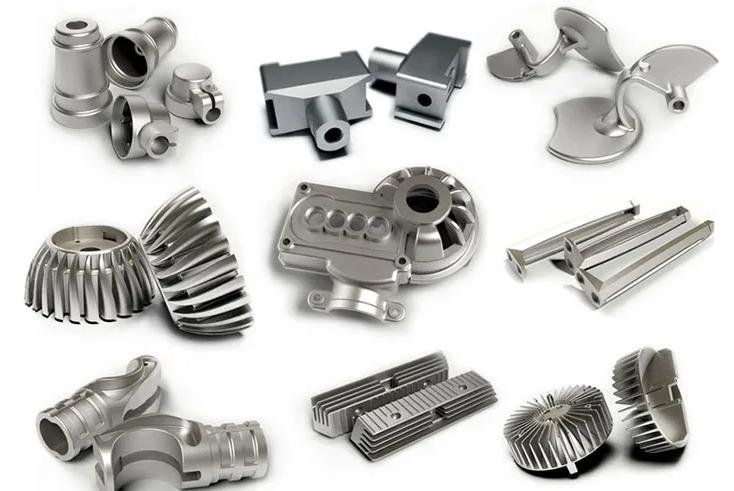
Professional services make the selection process easier. KEMING, with over twenty years of experience in precision casting, excels at handling complex projects and material selection. Their factory produces carbon steel, stainless steel, and cast iron castings for the автомобильный, marine, and construction industries. Engineers match the appropriate casting materials to project requirements, ensuring optimal quality and precision at every stage of the casting process.
The lost wax casting process depends on project needs. Foam suits large metal parts and creates a simple mold. Resin provides precision for jewellery and wax carving. 3D printing technology speeds production. Beginners should start with foam. Professionals need resin. For complex orders, KEMING ensures quality and turnaround. Future trends include single-crystal superalloys processed via investment casting.
ЧАСТО ЗАДАВАЕМЫЕ ВОПРОСЫ
How does material choice affect the wax to metal conversion process?
The pattern material decides how cleanly the mold cavity forms. Wax and foam burn out fully, leaving exact cavities. Resins need longer burnout times but still give great results. Each material changes the final casting quality in its own way.
What makes investment molding different from other casting methods?
Investment molding builds a ceramic shell around the pattern. This shell picks up fine details and gives smooth surfaces. The method handles complex shapes that other techniques cannot. It also works with high-temperature alloys.
How does one ensure production consistency across multiple castings?
Production consistency depends on controlling pattern sizes and burnout conditions. Digital methods like 3D printing make identical patterns every time. Professional services check each step closely. This cuts down differences between batches.
Does wax removal require special equipment?
Standard burnout furnaces remove wax effectively. The process uses a controlled temperature schedule. Most shops already have the needed equipment. No extra specialized machines are required for this step.