EN
EN  DE
DE  ES
ES  FR
FR  PT
PT  RU
RU 
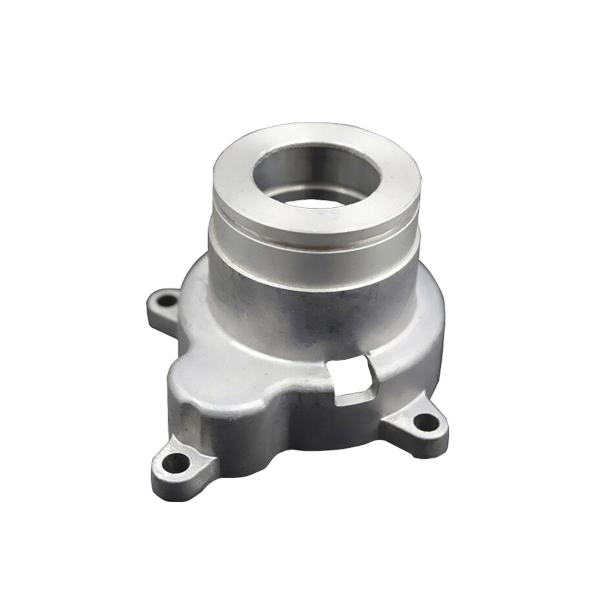
The best wax for lost wax casting varies by application, with industry-standard graded pattern wax and non-filled pattern wax dominating modern investment casting production.
For general detailed jewelry and precision industrial parts, blue wax is the best wax for lost wax casting for ultra-fine detail retention and low shrinkage. For high-strength structural patterns requiring sharp edges, green wax is the top choice. For flexible, crack-resistant molds, purple wax performs best. Non-filled pattern wax is widely adopted for high-precision casting requiring zero ash residue and clean burnout. Auxiliary wax types including microcrystalline wax, soft sculpting wax, paraffin wax and beeswax serve modification, rapid shaping and traditional casting scenarios respectively.
Key Takeaways
- Select the best wax for lost wax casting based on pattern detail, structural strength and burnout requirements; blue wax excels in fine details, while green wax delivers maximum rigidity.
- Non-filled pattern wax is preferred for high-precision industrial lost wax casting, featuring low shrinkage and zero residual ash.
- Maintain standard wax thickness (1.5–2 mm for ring bands, ≥0.8 mm for fine details) to prevent incomplete metal filling and casting defects.
- Preserve all casting wax in temperature-controlled environments (64°F–77°F) with 40%–50% humidity to avoid deformation.
Wax Types for Lost Wax Casting
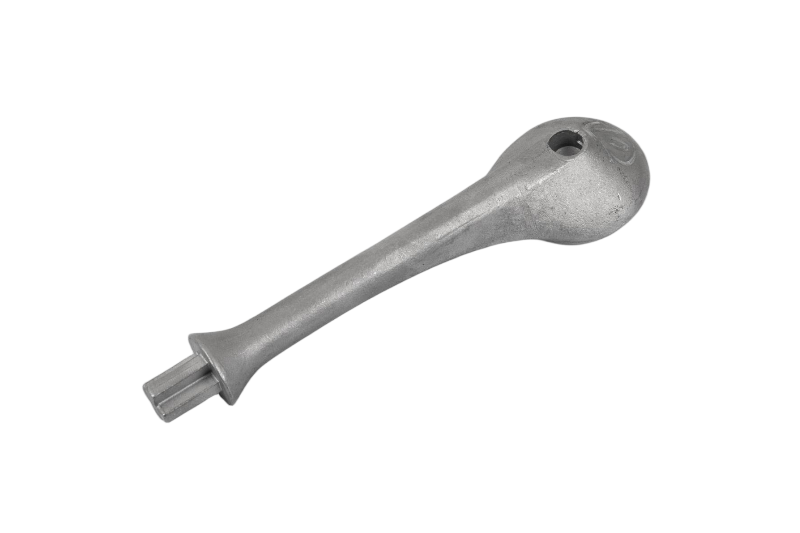
Choosing the right wax is crucial for lost wax casting. Each color and type of wax has unique properties, making it more suitable for different projects. Artists and engineers examine the wax’s hardness or softness, and how easily it bends, melts, or retains detail. The following sections introduce the main types of wax commonly used in jewelry and industrial applications.
Blue Wax | Best Detailed Wax for Lost Wax Casting
Blue wax is ideal for showcasing fine details and is often used in the making of jewelry and small mechanical parts. This wax forms a smooth surface and has extremely low shrinkage. After burning, blue wax leaves almost no residue. The table below lists its main properties:
| Property | Value |
|---|---|
| Hardness | 53 (Shore “D” Scale) |
| Penetration @77°F, 150g | 13.0 dmm |
| Specific Gravity | 0.92 |
| Specific Density | 0.92949 g/cm³ |
| Flash Point (COC) | 575°F |
| Melt Point (Ring & Ball Method) | 240°F (116°C) |
| Viscosity @ 270°F | 3,035 cP |
| Volumetric Shrinkage | 5% typical |
| Ash Content | 0.0066% |
| Flexural Modulus | 479 Average (N/mm) |
| Coefficient of Thermal Expansion | 9.5 x 10⁻⁵ (in./in. ºF) |
| Coloring | blue dye, permanent, oil base |
Green Wax | High-Strength Wax for Lost Wax Casting
Green wax is hard and has sharp edges, harder than most other waxes, making it ideal for carving intricate designs. Artists use green wax to create crisp lines and textures that are difficult to achieve with metal tools. Green wax is also more flexible when heated, which helps prevent it from breaking. Artists can use green wax to create delicate patterns that are difficult to achieve with metal.
Purple Wax | Flexible Crack-Resistant Casting Wax
Purple wax is both tough and flexible, able to hold its shape, and has extremely low shrinkage. Purple wax also has a low expansion rate when heated, so it won’t crack when burned. It leaves no ash, resulting in a clean and tidy final product. The table below lists the main characteristics of purple wax:
| Property | Effect on Casting Results |
|---|---|
| Outstanding Dimensional Stability | Maintains precise geometry with minimal shrinkage, reducing post-processing needs. |
| Thermal Stability | Allows for long-term storage and batch production planning, ensuring availability. |
| Low Thermal Expansion | Prevents issues like shell cracking during burnout, ensuring a smooth casting process. |
| Tough and Flexible Wax | Provides mechanical strength for detailed work, enhancing the quality of the final product. |
| Zero Ash Residue | Ensures clean burn-out, preventing contamination of the final metal surface. |
| Seamless Workflow Integration | Facilitates the use of wax models alongside traditional parts, streamlining the casting process. |
Purple wax is suitable for applications requiring strength and flexibility, such as crafting delicate jewelry and mechanical parts.
Microcrystalline Wax
Microcrystalline wax has a melting point between 145-195°F, depending on the type of wax. This wax is strong and does not melt easily, helping the wax model remain stable during operation. Microcrystalline wax shrinks less when cooled, resulting in more precise models. Its uniform texture ensures consistent quality even for small parts.
| Property | Benefit |
|---|---|
| Higher melting point | Greater strength and resistance to damage during handling. |
| Stability | Less shrinkage, more accurate wax patterns. |
| Homogeneous structure | Consistent quality for precision industries. |
Soft Wax
Soft wax is easy to shape by hand, making it ideal for creating natural forms and quick modifications. Artists often use soft wax to create smooth shapes. However, soft wax cannot maintain sharp details, tends to sag at high temperatures, and thinner sections are prone to falling apart. Therefore, it is best suited for creating thick, simple models.
Parasy
Parasy has a melting point of 50-60°C. This wax has good fluidity and is easy to sculpt. Paraffin wax is also suitable for low-temperature casting, such as with aluminum or copper. It is hard and has large crystals, making it less suitable for hand shaping, but sufficient for creating simple shapes.
Beeswax
Beeswax has been used for lost wax casting for a long time. Artists shape beeswax, cover it with clay, and bake it to make a mold. The table below compares beeswax to other waxes:
| Wax Type | Melting Point (°F) | Hardness Description |
|---|---|---|
| Beeswax | 142°-150°F | Hard, varies based on flower source |
| Microcrystalline Wax | ~160°F | Medium-soft, pliable, slightly sticky |
| Paraffin Wax | 135°-140°F | Hard, large crystalline structure, not suitable for hand modeling |
Beeswax is still used by artists for its natural feel and easy shaping. It is loved for old-style and art projects.
Non-Filled Pattern Wax for Precision Lost Wax Casting
Non-filled pattern wax is a high-purity industrial wax formula specially engineered for premium lost wax casting. Unlike ordinary blended wax, it contains no inorganic filler particles, ensuring zero ash residue, ultra-low shrinkage, and complete burnout.
Core Advantages
- No filler impurities to avoid pinhole defects on finished metal surfaces
- Stable thermal expansion to prevent shell mold cracking
- Ideal for aerospace, medical and high-end jewelry precision casting
- Compatible with all standard investment casting shell materials
Choosing Wax for Projects
Thick Wax vs. Thin Wax
Choosing the appropriate wax model thickness is crucial for lost-wax casting. Artists and engineers typically consider the wax model’s thickness before casting. They aim to keep the ring band at least 1.5-2 mm thick. For other details, they avoid thicknesses less than 0.8-1 mm. This helps prevent casting failure. Thicker wax models require more metal, so the thickness is sometimes adjusted to save gold or other metals. If the wax model is too thin, the molten metal may not fill all the space, causing problems. Shrinkage also occurs during casting, so careful planning is essential.
Fine Sculpture
Hard wax is best suited for fine sculpting. Green wax stands out for its ability to maintain sharp edges and fine lines. Artists use it to create clear patterns and textures. Blue wax also helps create smooth surfaces and rounded shapes. For pieces requiring both strength and flexibility, purple wax strikes a good balance. Hard wax is generally chosen for fine details, while soft wax is used for larger, less detailed areas.
Repair and Modification
Repairing and modifying wax models requires the use of special waxes. The table below lists the best waxes for each type of repair need:
| Wax Type | Description | Best Use |
|---|---|---|
| File-a-wax | Easy to file and shape, great for intricate work | Repairs needing sharp edges and details |
| Green | Very hard, keeps sharp edges, ideal for carving | Intricate carvings and engraving |
| Purple | Hard with some flexibility | Versatile repairs |
| Blue | Less hard, more flexible | Rounded surfaces and simple modifications |
| Turquoise | Strong and flexible, smooth finish | Complex repairs needing durability |
| Sheet wax | Good for cutting and modeling | Basic repairs and shaping |
| Wax profile wire | Can bend and twist, used for hinges and structural changes | Structural modifications |
Wax Properties
Hardness and Flexibility
Hardness and flexibility are important for lost wax casting. Hard wax lets artists make sharp lines. It also helps polish surfaces to look smooth. Flexible wax is good for bending models. It stops them from breaking when shaped. Clean burn-out keeps the mold safe. The table below shows how these traits help:
| Characteristic | Impact on Casting Outcome |
|---|---|
| Hardness | Helps carve and polish for a smooth finish. |
| Flexibility | Makes shaping easier and keeps the mold strong. |
| Clean burn-out | Keeps the mold safe during casting. |
Melting Point
Melting point tells how hot wax must be to melt. Different wax types melt at different temperatures.
| Wax Type | Melting Point (°C) |
|---|---|
| Paraffin-rich injection wax | 45–70 |
| Microcrystalline wax blends | 60–95 |
| Pattern wax (engineered blends) | 55–95 |
| Beeswax / natural wax blends | 60–65 |
| Hot-melt thermoplastic patterns | 120–200 |
| 3D-printed castable resins | glass transition ~50–120; decomposition 200–600 |
Surface Finish
Surface finish refers to the smoothness of the wax model. A smooth wax model results in a cleaner casting with fewer defects. Different wax formulations affect the shape retention and flowability of the wax model. Problems in the wax model stage can lead to issues with the shell and the casting. Choosing the right wax can help artists avoid mistakes and achieve a high-quality finished product.
Practical Tips for Lost Wax Casting
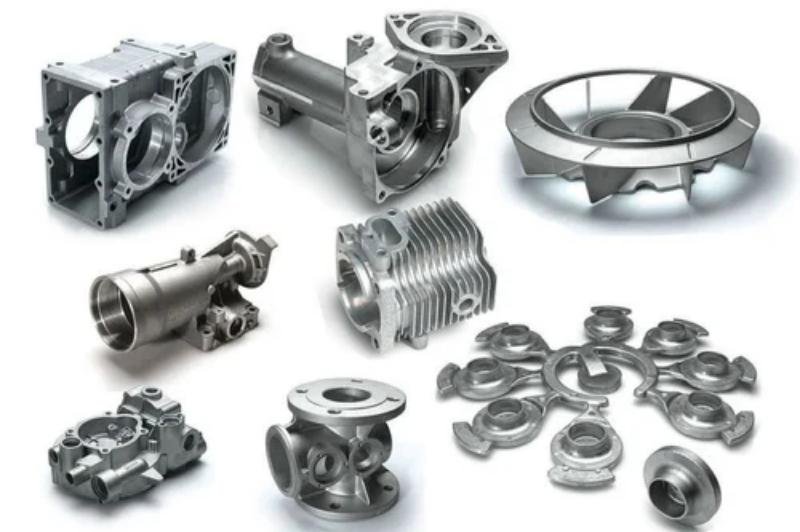
Handling and Storage
Proper handling and storage ensure the safety of waxes. The storage temperature for waxes should be maintained between 64°F and 77°F. Humidity should be maintained between 40% and 50%. Dark-colored containers extend the shelf life of waxes. Opaque containers block light, helping to protect the wax. Clean air prevents dust from adhering to the wax. Airtight containers are the best choice for storing waxes. Always label each container with the type of wax it contains.
| Storage Factor | Recommended Conditions |
|---|---|
| Temperature | 18°C to 25°C (64°F – 77°F) |
| Humidity | 40% to 50% |
| Light Exposure | Store in dark, opaque containers |
| Air Quality | Keep free from dust and contaminants |
| Storage Containers | Use airtight containers, label appropriately |
Avoiding Common Problems
Lost wax casting can lead to problems if not handled properly. Defects can occur if the artist uses the wrong wax or technique. Some common problems include:
An overly narrow gating system can cause defects. The gating system should be wider than the largest part of the wax model.
Incorrect mixing of the embedding material can cause problems. Always measure water and powder according to the instructions.
Improper temperature can result in incomplete castings. Closely monitor and control the temperature at each step.
Using recycled metal can cause defects. Using fresh alloys yields better results.
Improper wax burning can cause pinholes. Following the correct wax burning procedure can prevent this.
Choosing the Right Wax for Your Skill Level
Choosing the right wax is crucial for both beginners and experts. The table below lists waxes suitable for different skill levels.
| Wax Type | Suitability for Beginners | Suitability for Experienced Users |
|---|---|---|
| Blue | Good middle of the road wax | Preferred for detailed work |
| Purple | Flexible, forgiving, less detail | Not recommended for detailed work |
| Green | Not ideal for beginners | Great for detail and sharp edges |
Beginners typically use blue wax because it’s easy to shape and offers excellent detail. Purple wax is suitable for those seeking flexibility. Green wax is best suited for experts who require sharp lines and fine details.
Blue wax is ideal for creating intricate lost-wax castings. Green wax is better suited for building robust models. Jewelry makers choose waxes with good fluidity and high detail. Factory workers require waxes with high strength and heat resistance. Artists experiment with different waxes to find the one that best suits their needs.
FAQ
What is the best wax for lost wax casting overall?
Blue wax is the overall best wax for lost wax casting for most jewelry and precision parts. For industrial high-strength components, green wax is optimal, while non-filled pattern wax is the top choice for ultra-precision defect-free casting.
What is non-filled pattern wax used for in lost wax casting?
Non-filled pattern wax is a high-purity filler-free casting wax designed for precision lost wax casting, delivering clean burnout, minimal shrinkage and zero surface contamination for high-end industrial and medical castings.
Which lost wax casting wax is best for beginners?
Blue wax is the most beginner-friendly wax for lost wax casting due to balanced flexibility, easy carving and stable detail retention.
Which wax is best for sharp details in lost wax casting?
Green wax provides the sharpest edges and finest intricate details, widely used for professional sculpting and high-precision pattern making.