EN
EN  DE
DE  ES
ES  FR
FR  PT
PT  RU
RU 

As a high-precision near-net-shape forming process specified under ASTM casting standards, investment casting enables custom metal component manufacturing across automotive, marine, railway, agricultural, mining, military OEM and art decoration sectors. Qualified foundries produce bespoke precision components from carbon steel, stainless steel, cast iron, aluminum, brass, bronze and high-performance superalloys to meet diversified industrial tolerance requirements.
| Casting Method | Market Share (%) | Growth Characteristics |
|---|---|---|
| Sand Casting | 60 | Low cost, very flexible, grows in a steady way |
| Die Casting | 22 | Grows fast, used a lot for cars and electronics |
| Investment Casting | 10 | Grows steadily, good for detailed and special parts |
| Evaporative Casting | 8 | Grows at a medium rate, good for the environment, makes complex parts |
Key Takeaways
- Investment casting delivers high-strength custom engineered components for automotive, marine, agricultural and defense industries. Controlled shell casting procedures ensure precise dimension and premium surface finish complying with ASTM, DIN and JIS international standards, supporting flexible production from small custom prototypes to large batch orders.
Industries Served by Investment Casting

Automotive and Transportation
Investment casting is an indispensable manufacturing route for core automotive structural and power components, covering suspension assemblies, engine brackets, flywheels, rocker arms, brake rotors, wheel hubs, chassis brackets and transmission gears. Advanced lost-wax & shell mold casting realizes intricate irregular geometries, delivering lightweight yet high-tensile parts for fuel efficiency improvement and driving safety optimization. The table below shows how investment casting helps cars:
| Aspect | Investment Casting Benefits |
|---|---|
| Precision | Makes parts with exact shapes. |
| Weight | Parts are light but strong. |
| Performance | Helps cars run better and save fuel. |
| Quality | Meets high standards for safety and use. |
Finished castings go through complete dimensional and mechanical inspection in-house to satisfy customized and bulk procurement demands from automotive OEM suppliers.
Marine and Railroad
Marine and railway components require outstanding mechanical durability and seawater corrosion resistance, including mooring cleats, pipe fittings, hinges and partial propeller accessories. High-carbon steel, austenitic stainless steel and nickel-base corrosion-resistant alloys are preferred raw materials; all dimensional and surface texture parameters are implemented per ISO 4287, ISO 1302 and ASME B46.1 international surface roughness specifications for harsh outdoor and seawater working conditions.
Note: Above-mentioned specifications define industrial surface texture measurement & geometric tolerance test rules for casting inspection per ASME & ISO official document.
Agriculture and Mining
Investment casting helps farms and mines by making strong parts. KEMING makes hinge brackets, anchors, roller heads, waste removal equipment, measuring and control devices, pump valves, levers, handles and latches, pivots, rotary disks, sprinklers and spreaders, chain sprockets, clutch pins, and knives. The table below shows some farm and mining parts made by investment casting:
| Part Description | Weight | Size | Casting Method | Finishing Process |
|---|---|---|---|---|
| Silicon bronze baling twine component | 0.5 lbs | 2.5″ x 2.5″ x 3″ | Investment Casting | None |
| Carbonitrided alloy steel slip-clutch ring | 0.6 lbs | 3″ x 3″ x 0.8″ | Investment Casting | None |
All finished castings undergo mechanical property testing to adapt to severe continuous working scenarios of farm and mining equipment, with flexible manufacturing solutions for custom-designed small batches and large-scale bulk projects.
Military and OEM Applications
Defense and industrial OEM procurement requires high-temperature resistant superalloy castings for gas turbine assemblies, aerospace structural frames and land & naval equipment components. Precision investment casting optimizes alloy forming performance; full-process material and non-destructive inspection supports drawing-based customized component development for defense-grade production.
Art, Jewelry, and Custom Parts
Investment casting helps make detailed and artistic items. KEMING makes idols, ornaments, jewelry, and artwork. These items have history and show culture. Artists use investment casting for hand-carved decorations, jewelry, and custom parts. The process keeps tiny details and lets artists change designs.
- Small details are copied from the pattern to the final piece.
- Artists can change designs and make tricky shapes.
- Many metals can be used for color and strength.
- The process helps set gemstones exactly.
- Artists and clients can make unique designs.
Materials and Product Types in Investment Casting
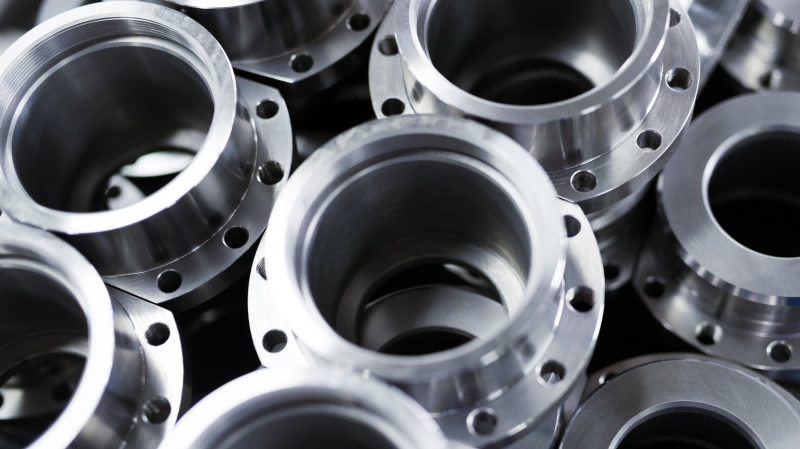
Investment casting foundries like KEMING use many materials. They make very exact parts for different industries. The investment process lets companies make shapes that are hard to create. These shapes have tight tolerances and smooth surfaces. These methods help make parts with great tolerances and surface quality. They work for both regular and custom parts.
Stainless Steel and Carbon Steel Parts
Stainless steel and carbon steel are used the most. Stainless steel does not rust because it has chromium. Chromium makes a layer that protects the metal. Stainless steel also handles heat well and feels smooth. Carbon steel is strong and tough. It costs less than stainless steel. Carbon steel is easy to cut and heat treat.
Industries that use these parts are:
- Aerospace and defense: Planes and missiles need strong, rust-free parts.
- Automotive and industrial: Exhausts and pumps need to last a long time.
- Marine hardware: Rust resistance is important for boats.
- Medical and pharmaceutical: Tools must be clean and safe for people.
- Food and beverage: Machines must be clean for food.
- Processing equipment: Some machines need to handle high heat.
- Agriculture: Farm machines need strong parts.
Aluminum, Brass, and Bronze Castings
Aluminum, brass, and bronze are also common. Each one has special features for different uses.
| Material | Applications |
|---|---|
| Aluminum | Aerospace, cars, electronics, machines (light, does not rust) |
| Brass | Decorations and electric parts (looks nice, conducts electricity, does not rust) |
| Bronze | Pump and valve parts, boat parts, bearings, planes, and defense |
Aluminum castings are light and do not rust. They are good for planes and cars. Brass castings look nice and conduct electricity. They are used for decorations and electric parts. Bronze, especially aluminum bronze, is strong and does not wear out fast. It is used for boat parts, pumps, and bearings.
The properties of these alloys help decide where to use them:
| Alloy Type | Strength | Corrosion Resistance | Wear Resistance | Fluidity | Applications |
|---|---|---|---|---|---|
| Aluminum Bronze | High | Excellent | Moderate | Good | Boat parts, plane parts, machines |
| Silicon Bronze | Moderate | Good | Moderate | High | Pumps, valves, plumbing parts |
| Phosphor Bronze | Moderate | Good | Excellent | Moderate | Electric connectors, springs, stressed parts |
| Tin Bronze | High | Excellent | High | Moderate | Bearings, pump bodies, strong parts |
Superalloys and Specialty Metals
Superalloys and special metals are used for tough jobs. These include nickel-based and cobalt-based superalloys, titanium alloys, and zirconia-based materials. Superalloys are very strong. They can handle high heat, rust, and wear. They keep their strength even above 1000°C. This makes them good for gas turbines, plane parts, and nuclear reactors.
Industries that use superalloy castings are:
- Aerospace: Turbine blades and engine parts need to handle heat.
- Energy: Gas turbines and nuclear reactors need strong parts.
- Medical: Implants and fake body parts need to be safe and strong.
- Automotive: Fast cars need strong, special parts.
KEMING uses advanced casting to work with these metals. They design molds carefully and use hot isostatic pressing. They also use CAD and computer tests to make sure parts are exact and have no defects.
Common Product Types (Valves, Blades, Implants)
Investment casting is great for making tricky parts like valves, turbine blades, and medical implants. These parts need to be very exact and smooth.
| Product Type | Applications |
|---|---|
| Turbine Blades | Planes and machines that need tricky shapes |
| Dental Implants | Medical parts that must fit and be safe |
| Valves | Used in machines to control fluids |
| Orthopedic Implants | Medical parts that must last and fit well |
| Impellers | Used in planes and machines |
Per ASTM B487 investment casting specification, standard dimensional tolerance can reach ±0.003~0.005 inch for precision components; typical as-cast surface roughness ranges 32~63 μin Ra (0.8~1.6μm), consistent with ANSI/ASME B46.1 surface texture criteria. The process works with many metals. It can make thin walls and inside shapes. This is important for parts that must work well and last.
Custom and Precision Components
Many companies need special and exact parts. Investment casting is good for these needs.
| Benefit | Description |
|---|---|
| Versatility of materials | Works with many alloys, even hard-to-cut ones. |
| Tight tolerances | Makes parts with close sizes, better than other methods. |
| Exceptional surface finish | Parts are smooth, so less extra work is needed. |
| Faster production, lower cost | Makes parts faster and cheaper because less work is needed. |
| Low tooling costs | Tools cost less, good for small test runs. |
| Repeatability | Every part is the same quality. |
| Sustainability | Makes parts close to final shape, so less waste. |
KEMING uses lost wax and shell mold casting to make exact parts. Their CNC machines make parts even more accurate and smooth. Lost wax casting makes parts with smooth surfaces and exact sizes, even with thin walls. Silica sol lost wax casting mixes old ways with new, making it good for very exact parts.
Burning out the mold well is important. It stops gas bubbles and keeps the metal strong for alloys like stainless steel, bronze, cobalt-chrome, or titanium.
Investment casting foundries like KEMING make many kinds of castings for different industries.
- Investment casting can make parts with close sizes and tricky shapes.
- The surfaces of these parts are smooth.
- Companies use this process to get custom and strong parts.
| Certification | Description |
|---|---|
| ISO 9001 | Quality management systems |
| IATF 16949 | Automotive quality management |
FAQ
Which industries use precision casting?
Many companies use precision casting. It is used in the automotive, shipbuilding, train, farm, mining, military, OEM (Original Equipment Manufacturer) industries, and even in art and jewelry.
How does precision casting improve product quality?
Precision casting produces parts with precise shapes and smooth surfaces. Factories can customize designs according to stringent quality standards.
Can factories accept custom precision casting orders?
Factory can produce custom precision casting parts. They utilize advanced processes and CNC machine tools to meet specific needs.