EN
EN  DE
DE  ES
ES  FR
FR  PT
PT  RU
RU 
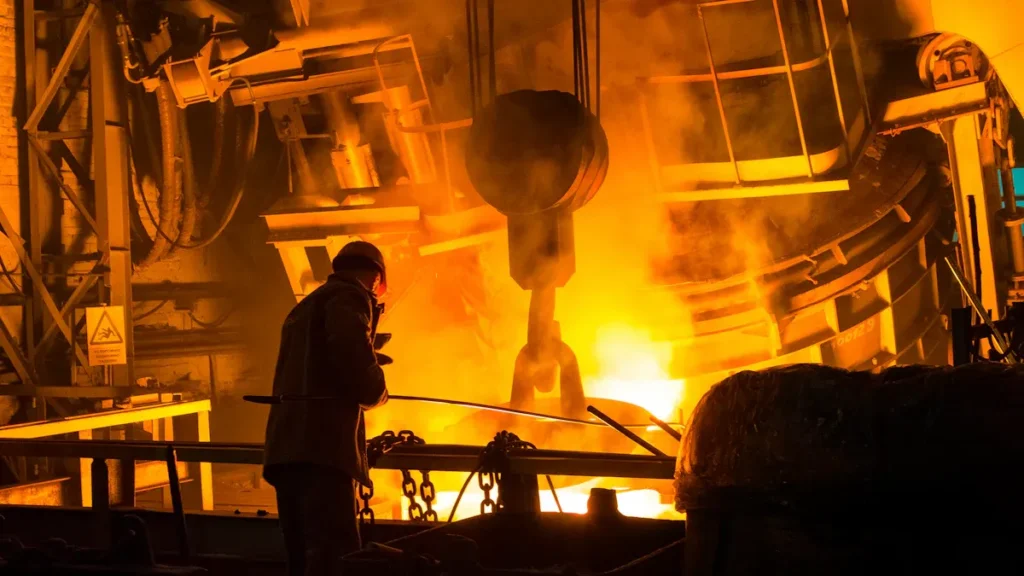
Permanent mold and investment casting are not the same. They use different molds and make parts with different complexity. Knowing these differences helps people pick the right process.
- Permanent mold casting works well for making many parts fast.
- Investment casting is good for making parts with complex shapes.
- The material you pick can change which process you use.
Key Takeaways
- Permanent mold casting is great for making many simple parts fast. It uses a mold that can be used again, so it saves money when making lots of parts.
- Investment casting is best for making parts with tricky shapes and fine details. It uses a mold that is thrown away after one use, so it can make very detailed and smooth parts.
- Picking the right casting method depends on how hard the part is to make, how many you need, and how much money you have. Think about what your project needs before you choose which process to use.
Permanent Mold and Investment Casting Overview
What is Permanent Mold Casting?
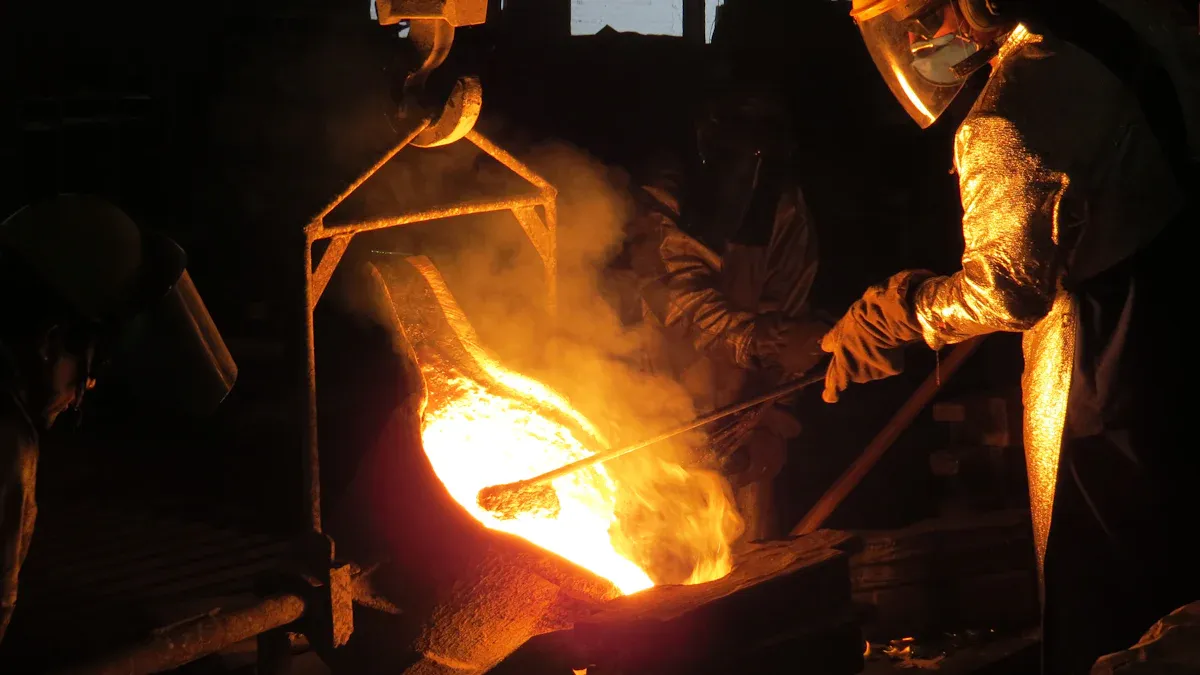
Permanent mold casting uses a tough mold that can be used many times. The mold is made from strong stuff like steel or cast iron. Workers pour hot, melted metal into the mold. They wait for the metal to cool down. Then, they take out the finished part. This way, people can make lots of the same part fast. The mold does not break after one use. It is good for making many parts in a short time. This process works best for shapes that are simple or not too hard.
The table below lists the main steps in permanent mold casting:
| Step | Description |
|---|---|
| 1 | Design and build a reusable steel tool |
| 2 | Preheat and coat the mold |
| 3 | Pour molten metal into the mold |
| 4 | Allow casting to solidify and eject |
| 5 | Perform secondary operations |
Molds are made from gray cast iron, steel, bronze, or graphite. These materials do not get damaged by heat or use. Because of this, the mold can last for many uses.
What is Investment Casting?
Investment casting uses a mold that is thrown away after one use. Workers first make a wax copy of the part. They cover the wax with a hard ceramic shell. Then, they melt the wax and take it out. Next, they pour hot metal into the ceramic shell. When the metal cools, they break the mold to get the part. Each mold is only used one time. This way, people can make parts with lots of small details.
Here are the main steps in investment casting:
| Step | Description |
|---|---|
| 1 | Create the wax pattern |
| 2 | Build the ceramic mold |
| 3 | Remove the wax |
| 4 | Cast the metal |
| 5 | Put on the finishing touches |
Molds for investment casting are made from tool steel, cast iron, graphite, or copper-based alloys. These materials can handle very high heat and stress.
Both permanent mold and investment casting help people make strong metal parts. The biggest difference is that permanent mold casting uses the same mold again, but investment casting uses a new mold each time.
Permanent Mold Casting Process
How Permanent Mold Casting Works
Permanent mold casting uses a strong mold that can be used again. Workers follow steps to make each metal part:
- Mold Preparation: Workers clean the mold and heat it up. This removes dirt and gets the mold to the right temperature.
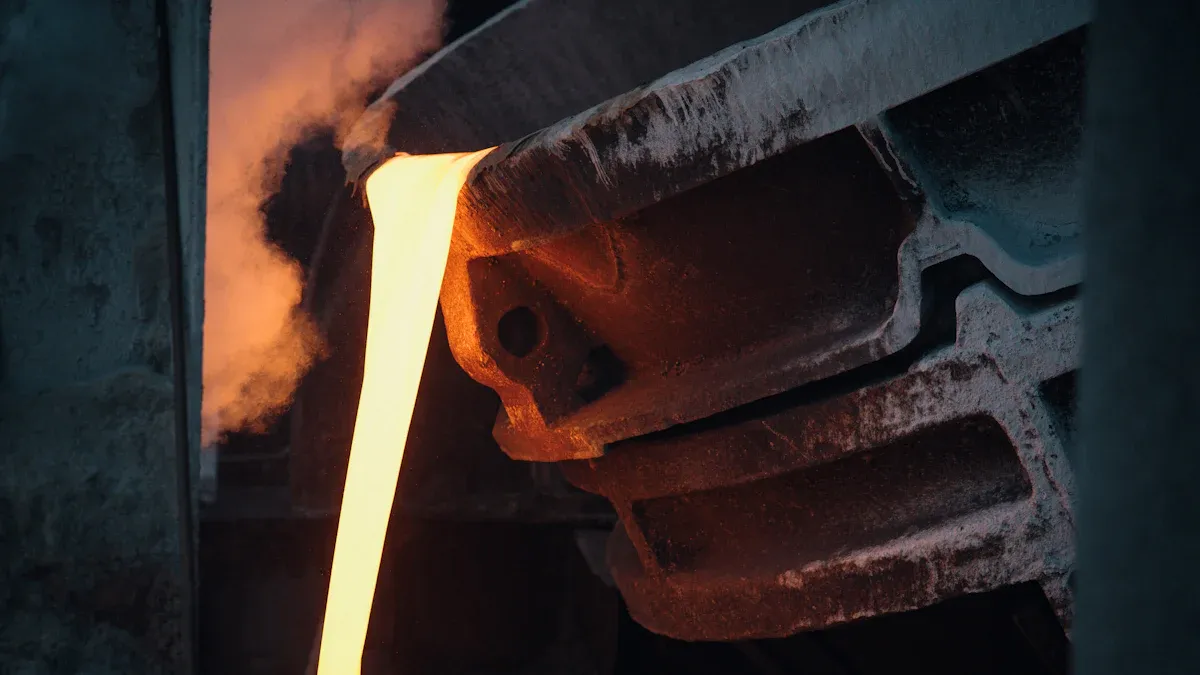
- Metal Pouring: They pour hot, melted metal into the mold. They do this carefully so the metal fills the space.
- Solidification: The metal cools down and gets hard inside the mold.
- Mold Opening: Workers open the mold to get the finished part out.
- Casting Ejection: They take out the part and get the mold ready for the next use.
Note: Heating the mold first helps the metal fill every space. It also stops cracks from forming in the casting.
This process lets workers make many of the same part quickly. The mold can be used over and over, so it is good for making lots of parts.
Materials Used in Permanent Mold Casting
Permanent mold casting works best with metals that melt at lower heat. Some common metals are:
- Aluminum
- Zinc
- Copper
- Magnesium
- Brass
- Nickel
- Bronze
These metals flow into the mold easily and make strong parts. The mold is usually made from steel or cast iron. These materials can handle the heat and pressure many times.
Applications of Permanent Mold Casting
Many businesses use permanent mold casting to make important parts. This process works best for shapes that are simple or not too hard. It does not work well for very tricky designs. The table below shows where permanent mold casting is most helpful:
| Industry | Components Produced |
|---|---|
| Automobile | Engine blocks, vehicle parts |
| Marine | Aluminum and stainless steel components for harsh conditions |
| Construction | Manhole covers, structural supports |
| Aviation | Turbine blades, engine housings |
| Military | Firearms, equipment |
| Mining | Wheel hubs, piston shafts |
| Electrical | Heat sinks, enclosures |
| Oil & Gas | Pump and valve parts |
| Sporting Goods | Baseball bats, furniture parts |
Permanent mold casting helps companies make strong, good-quality parts for many jobs.
Investment Casting Process
How Investment Casting Works
Investment casting uses a mold that is thrown away after use. Workers start by making a wax shape that looks like the final part. They put these wax shapes together on a main stick. Next, they dip the wax shapes in a wet ceramic mix. Then, they cover them with sand to make a hard shell. The shell dries and gets strong. Workers heat the shell to melt out the wax. This leaves an empty space inside the shell. They pour hot metal into the shell. When the metal cools, they break the shell to get the part out. The steps below show how this works:
- Make and put together the wax shapes.
- Attach the wax shapes to a main stick.
- Dip and coat the wax shapes to build the shell.
- Heat the shell to melt out the wax.
- Pour melted metal into the shell.
- Break the shell and clean the part.
This way, workers can make parts with lots of small details. It is good for making parts that need to be very exact.
Materials Used in Investment Casting
Investment casting can use many kinds of metals. Some common ones are:
- Stainless steel is strong and does not rust.
- Carbon steel is tough and lasts a long time.
- Alloy steel is strong and hard to break.
- Aluminum alloys are light and easy to use.
- Copper-based alloys are good for electric parts.
- Nickel-based alloys can handle high heat.
- Titanium alloys are used for medical and sea parts.
KEMING uses special machines to work with these metals. They make sure the parts are strong and work well for many jobs.
Applications of Investment Casting
Many businesses use investment casting to make parts with lots of detail. The table below shows some ways it is used:
| Industry | Application Description |
|---|---|
| Firearm | Small and detailed parts for guns |
| Medical & Dental | Tools and implants that must be very exact |
| Locks | Strong and exact parts for locks |
| Food Production | Machine parts like slicers and grills that last long |
| Hydraulic & Pneumatic | Valves and pumps for moving fluids |
Investment casting helps companies make parts that are very detailed and meet high standards.
Permanent Mold vs. Investment Casting
Process Comparison
Permanent mold and investment casting use different ways to make metal parts. Permanent mold casting uses a strong mold that can be used again. Workers pour hot metal into the mold. They wait for it to cool. Then, they take out the part. This way is fast and easy. Investment casting uses a mold that is thrown away after one use. First, workers make a wax shape. They cover it with ceramic. Next, they melt out the wax. Then, they pour in the metal. This way takes more time and has more steps.
- Permanent mold casting is quicker and easier because the mold is used many times.
- Investment casting takes longer and needs more steps, like making a wax shape and a ceramic shell.
The table below shows how often each mold can be used:
| Casting Method | Mold Reusability |
|---|---|
| Permanent Mold Casting | Reusable metal molds for multiple castings |
| Investment Casting | Disposable molds requiring new molds for each part |
Design Flexibility and Precision
Permanent mold and investment casting let you make different kinds of shapes. Permanent mold casting works best for simple shapes. It cannot make parts with lots of small details. Investment casting lets you make more complex shapes. It can make thin walls, tiny holes, and fine features.
The table below compares how easy it is to make different shapes:
| Casting Method | Design Flexibility | Limitations |
|---|---|---|
| Permanent Mold Casting | Limited | Higher tooling costs, best for simple designs |
| Investment Casting | Greater | Good for complex shapes and many types of metals |
Investment casting also makes parts that fit together very well. It gives higher accuracy. Permanent mold casting is good but may not have as much detail.
| Casting Method | Dimensional Accuracy | Surface Finish (RMS) |
|---|---|---|
| Permanent Mold Casting | Moderate | 150-250 RMS |
| Investment Casting | High | 32-90 RMS |
Cost and Production Volume
Cost and how many parts you need help you choose the right method. Permanent mold casting costs more at the start. Making the strong mold is expensive. This way is best for making lots of parts. The price for each part goes down when you make many.
Investment casting costs less to start, especially for simple parts. It is good for making a few parts or custom shapes. The table below shows how much the molds cost:
| Cost Factor | Investment Casting | Permanent Mold Casting |
|---|---|---|
| Tooling (low complexity) | $500 – $5,000 | $20,000 – $60,000 |
| Tooling (high complexity) | $5,000 – $30,000 | $60,000 – $150,000 |
Permanent mold casting is better for making lots of the same part. Investment casting is better for small or medium amounts or tricky shapes.
Surface Finish and Quality
Surface finish and quality are important for many jobs. Permanent mold and investment casting give different results. Investment casting makes smoother parts with more detail. It also has fewer problems during production.
| Casting Method | Typical As-Cast Ra (μm) | Typical As-Cast Ra (μin) |
|---|---|---|
| Investment Casting | 1.6 – 3.2 | 63 – 125 |
| Permanent Mold Casting | 1.6 – 6.3 | 125 – 250 |
- Investment casting has fewer defects. This means less fixing and lower costs.
- Permanent mold casting is good for making the same part many times. It may not have as much detail as investment casting.
Tip: Pick investment casting if you need smooth parts, high detail, or tight fits. Pick permanent mold casting for simple shapes and making many parts.
Permanent mold and investment casting are both useful ways to make metal parts. Each way is good for different jobs. Knowing the differences helps you choose the best one for your needs.
Permanent Mold vs. Investment Casting: Pros and Cons
Permanent Mold Advantages and Disadvantages
Permanent mold casting has many good points for companies. It is fast and makes parts the same every time. Workers can make up to 50 parts in one hour. One mold can be used more than 50,000 times. This helps companies make lots of parts quickly. The parts have smoother surfaces than sand casting. They also fit better because the sizes are more exact. This means the parts are more alike.
| Advantage | Detail |
|---|---|
| Production Speed | Production rates typically range from 5 to 50 parts per hour. |
| Mold Durability | Each mold can withstand over 50,000 cycles, enhancing production speed. |
| Part Consistency | Consistent tolerances and stability due to the durability of molds. |
Permanent mold casting is best for simple shapes and making many parts.
But there are some problems with this method. The first cost to make the mold is high. This is not good for small jobs. It is hard to make very tricky shapes or big parts. The mold can get worn out and needs fixing. Some metals cannot be used because they melt too hot or hurt the mold. If you want to change the part design, it can cost a lot.
Investment Casting Advantages and Disadvantages
Investment casting is great for parts with tiny details or thin sides. It can make shapes that are hard to build in other ways. The parts come out smooth and the right size. This means less work after casting. Many metals can be used, so it is very flexible. This way also makes less waste and fewer mistakes.
| Advantage | Description |
|---|---|
| Dimensional Accuracy | Investment casting provides exceptional accuracy for intricate components. |
| Surface Finish | The process achieves superior surface finishes. |
| Material Versatility | It accommodates a wide range of materials. |
| Complex Geometries | Capable of producing complex shapes and internal features. |
| Reduced Waste | Minimal waste generation leads to lower production costs. |
| Fewer Defects | The precision of the process results in higher quality components. |
Investment casting often does not need extra cutting or shaping.
There are some downsides too. Investment casting takes more time. Workers must make wax shapes and ceramic molds first. The first setup costs more than sand casting. If you only need a few parts, each one can cost more than with other ways.
Choosing the Right Casting Method
Factors to Consider
Picking the best casting method depends on a few things. Engineers look at the part’s shape and how many parts they need. They also check how much detail is needed. Cost, material, and surface smoothness are important too. The table below shows how these things compare for each casting method:
| Factor | Investment Casting | Permanent Mold Casting |
|---|---|---|
| Surface Finish and Aesthetics | Smooth surface (Ra 63-125) | Smoother than sand, not as fine |
| Dimensional Tolerances | High precision, near-net shape | Good, but less precise for complex |
| Tooling Costs | Higher initial costs | High for mold, lower per part |
| Production Volume | Good for small to medium runs | Best for high-volume production |
| Material Versatility | Handles complex shapes and thin walls | Limited by mold strength |
The size and shape of the part matter a lot. Bigger parts are harder to keep exact. If the part is tricky, investment casting works better. If the wall thickness changes, the part can bend or twist.
When parts get bigger, they shrink more as they cool. The mold can also change shape. This makes it harder to keep tight sizes. Designers should remember this when making big parts.
Real-World Examples
A car company needs lots of engine blocks. They use permanent mold casting because it is fast and saves money. A medical company needs a few special tools. They pick investment casting for its smooth finish and high detail. A marine company wants strong parts that do not rust and have tricky shapes. They use investment casting to get what they need. Each business picks the way that fits their needs for quality, price, and design.
Comparison Table: Permanent Mold and Investment Casting
Picking between permanent mold casting and investment casting is not easy. There are many things to think about. Each way has its own good points for different jobs. The table below shows how the two ways are different in important areas:
| Criteria | Permanent Mold Casting | Investment Casting |
|---|---|---|
| Tooling Costs | High at the start, but lower per part for big orders | Lower at the start, but higher per part for small orders |
| Labor Costs | Usually lower, process is less complex | Usually higher, process needs more steps |
| Design Characteristics | Good for medium complexity, less flexible for large parts | Great for complex shapes and fine details |
| Surface Finish | Smoother than sand casting, but not the smoothest | Very smooth, best for detailed parts |
| Tolerance Control | Good, but not as exact as investment casting | Excellent, very precise |
| Achievable Tolerances | ±0.2 mm to ±0.5 mm | ±0.1 mm to ±0.3 mm |
Tip: Use investment casting if you need parts with lots of detail and tight fits. Permanent mold casting is better for making many simple parts at a lower price.
This table lets engineers and buyers see the main differences quickly. They can use it to choose the best casting process for their project.
Manufacturers know there are big differences between permanent mold and investment casting. The table below lists the main things to think about:
| Consideration | Permanent Mold Casting | Investment Casting |
|---|---|---|
| Production Volume | Best for making lots of parts | Good for making fewer parts |
| Precision Requirements | Makes parts with smooth surfaces | Works well for tricky shapes |
| Budget Constraints | Cheaper if you make many parts | Costs more to start |
| Complexity of Parts | Good for simple shapes | Good for detailed designs |
To pick the best process, they should:
- Know what their project needs.
- Check if the material is good.
- Think about how hard the part is to make.
- Look for suppliers they can trust.
- Ask for samples before buying a lot.
FAQ
What is the main difference between permanent mold and investment casting?
Permanent mold casting uses molds that can be used again. Investment casting uses a new mold for every part made. This helps investment casting make parts with more details.
Which process gives a smoother surface finish?
Investment casting makes parts with smoother surfaces. These parts usually need less fixing after they are made.
Can both methods use the same metals?
- Permanent mold casting works best with aluminum, zinc, and copper.
- Investment casting can use more kinds of metals, like steel and titanium.