EN
EN  DE
DE  ES
ES  FR
FR  PT
PT  RU
RU 
Many people often confuse CNC machining with precision machining, and the two are actually different in the manufacturing industry. Precision machining utilizes various professional tools to achieve extremely high machining accuracy, while CNC machining adopts computer control to realize automated processing and ensure stable precision. The selection of the most suitable processing method should be based on accuracy requirements, structural complexity and production cost.
Key Takeaways
- CNC machining utilizes computer-controlled machine operation, enabling the rapid and convenient manufacture of various parts. Precision machining, on the other hand, focuses on manufacturing parts with extremely high precision, such as those used in aircraft and hospitals, which must be flawless. The choice between CNC machining and precision machining depends on the complexity of the part being machined, the required precision, and the budget.
Definitions: CNC Machining and Precision Machining
CNC Machining Explained
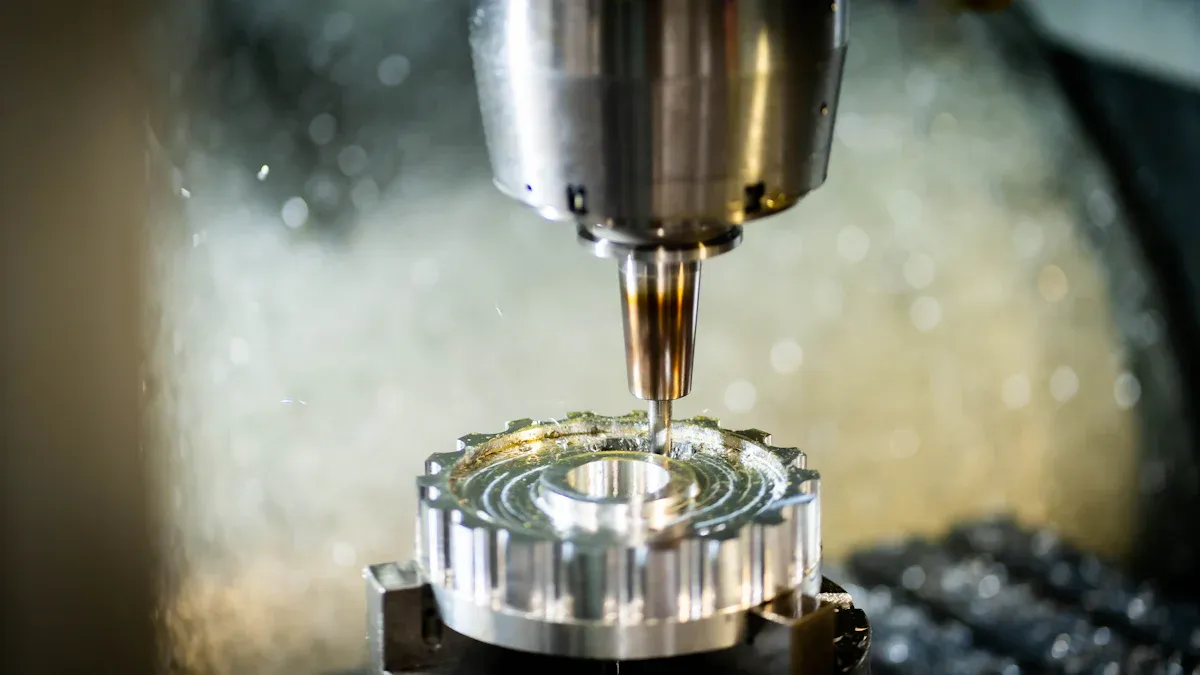
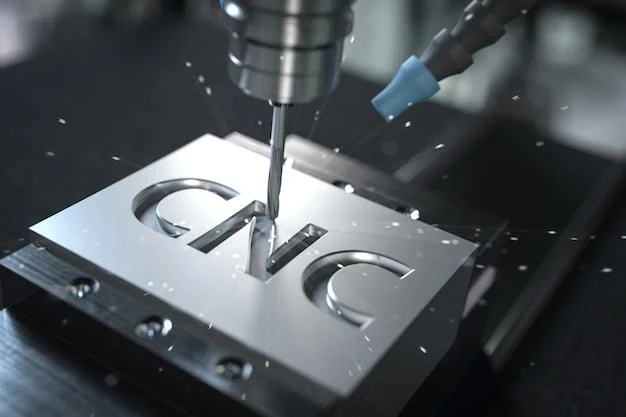
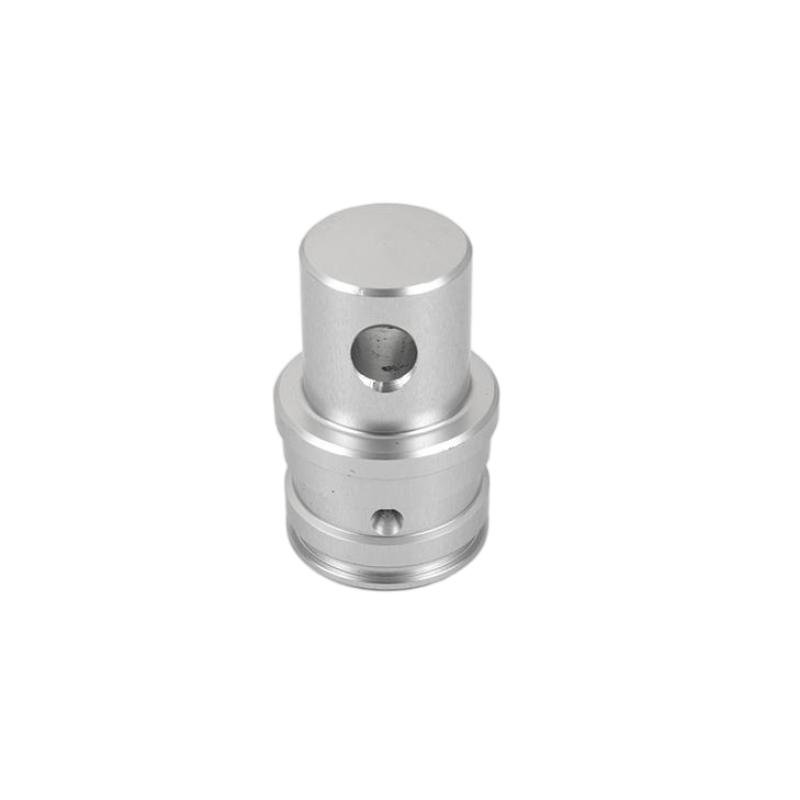
CNC machining relies on computer systems to control automated machinery to shape raw materials, including metals and plastics. The entire workflow begins with digital design files, which guide the equipment in driving cutting and drilling tools to remove material. CNC stands for Computer Numerical Control, and this advanced manufacturing technology enables factories to produce highly consistent and standardized finished parts. KEMING possesses extensive expertise and experience in professional CNC machining services.
Generally, the tolerance levels achievable in CNC machining vary considerably depending on the workpiece material and specific design specifications. The table below lists widely accepted standard tolerance ranges:
| Material Type | Tolerance Range (mm) | Tolerance Range (inches) |
|---|---|---|
| Metals (Aluminum, Steel, Stainless Steel) | ±0.1 | ±0.005 |
| Hole Positions | ±0.05 to ±0.1 | N/A |
| Plastics | ±0.1 to ±0.2 | N/A |
| Excellent (Aluminum Alloys) | ±0.1 | ±0.004 |
| Good (Steel, Stainless Steel) | ±0.1 | ±0.004 |
| Rigid Plastics (ABS, PC, Acrylic, Nylon) | ±0.1 | ±0.004 |
Precision Machining Overview
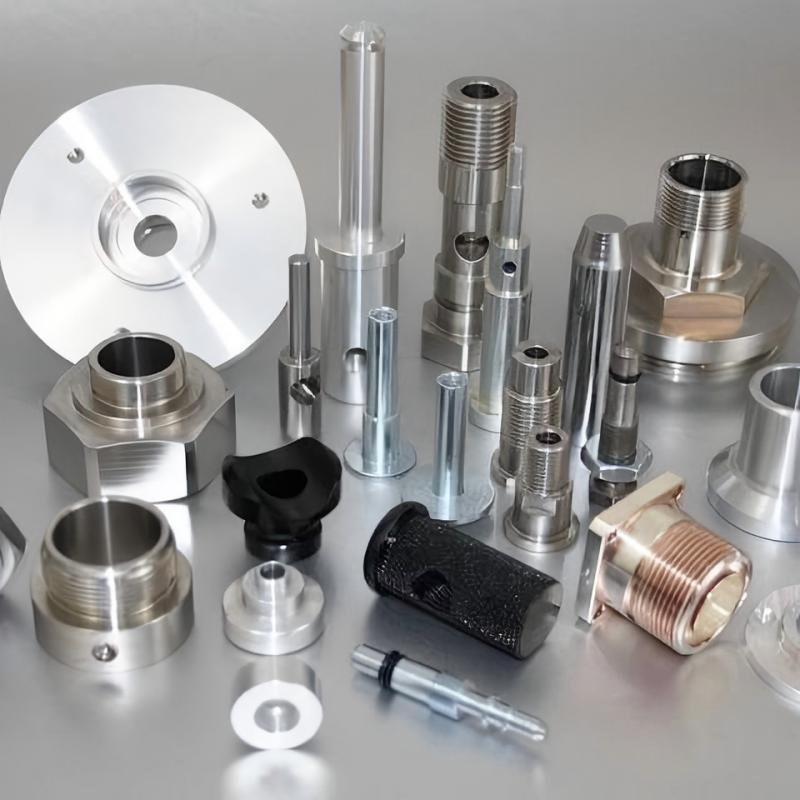
Precision machining is a specialized branch of CNC machining, designed to fabricate components with ultra-tight tolerances and intricate complex geometries. Manufacturers turn to this process when parts demand flawless assembly compatibility or reliable performance in harsh working environments.
Distinct from standard CNC machining, precision machining delivers superior accuracy and finer structural details. It requires longer processing cycles and top-tier machinery, which leads to higher production costs, particularly for complex components and small-batch orders. The table below illustrates how different machine types affect hourly processing rates.
| Machine Type | Hourly Rate |
|---|---|
| 3-Axis Machines | $30–$40 per hour |
| 5-Axis Machines | $75–$150 per hour |
Both CNC machining and precision machining are indispensable in today’s factories. Understanding their differences helps businesses choose the machining process best suited to their needs.
CNC Machining vs. Precision Machining
Key Focus Areas
Today, both CNC machining and precision machining are crucial in factories. CNC machining utilizes computer-controlled machines to manufacture parts quickly and with high precision. It also offers flexibility, as the program can be modified to suit different parts. Precision machining, on the other hand, strives to achieve the ultimate precision in parts. Precision machining is most effective when parts must fit perfectly, such as in aircraft or medical devices.
The table below lists the differences between CNC machining and precision machining:
| Aspect | CNC Machining | Precision Machining |
|---|---|---|
| Accuracy | Can make many parts with good repeatability. It works for big jobs. | Tries for very tiny accuracy, even smaller than a hair. Used when parts must be perfect. |
| Equipment | Uses CNC machines that can do many things. | Needs special machines that work in clean rooms. |
| Processing Range | Can make lots of shapes and sizes. | Focuses on making parts very smooth and exact, usually in small numbers. |
| Flexibility | Very flexible, can switch to new parts fast. | Not as flexible, needs special steps for tricky parts. |
| Automation Level | Mostly runs by itself, so people do not need to help much. | Needs skilled workers to check and fix things for best results. |
Tolerance Limits
CNC machining delivers components with varied accuracy standards, while precision machining achieves ultra-fine tolerances under 0.01mm, ideal for components used in extreme working conditions. KEMING strictly complies with international industry standards including ASTM, DIN and JIS to guarantee standardized production quality. We adopt a full range of processing equipment such as CNC milling, turning, grinding, drilling and EDM machines, enabling us to produce high-precision components suitable for rigorous industrial applications.
Use Case
Manufacturers choose standard CNC machining and precision machining according to actual production demands. General CNC machining fits mass production and parts with complex structures, whereas precision machining is more suitable for small-batch products requiring extreme dimensional accuracy. KEMING implements a comprehensive strict quality control system covering supplier verification, detailed product inspection and real-time quality monitoring, effectively eliminating product defects. We have earned widespread customer trust by consistently supplying reliable high-precision parts for core industrial projects.
Applications of CNC Machining and Precision Machining
Typical Uses for CNC Machining
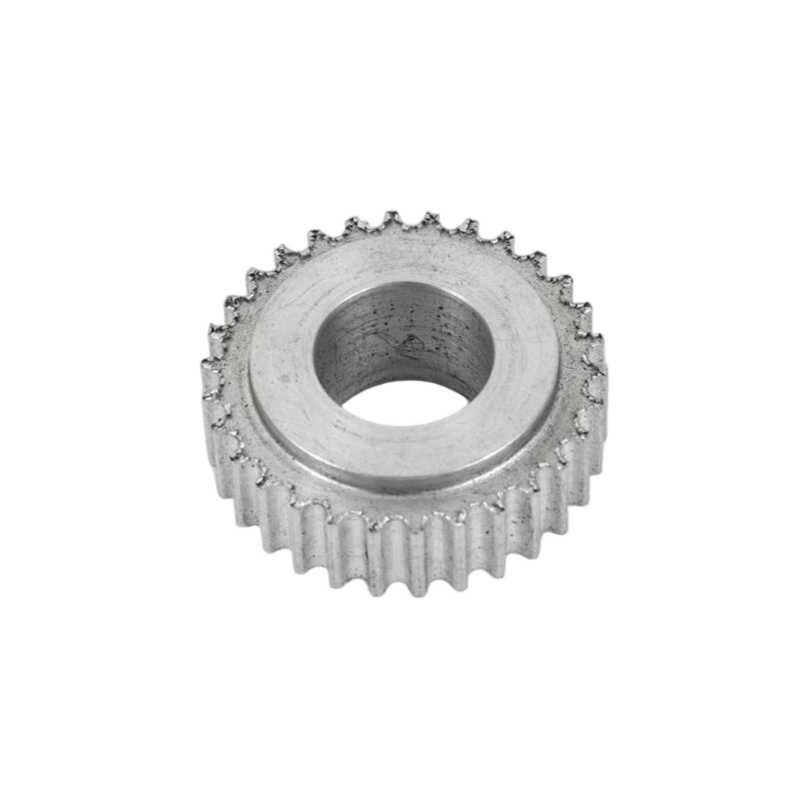
Renowned for fast production and outstanding precision, CNC machining serves a wide range of industrial sectors. KEMING leverages this technology to manufacture components for automotive, marine, railway and agricultural fields. In the automotive industry, it is widely applied in producing engine blocks, pistons, gear shafts and brake components, as well as core EV accessories including motor housings and battery brackets. It supports efficient mass production and rapid prototype development for new product designs.
For marine applications, CNC machining crafts durable parts capable of withstanding harsh marine environments, such as propellers, engine fittings and electronic structural components. It also facilitates custom marine part fabrication and trial mold development. Compatible with metals, plastics and various other raw materials, this process is also ideal for aerospace hardware, medical devices and daily consumer goods, allowing KEMING to deliver high-precision customized parts to diverse clients.
Typical Uses for Precision Machining
Precision machining specializes in manufacturing components that demand extreme dimensional accuracy. KEMING adopts this process to produce railway hydraulic manifolds, mounting brackets and enclosures, which require high precision and material efficiency to meet large-scale project standards. Within the agricultural sector, it produces core accessories for tractors and harvesters, ensuring stable operation and extended service life under severe working conditions.
Aerospace, defense, new energy and medical industries heavily rely on precision machining to fabricate high-spec critical parts. Surgical instruments and medical implants, for instance, require flawless craftsmanship to ensure user safety. This processing method is also perfect for sample trial production and small-batch orders where quality takes priority over output. KEMING’s rich practical experience in these fields ensures the steady supply of robust, top-grade components for all kinds of sophisticated projects.
CNC machining is fast and widely used. Precision machining can produce parts with extremely high precision, even down to minute dimensions. The choice of the optimal machining process depends on the difficulty of machining the part, the required dimensional accuracy, and the cost.
FAQ
What is the main goal of CNC precision machining?
CNC precision machining aims to manufacture extremely precise parts. It ensures that each part assembles as expected and functions correctly. This is crucial in high-precision manufacturing.
How do precision CNC machine tools improve the precision machining process?
Precision CNC machine tools use specialized control systems and cutting tools. They help factories achieve tight tolerances and ensure that parts machined every time are identical.
Why do industries need high-precision manufacturing?
Industries need high-precision manufacturing to ensure safety and good performance. Tight tolerances contribute to efficient machine operation and extend the lifespan of parts.