EN
EN  DE
DE  ES
ES  FR
FR  PT
PT  RU
RU 
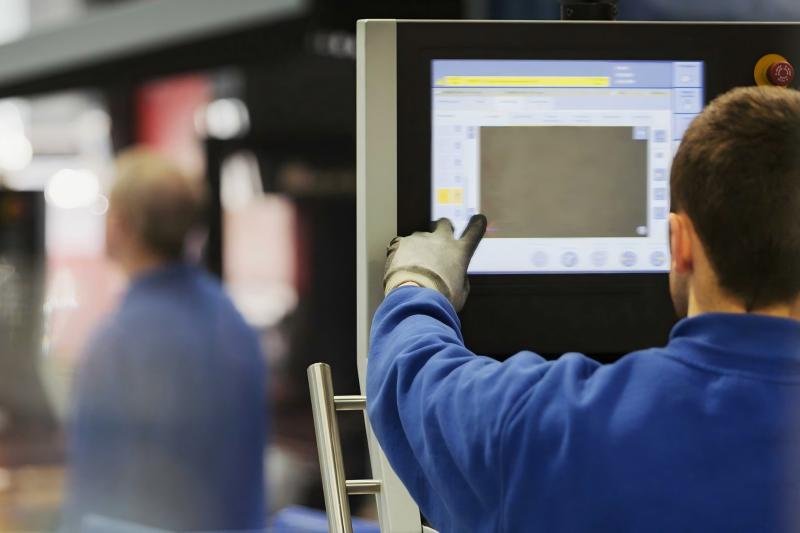
The difference between 3-axis CNC and 5-axis CNC lies in the motion method and the detail of the parts. Three-axis CNC processes parts through motion in three directions, while five-axis CNC processes more complex parts through motion in five directions. This difference determines the speed and quality of part processing. KEMING utilizes new equipment to help numerous companies improve efficiency. The difference between three-axis and five-axis CNC not only changes how companies process precision parts but also impacts application scenarios across different industries.
Key Takeaways
- Three-axis CNC machining is best suited for machining simple parts with flat sides. It is inexpensive and easy to operate, making it ideal for small businesses.
- Five-axis CNC machining can machine complex shapes and smooth surfaces. Because machining can be completed in a single setup, it saves time. This is ideal for industries such as aerospace and medical.
- You should choose between three-axis or five-axis CNC machining based on the complexity of the part, the required quantity, and your budget. The KEMING team can help you choose the most suitable option.
3-axis CNC Machining Overview
What is Three-Axis CNC Machining?
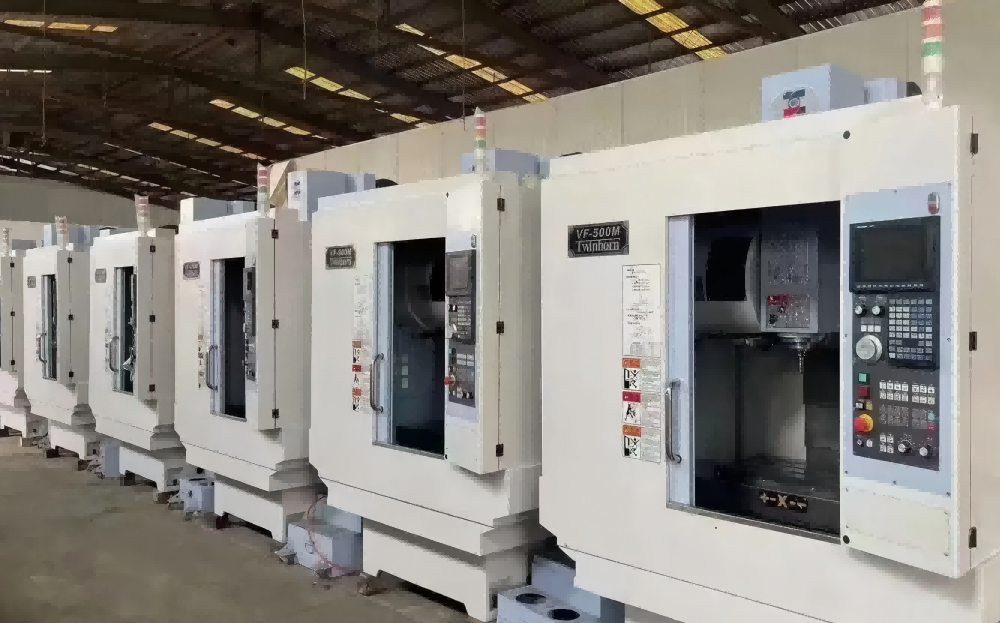
Three-axis CNC machining uses a computer-controlled machine to cut and shape materials. The machine moves the tool in three directions: left-right (X-axis), front-back (Y-axis), and up-down (Z-axis). This method is ideal for machining planes, grooves, and holes. KEMING uses three-axis CNC machining technology to manufacture robust and precision parts for numerous industries. Commonly used materials include metals such as aluminum, brass, stainless steel, and titanium, as well as plastics such as ABS and nylon.
Three-axis CNC machining helps manufacture parts that are strong yet lightweight. It is widely used in aerospace, automotive, and agricultural fields.
How Three-Axis CNC Machining Works
The machine receives digital instructions from a computer file (usually a DXF file). The workpiece itself does not move; the tool moves along three axes. Stepper motors control each axis, ensuring the tool moves in the correct direction. Algorithms enable the machine to maintain extremely high precision, typically within 0.005 millimeters. The system uses multi-threading technology to control different components simultaneously, which helps the machine operate faster and more smoothly.
Pros and Cons of 3-axis CNC
Advantages:
- Good price for simple parts
- Simple to use and take care of
- Very accurate for flat and basic shapes
Disadvantages:
- Cannot make very complex shapes
- Needs more setups for parts with many sides
- May not make surfaces as smooth as advanced machines
5-axis CNC Machining Explained
What is 5-axis CNC machining?
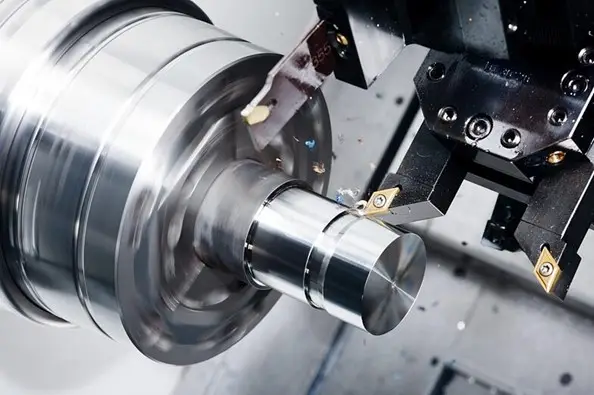
5-axis CNC machining refers to machining where the cutting tool on a machine tool can move in five directions. The tool can not only move up, down, left, and right, but also tilt and rotate. This allows the machine tool to machine workpieces from multiple directions. 5-axis machining can complete the machining of complex shapes in a single setup. KEMING applies advanced CNC machine tools to the aerospace, medical, and automotive parts industries.
| Machine Model | Key Features | Applications |
|---|---|---|
| UMC-750SS by Haas | Real 5-axis machining, fast spindle, automatic tool changer | Aerospace, medical uses |
| DMU 50 by DMG MORI | Swivel table, strong spindle, smart CNC controls | Multi-sided machining, hard parts |
| VARIAXIS i-800 by Mazak | Tilting table, SmoothX CNC control, automatic tool changers | Mold making, precision engineering |
| MU-4000V-L by Okuma | Strong build, Thermo-Friendly Concept, INTELLIGENT Technology suite | Machining many sizes |
| Robodrill α-D21MiB5 by FANUC | Built-in motor spindle, advanced drive system, automatic tool changer | Electronics, medical devices |
Types: Indexing and Continuous
Five-axis CNC machining is mainly divided into two types: indexing five-axis machining and continuous five-axis machining. Indexing machine tools move the tool to a set angle before cutting; while continuous machine tools move the tool and cut simultaneously. For machining complex shapes, continuous five-axis machining offers higher precision and faster speed.
| Feature | Indexed 5-Axis CNC Machining | Continuous 5-Axis CNC Machining |
|---|---|---|
| Precision | Lower precision | Higher precision |
| Complexity of Geometry | Limited | Intricate designs |
| Cost | Lower | Higher |
| Applications | Jigs, fixtures | Freeform shapes, detailed parts |
| Setup | Multiple setups | Continuous machining |
Pros and Cons of 5-axis CNC
5-axis machining has many good points:
- The machine makes detailed designs in one setup.
- It saves time by moving along many axes.
- It makes complex three-dimensional objects.
- Fewer setups mean jobs finish faster.
- Better accuracy helps make high-quality parts.
- Smooth tool movement gives better surface finish.
Difference Between 3 and 5-axis CNC
Key Differences Table
The biggest differences between three-axis and five-axis CNC machine tools lie in their motion mechanisms, the types of parts they can process, and the precision of the finished parts. The table below provides a brief comparison:
| Feature | 3-Axis CNC Machining | 5-Axis CNC Machining |
|---|---|---|
| Machining Accessibility | Limited to surfaces parallel or perpendicular to the spindle; needs multiple setups | Continuous access to any surface; complete part machining in one setup |
| Surface Quality and Tool Life | Basic tool orientation; may lead to rougher surfaces and shorter tool life | Optimal tool orientation; improved surface finish and longer tool life |
| Programming Complexity | Simple programming and tool paths | Advanced software and expertise needed for multi-axis motion |
| Setup and Cycle Time | Longer setup and slower cycle time | Faster with less setup time |
| Efficiency | Less efficient, more waste | Increased efficiency, less waste |
| Productivity | Lower | Higher |
| Tolerances and Accuracy | Less tight, moderate accuracy | Tighter tolerances, high accuracy |
| Dimensional Stability | Moderate | High |
| Maintenance Requirements | Less intensive, longer machine lifespan | More frequent calibration, slightly shorter lifespan |
| Cost and Investment | Lower initial cost, good for small runs | Higher investment, better for complex or high-volume parts |
Key Differences Overview
Three-axis CNC machining allows the tool to move in three directions. It is best suited for machining parts with simple shapes, planes, or holes. However, it is time-consuming because the machine needs to stop and reposition to machine new surfaces. This method is suitable for small businesses looking to save costs and machine a small number of parts at a time. Many companies use three-axis CNC machining to machine parts that do not require high dimensional accuracy or have simple shapes.
Five-axis CNC machining allows the tool to move in five directions. The machine can machine at almost any angle, allowing for the production of complex parts in a single pass. This method offers more shape options and produces smoother surfaces. It also helps maintain high precision and stability of parts. Aerospace, automotive, and medical device companies use five-axis CNC machining to machine products such as turbine blades, engine parts, and medical implants. These parts require extremely high precision and smoothness.
KEMING offers both three-axis and five-axis CNC machining services using new equipment. The KEMING team helps clients choose the best option for each project.
When choosing between these two machining methods, consider the following factors:
- Part complexity: 5-axis CNC can handle many angles and curves.
- Tolerance needs: 5-axis machines keep parts very exact.
- Production volume: Making lots of parts can make 5-axis CNC worth the cost.
- Time constraints: 5-axis CNC can finish hard jobs faster.
- Total cost per part: Think about the full cost, not just the machine price.
KEMING’s team can look at your design and suggest the best CNC method. They help companies that need both simple and advanced parts, always working for good quality and speed.
Choosing the Right CNC Machining
When to Use Three-Axis CNC Machining
Three-axis CNC machining is best suited for machining parts with simple shapes. Teams often choose this method for machining parts containing planes, holes, or small 3D details. It is an economical option for mass production of basic parts. The table below lists the appropriate scenarios for three-axis CNC machining:
| Criteria | Description |
|---|---|
| Components | Good for parts with 3D surfaces but few angled features |
| Cost-effectiveness | Ideal for molds, fixtures, or moderate complexity |
| Setup tolerance | Acceptable when multiple setups are not a problem |
| Team capability | Best for teams skilled in 3D CAM workflows |
| Part complexity | Suitable for simple parts and prototypes |
| Volume | Effective for high-volume production |
| Geometry | Handles moderate 3D geometry |
| Cost control | Keeps costs low for basic operations |
When to Use 5-Axis CNC Machining
5-axis CNC machining is ideal for machining complex parts and precision-fitted components. This method allows the tool to reach multiple surfaces, making it ideal for machining aerospace, medical, and automotive parts. For projects requiring smooth surfaces, complex shapes, or fewer setups, 5-axis CNC machining is the best choice. The table below lists the requirements for 5-axis CNC machining:
| Industry | Relevant Standards | Key Requirements |
|---|---|---|
| Aerospace | AS9100, NADCAP | Traceability, FOD prevention, special process controls |
| Medical | ISO 13485 | Risk management, sterility, biocompatibility |
| Automotive | IATF 16949 | PPAP, FMEA, SPC |
| Defense | MIL-STD-810 | Environmental testing, durability |
Decision Factors for Your Project
Picking 3-axis or 5-axis CNC depends on how hard the part is, the cost, and how fast you need it. The table below compares these things:
| CNC Type | Cost Considerations | Lead Time Impact | Part Complexity Suitability |
|---|---|---|---|
| 3 Axis | Economical for simple designs | Fast setup for flat surfaces | Best for simple geometries |
| 5 Axis | Higher machine rate, but saves cost per part | Lowers total manufacturing time | Ideal for complex, multi-sided parts |
| Feature | 3-Axis CNC | 5-Axis CNC |
|---|---|---|
| Movement | Three directions | Adds two rotations |
| Complexity | Simple parts | Complex shapes in one setup |
| Industries | Basic manufacturing | Aerospace, medical, automotive |
Aerospace and medical companies use 5-axis CNC the most. KEMING uses new machines and checks parts carefully. This helps customers get very exact parts for any job.
FAQ
What materials can three-axis and five-axis CNC machine tools process?
Both types of machine tools can process metals such as aluminum, steel, and titanium, as well as plastics such as ABS and nylon.
Are five-axis CNC machine tools always more expensive than three-axis CNC machine tools?
While five-axis CNC machine tools are generally more expensive to process individual parts, they can save costs when machining complex parts. This is because five-axis CNC machine tools require fewer setup steps and have a faster processing speed.
Why do aerospace companies prefer five-axis CNC machining?
Aerospace companies need to machine parts with extremely high precision and complex shapes. Five-axis CNC machine tools can machine these parts with extremely high precision and smooth surfaces.