EN
EN  DE
DE  ES
ES  FR
FR  PT
PT  RU
RU 
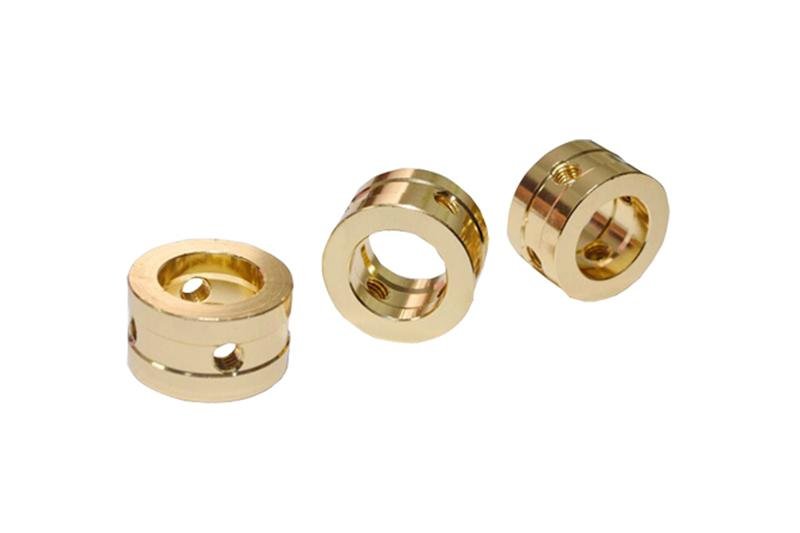
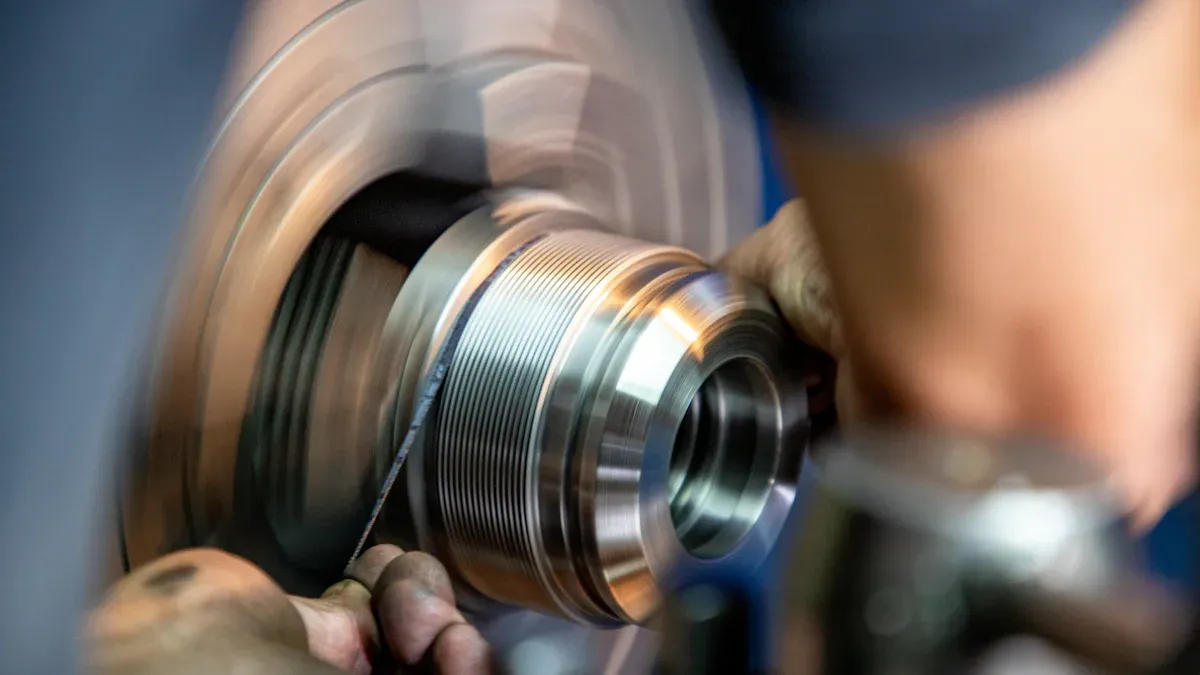
When selecting stainless steel for industrial precision machining, 303 stainless steel is widely favored for its excellent machinability; its high sulfur content enables smooth chip formation, improves machining efficiency, and simplifies manufacturing, making it ideal for CNC machining and investment casting. KEMING is committed to manufacturing high-precision stainless steel parts that meet stringent industrial standards and the needs of a wide range of practical applications.
Key Takeaways
- 303 stainless steel is easier to cut due to its sulfur content. This makes it ideal for machining complex shapes and improving work efficiency. 304 stainless steel offers better rust resistance. Although it is more difficult to cut, it is still popular for manufacturing food and medical devices. If you need to cut and precisely machine parts, choose 303. If you need a high-strength, rust-resistant material, choose 304.
303 vs 304: Material Differences
Composition and Additives
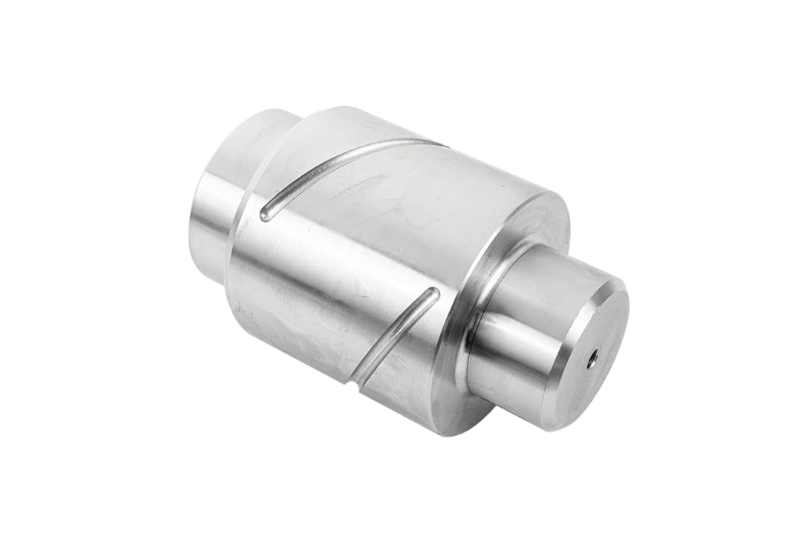
Type 303 and Type 304 stainless steel are made with different chemical compositions. The biggest difference lies in the additives, which alter their properties.
- 303 stainless steel contains sulfur, with a content between 0.15% and 0.35%. Sulfur helps produce chips during machining, making 303 stainless steel easier to form.
- 304 stainless steel contains more chromium and nickel. This gives 304 stainless steel greater resistance to rust, especially in humid or chemically corrosive environments.
- While 303 stainless steel sacrifices some rust resistance for ease of machining, 304 stainless steel retains its strength and rust resistance.
- 304 stainless steel does not contain sulfur, therefore it still possesses toughness and strength.
Physical Properties
The properties of stainless steel depend on its physical properties. The table below lists the differences in physical properties among various types of stainless steel:
| Properties | 303 stainless steel | 304 stainless steel |
|---|---|---|
| Ultimate Tensile Strength | 100000 psi | 73200 psi |
| Tensile Yield Strength | 60200 psi | 31200 psi |
| Hardness (Rockwell B) | 96 | 96 |
| Elongation at Break | 40% | 70% |
Type 303 stainless steel has higher strength but lower ductility than type 304 stainless steel. Both stainless steels have the same hardness, but type 304 stainless steel has better ductility at fracture. These characteristics help engineers select the appropriate stainless steel for specific applications.
303 vs. 304: Machining Performance Comparison
Why is 303 Stainless Steel Easier to Machin?
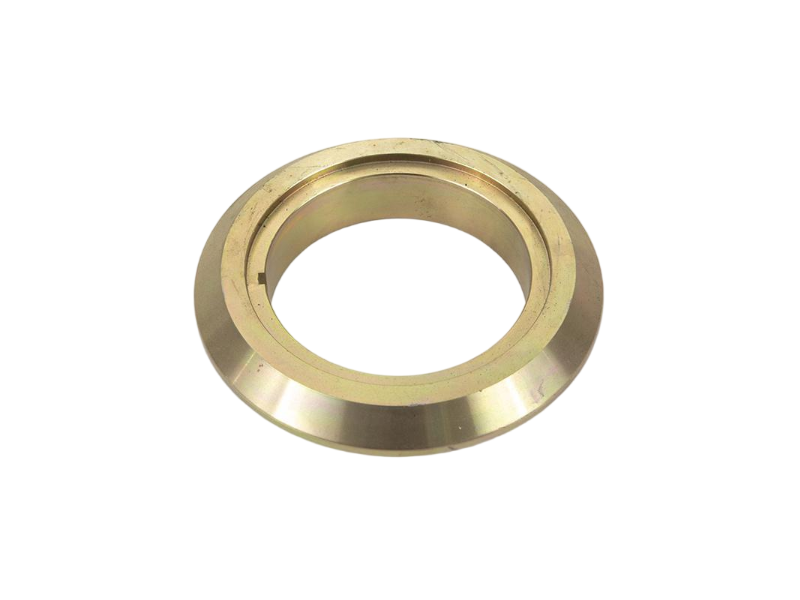
303 stainless steel has the best machinability among its class of stainless steels. Metallurgists added sulfur to 303 stainless steel to make it easier to machine. Sulfur acts as a lubricant, helping chips break during cutting. This makes 303 stainless steel easier to machine than 304 stainless steel. Chips break quickly, so tools are less likely to jam or wear out quickly. For this reason, 303 stainless steel is ideal for machining complex shapes.
304 stainless steel does not contain added sulfur. It was not designed for easy machining. Machining 304 stainless steel produces long, thin chips that easily entangle the tool. This accelerates tool wear and reduces machining speed. Furthermore, 304 stainless steel hardens during cutting. This makes machining more difficult, meaning you may need to change tools more frequently.
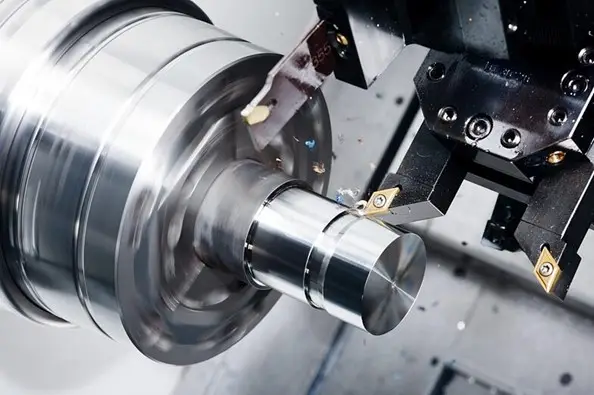
Type 303 stainless steel is ideal for CNC machining because it is easy to cut. This means you can machine parts faster and have longer tool life.
Machining Performance Factors
Many factors affect the machinability of stainless steel. Among the most important are chip formation, tool wear rate, surface finish, and cutting speed.
- The sulfur in 303 stainless steel helps break chips when cutting. This lowers friction and keeps tools sharp for longer.
- When you machine 303, tools can last up to 40% longer than with 304. Chips break apart easily, so tools do not get clogged.
- Type 304 makes longer chips that can wrap around tools. This means you need to change tools more and spend more money.
Surface finish is also important. 303 stainless steel parts typically appear bright and smooth, with a surface roughness Ra (average surface roughness) between 16 and 32 µin. Therefore, high-precision parts can be easily obtained without much deburring. However, 304 stainless steel parts often have a rough, streaked surface, with Ra values reaching 32–63 µin or even higher. Additional machining steps are usually required to improve their surface finish.
| Stainless Steel | Surface Finish Quality | Ra Range (µin) | Additional Notes |
|---|---|---|---|
| 303 | Fine, glossy finish | 16–32 | Minimal deburring, tight tolerances achievable |
| 304 | Rough, streaky look | 32–63 or rougher | Often needs post-processing for better finis |
KEMING leverages these advantages using advanced CNC machine tools. Choosing 303 stainless steel for CNC machining saves time and tooling costs, thereby increasing machining speed and reducing costs. For large or complex-shaped workpieces, 303 stainless steel is the optimal choice for ease of machining.
304 stainless steel remains widely used due to its excellent rust resistance, but it is more difficult to machine, typically requiring more steps for grinding and finishing parts, which may add some unexpected costs. KEMING is proficient in machining both types of steel and can help customers choose the steel that best suits their needs, balancing ease of machining with other important requirements.
303 vs 304: Corrosion & Weldability
Corrosion Resistance
When choosing stainless steel, corrosion resistance is crucial. 304 stainless steel offers excellent rust resistance in many situations. It contains more chromium and nickel, elements that help prevent rust and chemical corrosion. 304 stainless steel is commonly used in food processing plants, shipbuilding, and the chemical industry. It is not prone to rusting even in water or strong chemical environments.
303 stainless steel has added sulfur, making it easier to cut. This makes it easier to work with, but its corrosion resistance is not as good as 304. Sulfur can create weak points on the surface, leading to rusting. Therefore, 303 stainless steel is not suitable for humid or harsh environments. It is not suitable for food processing or applications requiring strong rust protection.
| Property | 303 Stainless Steel | 304 Stainless Steel |
|---|---|---|
| Corrosion Resistance | Lower due to sulfur | High corrosion resistance |
| Food Grade Status | Not food grade | Food grade |
Weldability Considerations
The weldability of these two stainless steels also differs. 304 stainless steel is very easy to weld and can be used with a variety of welding methods. The welds are strong and durable, making 304 stainless steel an ideal choice for welded components.
303 stainless steel, on the other hand, has inferior weldability compared to 304 stainless steel. While its sulfur content aids in cutting, it reduces weld strength, leading to weld fracture or a shorter service life. Therefore, 303 stainless steel is not the best choice for welded components.
Choosing the Right Grade of 303 vs 304:
Applications of 303 Stainless Steel
303 stainless steel is ideal for machining. Many industries use 303 stainless steel when fast, high-precision parts need to be manufactured. Small parts such as screws, nuts, bolts, and threaded inserts are often made of 303 stainless steel because it is easy to machine. Valves and fittings in oil, gas, chemical, and water treatment plants also use 303 stainless steel because it is easy to shape. Shafts and gears in machines require strength and smooth operation, making 303 stainless steel ideal for manufacturing these components. Food and beverage machinery sometimes uses 303 stainless steel to manufacture complex-shaped tools and parts. Electrical connectors and other parts also use 303 stainless steel because it helps to produce stable and uniform components.
| Application Type | Description |
|---|---|
| Precision Components | Screws, nuts, bolts, threaded inserts for automotive and aerospace industries |
| Valves and Fittings | Fluid control parts for oil, gas, chemical, and water treatment |
| Shafts and Gears | Rotating parts in industrial equipment |
| Food and Beverage Equipment | Tools and devices for food processing |
| Components of Electricity | Electrical connectors needing precision and non-magnetic properties |
Applications of 304 Stainless Steel
304 stainless steel has excellent rust resistance and is easy to weld. It is often chosen when a rust-resistant metal is needed in humid environments. Food and beverage companies use it for sinks, cookware, and in food production facilities. Builders use it to construct walls, railings, and roofs. Hospitals and doctors use it to make hospital beds and medical equipment. Chemical plants use it for storage tanks, pipes, and machinery in high-temperature environments. Automakers and home furnishing manufacturers use it to make automotive parts, furniture, and kitchenware.
| Industry | Typical Use Cases |
|---|---|
| Food & Beverage | Sinks, cookware, brewing vessels, food surfaces |
| Construction & Architecture | Cladding, facades, railings, roofs |
| Medical Equipment | Hospital furniture, trays, surgical instruments |
| Petrochemical & Chemical | Heat exchangers, tanks, pipes |
| Automotive | Trim, structural parts, exhaust systems |
| Consumer Products | Furniture, cutlery, appliances |
Selection Guide
You should choose either 303 or 304 stainless steel based on your specific needs. If you require fast machining or machining of irregularly shaped parts, choose 303 stainless steel. Compared to 304 stainless steel, using 303 stainless steel can increase machining speed by nearly 40% and double tool life. If you need a metal that is rust-resistant and has good weldability, choose 304 stainless steel. 303 stainless steel is best suited for manufacturing fasteners, shaft parts, and electrical connectors. 304 stainless steel is better suited for manufacturing sinks, food processing machinery, and automotive trim parts.
| Criteria | Grade 303 | Grade 304 |
|---|---|---|
| Machining Efficiency | Superior for complex machined parts | Needs careful machining parameters |
| Weldability | Poor due to sulfur | Excellent for welded structures |
| Corrosion Resistance | Less effective in corrosive environments | Good for humid or mildly corrosive areas |
| Cost Considerations | Cost-effective in high-volume machining | Competitive price, good performance |
| Application Examples | Fasteners, shafts, connectors | Sinks, food equipment, automotive trim |
303 stainless steel is easy to machine and gives a smooth finish. 304 stainless steel does not rust easily and is easy to weld.
- 303 is best for making exact parts in places that are not too harsh.
- 304 works well for food, medical, and chemical jobs.
KEMING helps people pick the right stainless steel for each project.
FAQ
Why is 303 stainless steel easy to machine?
The sulfur in 303 stainless steel helps break up chips. This means slower tool wear. Machining with 303 can speed up the process. Engineers prefer to use 303 to machine complex shapes.
Can 304 stainless steel be used in food processing equipment?
Yes, 304 stainless steel is ideal for food processing equipment. It is rust-resistant and meets food safety standards. Many kitchens and food factories use 304 stainless steel for sinks and work areas.
What are the differences in machinability between 303 and 304 stainless steel?
| Grade | Machinability Rating (%) | Typical Use |
|---|---|---|
| 303 | 78 | Precision parts |
| 304 | 45 | Food, medical, welded items |