EN
EN  DE
DE  ES
ES  FR
FR 
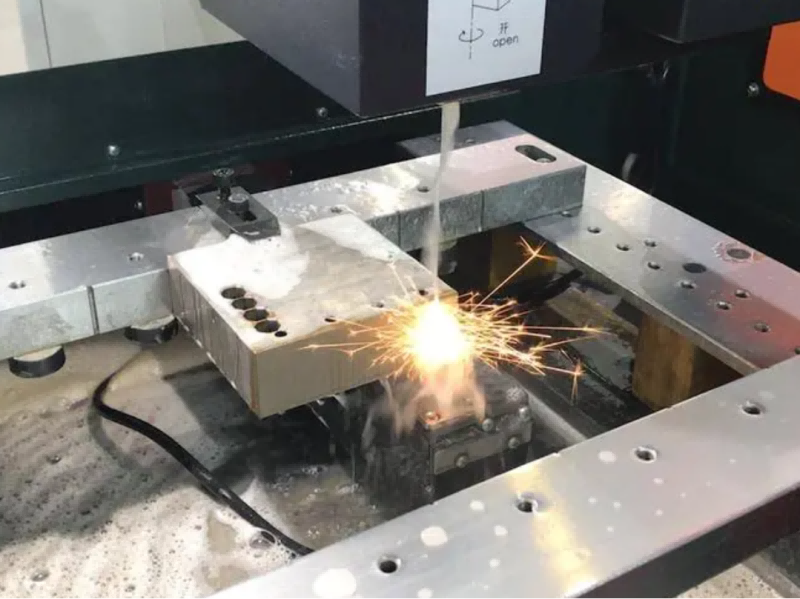
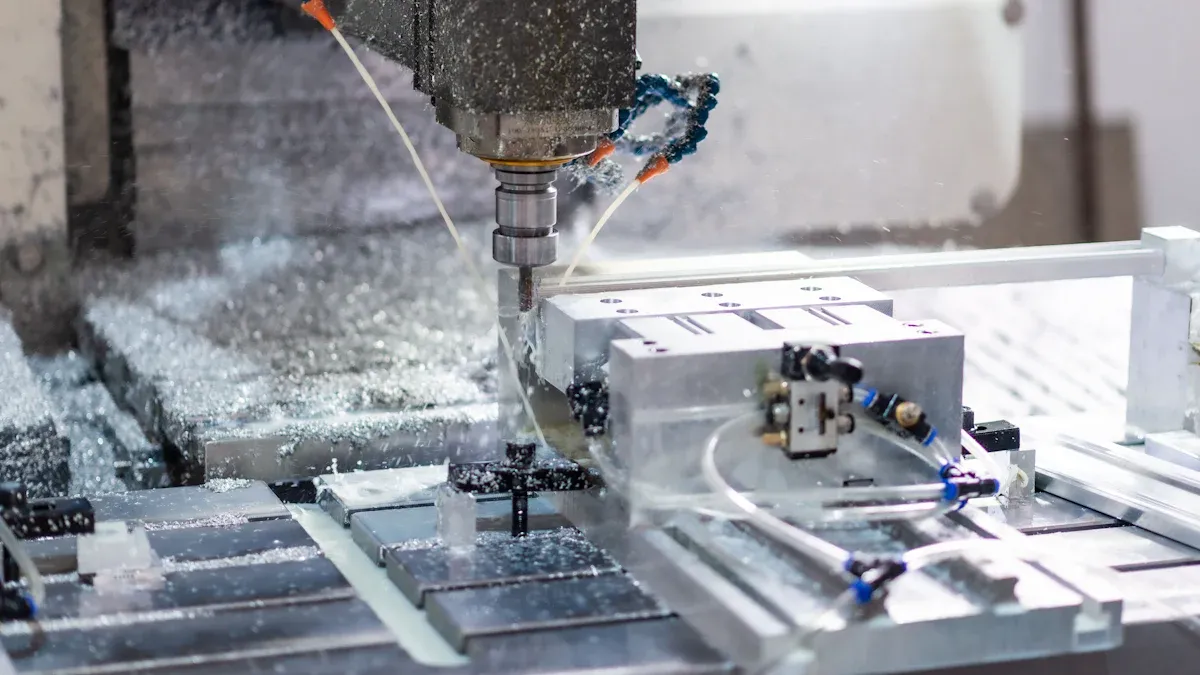
Precision machining utilizes a variety of raw materials, including aluminum, stainless steel, carbon steel, titanium, copper alloys, and plastics. These materials are widely used globally. Metals account for the majority of the market share, reaching 62.3%. Plastics account for 18.9%. Choosing the right material affects the product’s strength, ease of machining, and rust resistance. Kemin Company ensures high product quality through its casting and CNC machining technologies.
Key Takeaways
- Precision machining utilizes a variety of materials, including metals such as aluminum, stainless steel, and titanium, as well as plastics. Choosing the right material affects the product’s strength, cost, and performance.
- Metals are the most commonly used materials in precision machining, accounting for 62.3% of the market. Metals are strong and have a long service life. Plastics account for 18.9%. Plastics are lightweight and rust-resistant.
- Aluminum alloys are favored for their lightweight strength. They are easy to machine and do not rust, making them ideal for automotive and aircraft parts.
- Steel, such as carbon steel and stainless steel, is strong, has a long service life, and is widely used, including in automotive parts and medical devices.
- Plastics can be processed into various shapes, are lightweight, and do not rust, making them commonly used in medical and electronic products. Plastics are safe and flexible.
Precision Machining Materials
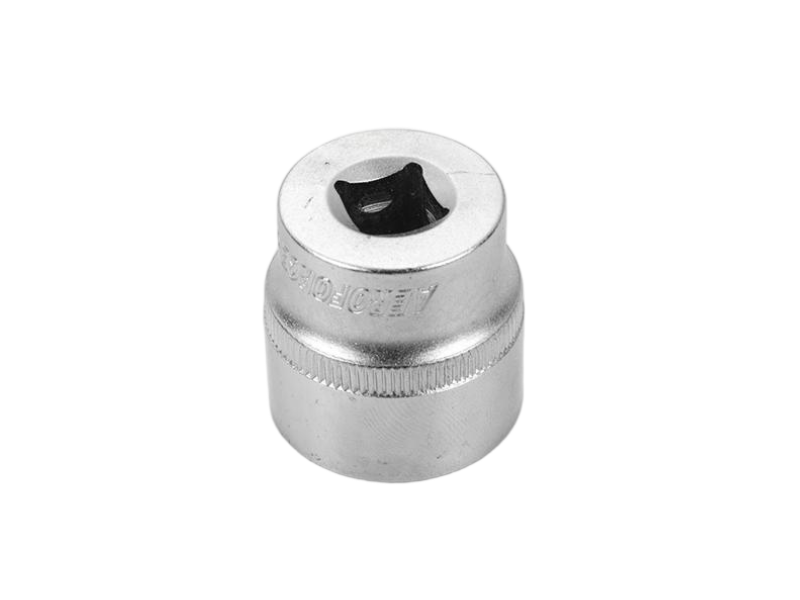
Precision machining utilizes a variety of raw materials. These materials are primarily divided into two categories: metals and non-metals. Each category possesses unique properties, making it suitable for different machining applications. The chosen material affects the strength, lightweight, and rust resistance of the part. It also influences the ease of forming the part and its cost.
Metals Overview
Metals are the most commonly used materials in machining. They are strong, have a long service life, and can be bent without breaking. The main metals commonly used in precision CNC machining include:
- Carbon steel and alloy steel: Carbon steel has a high carbon content, resulting in high strength. Alloy steel adds other elements to iron, making it more tough. Both are popular due to their ease of machining and ability to withstand stress.
- Stainless steel: Stainless steel contains at least 10.5% chromium. This helps it resist rust and corrosion. It maintains its strength even in harsh environments. Many industries use stainless steel to manufacture parts that require long-term use.
- Aluminum and aluminum alloys: Aluminum is lightweight and easy to form. Aluminum alloys are strengthened by adding other metals. These alloys are suitable for parts that require lightweight yet strong construction, such as components in automobiles and aircraft.
- Copper and copper alloys: Copper alloys possess excellent thermal and electrical conductivity, making them ideal for manufacturing electronic components and heat exchangers.
- Titanium and titanium alloys: Titanium alloys are strong, lightweight, and resistant to heat and rust. Aerospace and military companies frequently use titanium alloys to manufacture critical components.
- Iron and zinc: Iron is tough, durable, and inexpensive. Zinc is often used in combination with other metals to prevent rusting and improve casting quality.
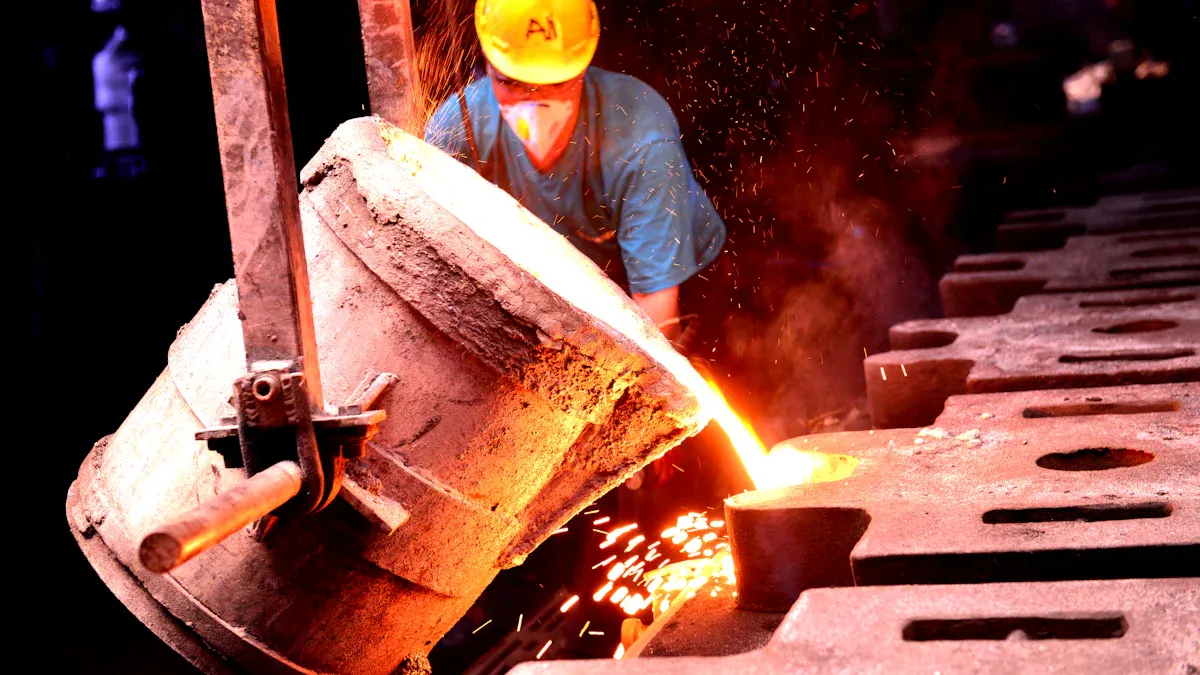
KEMING uses carbon steel, alloy steel, stainless steel, iron, aluminum, and zinc for precision casting and CNC machining. With its sophisticated material processing technology, KEMING is able to produce high-quality parts for numerous industries.
Overview of Non-metallic Materials
Non-metallic materials also play an important role in precision CNC machining. These materials include plastics and composite materials. They possess unique advantages that metals do not have.
- Plastics: Plastics are lightweight and easy to process. They do not rust and are resistant to chemical corrosion. Many industries use plastics to manufacture parts that require lightweight, quiet operation, or insulation.
- Composite Materials: Composite materials are made by blending two or more materials, thus combining the best properties of each. They can possess both high strength and lightweight characteristics. Composite materials are widely used in fields such as aircraft, sporting goods, and medical devices.
Non-metallic materials help reduce product weight and lower costs. They also allow for the creation of shapes that are difficult to machine with metals.
Choosing the right raw materials in machining is crucial for manufacturing high-performance and durable parts. The KEMING team, with its expertise in both metallic and non-metallic materials, helps clients select the best materials for each project.
Aluminum Alloys in Precision Machining
Properties
Aluminum alloys offer unique advantages in precision machining due to their excellent mechanical properties. They are lightweight yet strong, making them popular across numerous industries. Even in harsh environments, this material is not easily rusted or scratched. Aluminum alloys retain their strength and flexibility at low temperatures. Furthermore, they have good electrical conductivity and are easily recyclable. Many manufacturers choose aluminum alloys because they can be anodized. Anodizing not only enhances their toughness but also gives them an aesthetically pleasing appearance.
| Property | Description |
|---|---|
| Machinability | Aluminum is easy to cut and shape. It needs less force than steel. This helps make parts more exact. |
| Strength-to-Weight Ratio | Aluminum is light and strong. This is good for cars and planes. |
| Corrosion Resistance | It does not rust or scratch much. This is helpful in wet or salty air. |
| Low-Temperature Performance | It stays bendy and strong when it is cold. Other materials may not. |
| Conductivity | It lets electricity move through it well. This is good for electronics. |
| Recyclability | It can be recycled easily and does not need much energy. This is good for the planet. |
| Anodizing Potential | It can be anodized to make it tougher and look better. |
Advantages
Aluminum alloys are very easy to machine. They have high chip speeds and good formability. This helps extend tool life and save costs. Choosing the right aluminum alloy, such as 6061, helps to machine smooth and precise parts. Therefore, aluminum alloys are ideal for machining applications that require a balance of precision and speed. They are strong yet lightweight, which is crucial for many parts. Aluminum alloys do not rust, so no additional coatings are needed. They can be repeatedly recycled, which is beneficial to environmental protection.
Aluminum alloys are widely used in the manufacture of automotive and aircraft parts due to their lightweight, high strength, and ease of machining.
Challenges
Machining aluminum alloys presents some challenges. The material expands at high temperatures. This causes changes in part dimensions during cutting, making it difficult to maintain precise dimensions. Using incorrect cutting speeds or tools can also cause tool wear or chipping. Using carbide or high-speed steel tools with special coatings can help. Coolant and temperature control also help ensure part accuracy.
Applications
Precision-machined aluminum alloy parts are widely used in various fields. In the automotive industry, they are used to manufacture engine blocks, wheels, and chassis. The medical device industry uses aluminum alloys to manufacture surgical instruments and implants. Aircraft manufacturers use aluminum alloys to manufacture engine components and brackets. The electronics and optics industries use aluminum alloys to manufacture housings and connectors.
| Industry Sector | Common Applications of CNC-Machined Aluminum Parts |
|---|---|
| Automotive | Engine blocks, transmission cases, wheels, and frames. These parts are light, strong, and do not rust. They also help save fuel. |
| Medical Devices | Surgery tools, test tools, implants, and hospital machines. Aluminum alloy is picked for being exact, clean, and safe. |
| Aerospace | Engine parts, supports, wing parts, and body frames. These need to be light, strong, and not rust. |
| Electronics & Optics | Cases, covers, and connectors for phones, laptops, cameras, and optical tools. Aluminum alloy helps with heat and fits well. |
Precision machining of steel
Characteristics
Steel is frequently used in precision machining due to its high strength and wide range of applications. Carbon steel and alloy steel are extremely strong and not easily bent or broken. Stainless steel contains chromium, so it will not rust. The hardness of steel affects its machining speed. Heat treatment can increase the hardness of steel, extend its service life, and make it more suitable for high-intensity machining. Understanding the properties of carbon steel, alloy steel, and stainless steel helps machinists select the appropriate steel for parts requiring high-precision machining.
| Property | Carbon Steel | Stainless Steel |
|---|---|---|
| Machinability | Easier to cut because it is not too hard | Harder to cut because it is tougher |
| Strength | Very strong and hard | Bends more but does not break easily |
| Corrosion Resistance | Rusts more easily | Does not rust because of chromium |
Advantages
Carbon steel and alloy steel are chosen for their ease of forming and high strength. Machinists can machine carbon steel well, ensuring dimensional accuracy of parts. Alloy steel is tough and suitable for high-intensity operations. Stainless steel does not rust and can be used for a long time even in humid environments. Commin uses casting and machining processes to manufacture high-performance steel parts. These steels help to manufacture dimensionally accurate, smooth-surfaced automotive and energy machinery parts.
Challenges
Machining steel is challenging. Due to its toughness, tools wear out quickly. Cutting steel generates a lot of heat, which can damage tools and parts. Sometimes, steel hardens after cutting, increasing the difficulty of subsequent cuts. Because steel deforms under heat and stress, it is difficult to maintain dimensional accuracy of parts. Machinists need to use appropriate tools and coolants to address these issues, especially when machining carbon and alloy steel.
| Challenge | Description |
|---|---|
| Rapid Tool Wear | Tools get dull quickly because steel is hard. |
| Excessive Heat Generation | Cutting makes a lot of heat, which can hurt the tool and part. |
| Work Hardening | Steel gets harder after each cut, making it harder to machine. |
| Dimensional Instability | Heat and force can change the shape of parts and make them less exact. |
Applications
Precision-machined steel parts have a wide range of applications. Carbon steel and alloy steel are used to manufacture drive shafts, housings, bushings, sleeves, couplings, and fasteners. Stainless steel is used in medical devices, food machinery, and marine applications. Steel parts are critical in defense, commerce, energy, medical, oil and gas, textiles, and agriculture. Automotive companies use steel to manufacture engine parts and gears. HVAC systems use steel to manufacture valves and flow control devices.
Precision Machining of Titanium and Copper
Properties
Titanium and copper have unique properties that make them particularly valuable in precision machining. Titanium alloys are much lighter than steel but have high strength. They do not rust and can withstand high temperatures. Copper alloys possess excellent electrical and thermal conductivity. Both materials can be bent and stretched without breaking, making them easy to shape. They also help inhibit bacterial growth, which is crucial for the medical and food industries.
| Property | Value | Industrial Benefit |
|---|---|---|
| Density | 4.5 g/cm³ | 45% lighter than steel |
| Tensile Strength | Up to 1000 MPa | Excellent load-bearing capacity |
| Melting Point | 1668°C | Suitable for high-temperature applications |
| Corrosion Resistance | Exceptional | Long service life in harsh environments |
Titanium alloys have a low coefficient of thermal expansion, making them less prone to cracking. Copper alloys are easy to machine and are not corroded by chemicals.
Advantages
Compared to other metals, titanium and copper alloys offer numerous advantages. Titanium alloys are strong and rust-resistant, making them suitable for harsh environments. Copper alloys have good heat dissipation, which is beneficial for the manufacture of electronic products. Both alloys are resistant to wear and breakage, resulting in longer part lifespans. Titanium alloys are strong enough to withstand heavy loads. Copper alloys remain stable under pressure and are not easily deformed. These properties help save on repair and replacement costs.
Many industries choose titanium and copper alloys because of their durability and superior performance, even at a higher initial cost.
Challenges
Machinerying titanium and copper can be challenging. Titanium is not breathable, causing tools to overheat and wear quickly. Titanium alloys tend to adhere to tools, resulting in rough or damaged surfaces. Cutting titanium alloys increases their hardness, thus requiring greater cutting forces. Copper alloys can produce sharp edges and rough surfaces if the tool is not sharp enough or the cutting speed is too high. Excessive temperature or vibration can cause tool breakage and lead to unsuitable part dimensions. Machinists use powerful coolants, sharp tools, and precise assembly to solve these problems.
Applications
Parts made of titanium and copper alloys are widely used in various fields. The aerospace industry uses titanium alloys to manufacture jet engines and aircraft parts because they are lightweight and strong. The military uses them in missiles and parts requiring high strength. Shipbuilding uses titanium alloys to make propellers and pipes. Doctors use titanium alloys to make implants and pacemakers. Dentists use titanium alloys to make dental implants and crowns. Sporting goods companies use titanium alloys to make golf clubs and bicycle frames. Jewelry manufacturers use titanium alloys to make watches and rings.
| Industry | Applications |
|---|---|
| Aerospace | Commercial airplanes, military aerospace, jet engine components |
| Military | Missiles, artillery, ballistic-resistant components |
| Ships | Propellers, piping systems |
| Medical | Implant devices, pacemakers |
| Dental | Dental implants, bridges, crowns |
| Sports | Golf clubs, bike frames |
| Jewelry | Watches, eyeglasses frames, wedding bands |
Copper alloys are widely used in electronics, communication equipment, and construction due to their excellent electrical conductivity and durability.
Plastics in precision CNC machining
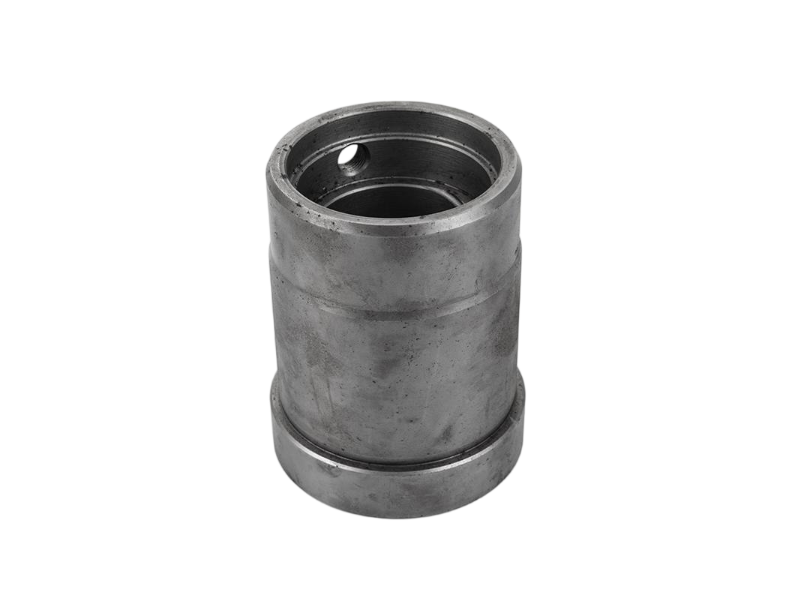
Properties
Plastics are crucial in precision CNC machining due to their numerous beneficial properties. There are many types of plastics, each suitable for different applications. Some common plastics include:
- Polypropylene (PP): It is light and does not get damaged by chemicals.
- Nylon (PA): It is strong, lasts long, and can slide easily.
- Garolite G-10: It is strong for its weight and does not burn easily.
- Acrylic (PMMA): It is clear, tough, and does not break easily.
- Polycarbonate (PC): It is strong and does not crack from hits.
- Polyvinyl Chloride (PVC): It does not soak up water and is simple to cut.
- Polyetheretherketone (PEEK): It works well and is safe for the body.
- Polyacetal (POM/Delrin): It slides easily and keeps its shape.
- Polyethylene (PE): It is tough and does not get hurt by chemicals.
- ABS: It is strong, easy to cut, and keeps its shape.
- PTFE: It slides easily and does not get hurt by chemicals.
These plastics are undamaged by chemicals. They have high tensile strength and are not easily worn. They are also electrically conductive. Many plastics are heat-resistant and safe for human use.
Advantages
Plastics offer numerous advantages in precision CNC machining. They are lighter than metals, resulting in lighter finished parts. Plastics do not rust or absorb water, making them ideal for medical and electronic tools. They are electrically conductive, ensuring equipment safety. Plastics are easier to cut, allowing machines to run faster and tools to last longer. This can save costs, especially for test parts or small-batch production. Plastics can also be machined into more intricate shapes.
Plastics such as PEEK and PC are commonly used in medical and electronic parts due to their high strength, safety, and flexibility.
Challenges
Processing plastics can be challenging. Plastics may bend or deform when heated. Rough spots or residual small particles may exist on the plastic surface. Some plastics can form long, thin strips that can clog machines. Thermal expansion of plastics can lead to dimensional inaccuracies in parts. Plastic can also wobble or bend, making it difficult to guarantee the accuracy of parts. Choosing the right machine settings can help solve these problems.
| Challenge | Description |
|---|---|
| Thermal Deformation | Plastics can bend if they get too hot |
| Surface Finish Issues | Rough spots or burrs can show up |
| Chip Formation | Long chips can block the machine |
| Dimensional Instability | Heat can make parts the wrong size |
Applications
Precision CNC machining can manufacture plastic parts for a wide range of applications. In agriculture, plastics are used to manufacture strips and guideways that can withstand impacts and dirt. Motion systems use smooth-sliding plastic guideways and covers. Power plants use plastic parts that are resistant to wear and won’t cause power outages. Marine engineering and humid environments use plastic parts that are rust-resistant and protect metals. Medical and electronics companies use plastic parts to manufacture covers, testing tools, bushings, and guideways.
Plastics help engineers manufacture lightweight, rust-resistant parts for a variety of applications that ensure electrical safety.
Choosing the right material is crucial for precision machining. The material’s strength, rust resistance, and ease of machining are all important. These factors affect the performance and cost of the parts. The table below lists the key factors to consider:
| Factor | Why It Matters |
|---|---|
| Material Properties | Impacts strength and durability |
| Cost | Affects project budget |
| Machinability | Changes production speed and quality |
Communicating with experts like KEMING helps businesses select the best materials. This helps them avoid costly mistakes and achieve good results in a wide variety of projects.
FAQ
What is the most commonly used metal in precision machining?
Aluminum is used more than any other metal. It is lightweight yet strong. Aluminum is easy to cut and shape. Many companies choose aluminum to manufacture parts that require strength, durability, and lightness.
Why do engineers choose stainless steel to manufacture certain parts?
Stainless steel does not rust and is not damaged by water. It works well in wet or rough environments. Engineers use stainless steel to manufacture medical devices, food machinery, and marine parts.
Can plastics replace metals in precision machining?
Plastics can sometimes replace metals. They are lightweight, unaffected by chemicals, and do not rust. Many engineers use plastics to manufacture electronic components, medical devices, and other parts that require lightness.
What is special about titanium in aerospace parts?
Titanium is strong yet lightweight. Titanium does not rust or break at high temperatures. Aerospace companies use titanium to manufacture jet engines and aircraft fuselages.
How does KEMING help clients choose the right materials?
The KEMING team carefully evaluates each project and selects the best materials based on strength, price, and intended use. With their expertise, they are able to create high-quality custom parts for various industries.