EN
EN  DE
DE  ES
ES  FR
FR 
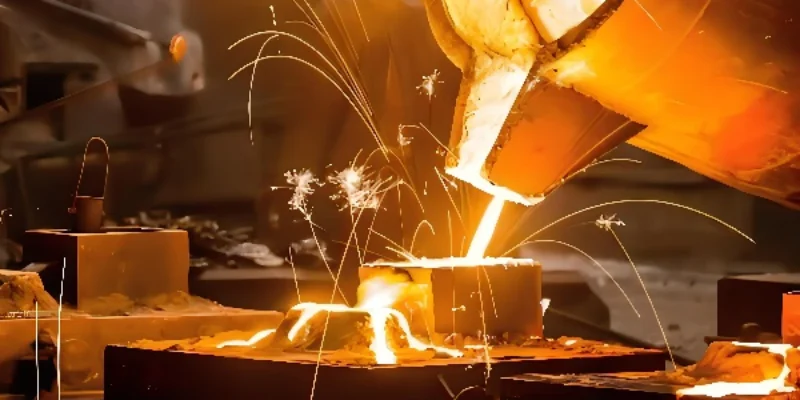
The mold casting process produces components by pouring liquid material into a prepared mold cavity, where it solidifies into the desired shape. This manufacturing method enables the creation of highly accurate and repeatable geometries, even for complex designs. It can be applied to a wide range of materials, making it a versatile solution across industries. By supporting both high-volume production and precision-focused applications, mold casting offers an efficient balance between scalability, dimensional accuracy, and material performance.
| Industry | Application Description |
|---|---|
| Automotive/engine | Makes lots of small parts quickly |
| Agriculture | Makes parts for farm machines |
| Commercial pumps | Makes parts for pumps used in many places |
| Marine | Makes parts for boats and ships |
| Power generation | Makes parts for power equipment |
| Hydraulic | Makes parts for hydraulic systems |
| Oil and gas | Makes parts for oil and gas work |
Key Takeaways
- Mold casting produces dimensionally accurate components by solidifying molten material within a prepared mold cavity.
- Picking the right pattern material is very important for accuracy. You can use wood, metal, or wax. Each one is good for different jobs.
- It is important to control the pouring temperature and cooling speed. This changes how strong and good the final casting is.
- Quality control helps make sure parts are strong and work well. Regular checks and careful handling stop problems during casting.
- Choosing the best casting method and materials gives better results. Think about what the part will do and how strong it needs to be.
Mold Casting Process Steps
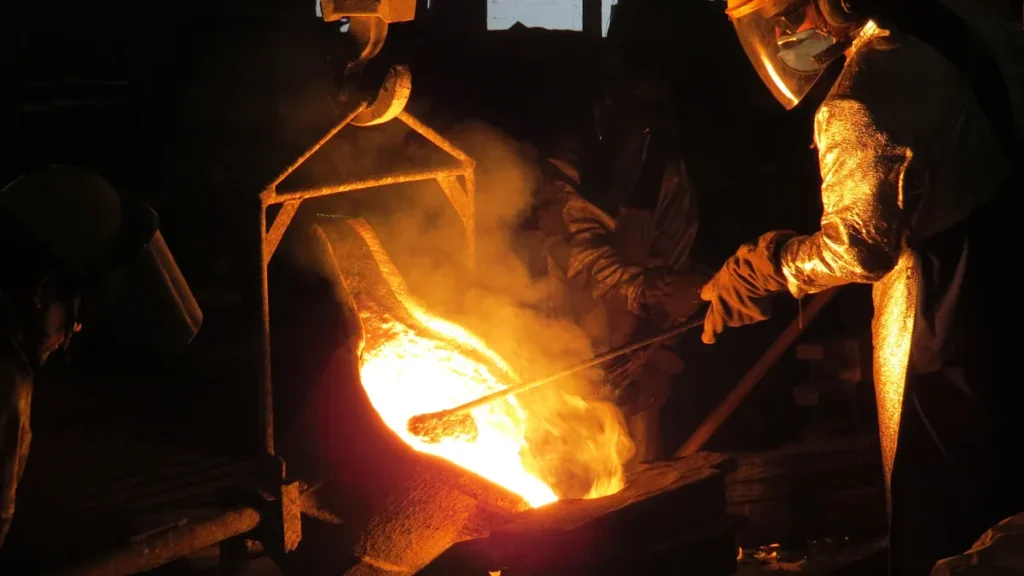
The mold casting process has several steps. Each step helps make sure the metal casting is good quality.
Pattern Creation
First, workers make a pattern. The pattern is a model for the part. Patterns are a bit bigger than the final part. This is because metal shrinks when it cools. The material for the pattern depends on the process and how accurate it needs to be. Common materials are:
- Wood, like sugar pine or Honduras mahogany
- Metal
- Plastics
- Wax, used in investment casting
- Plaster of Paris for special jobs
- Fiberglass
Choosing the right pattern material is important. Wax patterns with low shrinkage help keep the shape. Ceramic materials are strong and stable. This makes the casting more accurate. Experts focus on both the shape and material to get the best results.
Mold Preparation
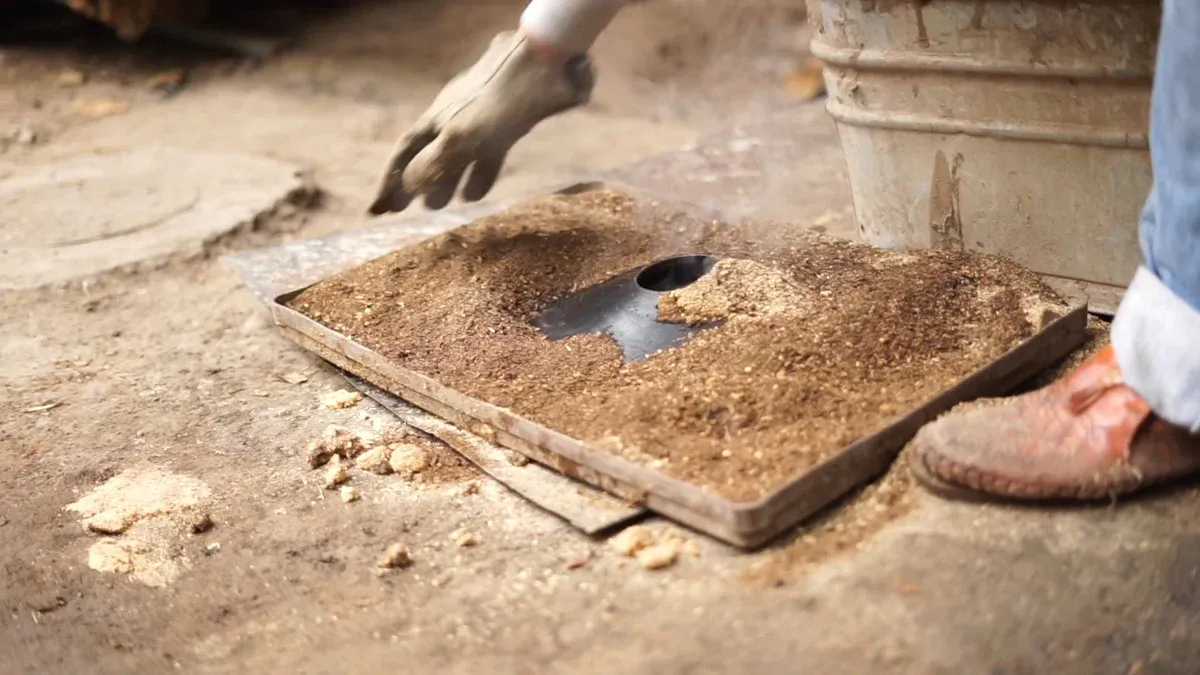
After making the pattern, workers prepare the mold. The pattern makes a space for the molten metal. The way the mold is made depends on the casting type. In sand casting, workers pack sand around the pattern. In investment casting, they cover the pattern with ceramic to make a hard shell.
Important steps in mold preparation are:
- Designing and making the pattern
- Picking the right pattern material
- Making the pattern a bit bigger for shrinkage
- Creating the mold with sand, ceramic, or other materials
Many things affect how the mold is prepared. These include the part’s complexity, the metal type, the mold design, and the casting method. The table below shows some key factors:
| Factor | Description |
|---|---|
| Part Design Complexity | Complex designs need special mold methods. |
| Material Selection | Different metals need different heat and cooling. |
| Mold Design | Good design helps metal flow and cool well. |
| Casting Method | Each method has its own rules. |
| Casting Tolerances | Tight tolerances need careful molds. |
| Solidification Rate | Controlling cooling stops defects. |
| Casting Defects | Knowing defects helps avoid them. |
| Mold Material and Lifespan | Strong molds last longer and work better. |
| Casting Volume and Batch Size | The number of parts affects the method used. |
Pouring and Solidification
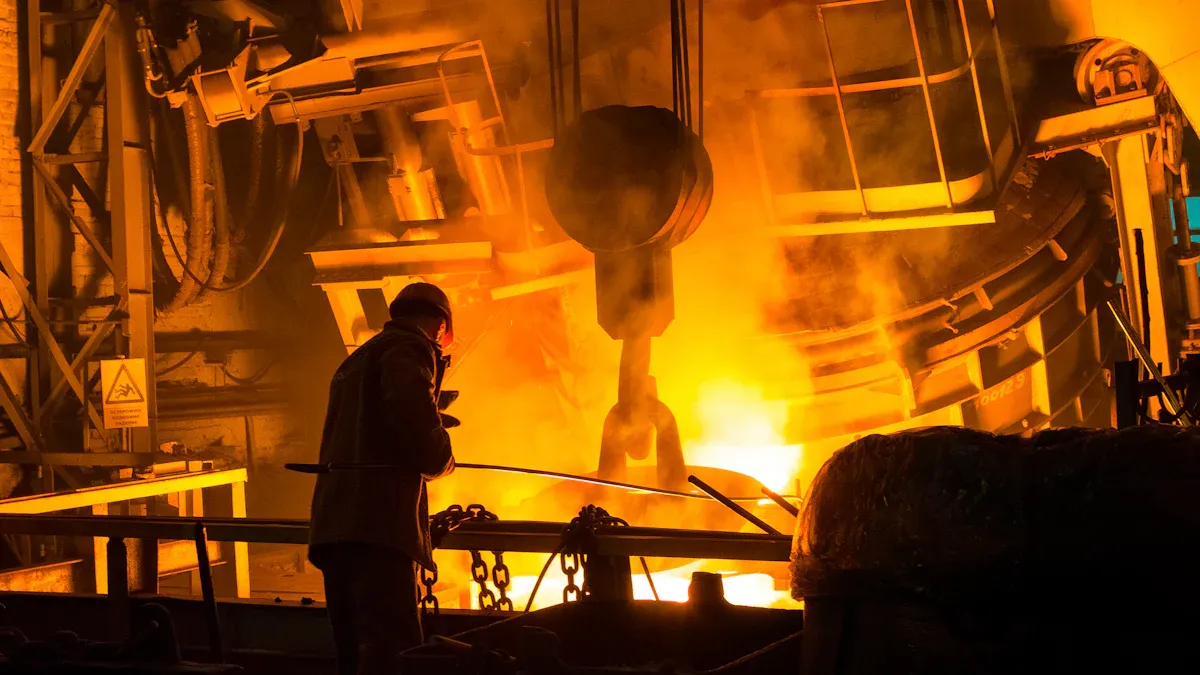
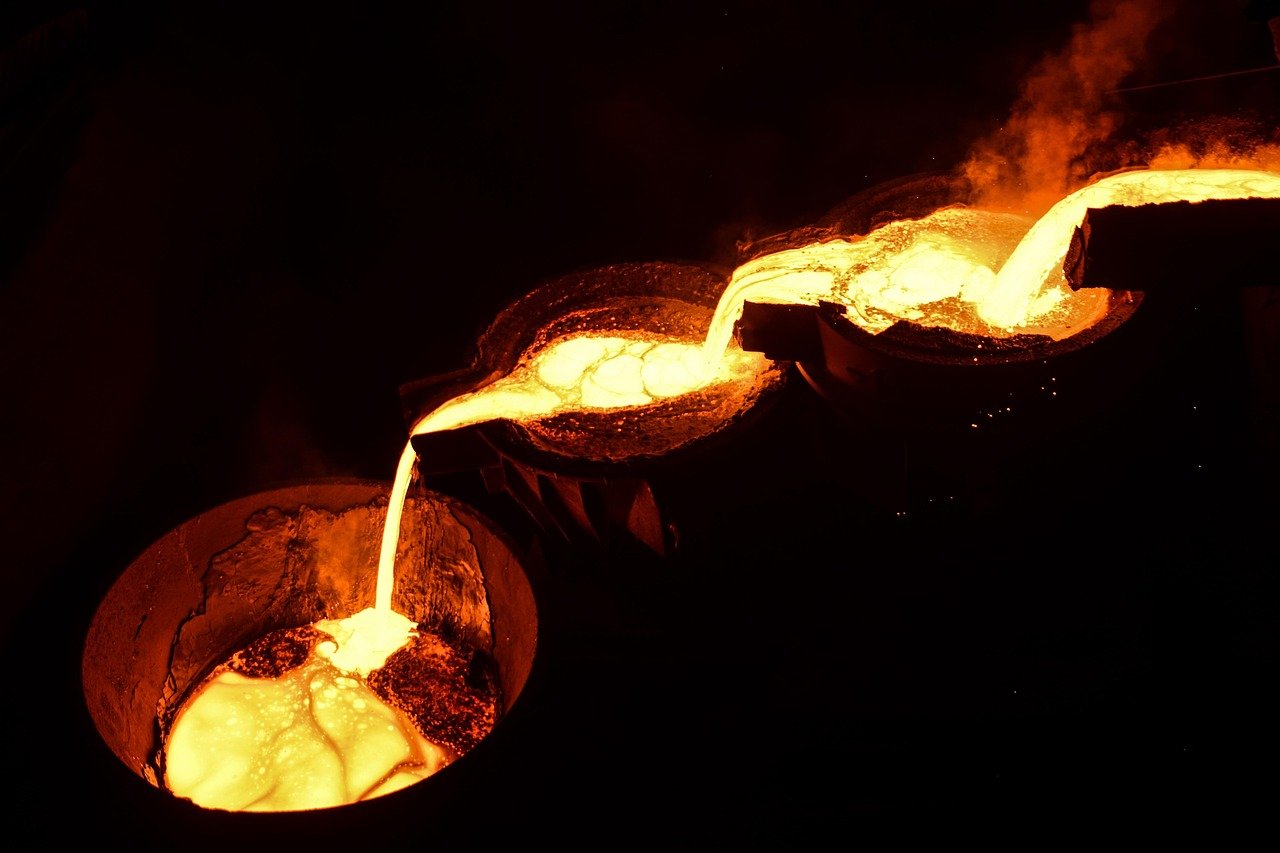
When the mold is ready, workers pour the metal. They melt the metal in a furnace. Then they pour it into the mold. Each metal has its own melting and pouring temperature. For example, aluminum melts at about 660°C (1220°F). It is poured at about 750°C (1382°F). Steel and copper alloys need higher temperatures.
Pouring temperature and speed are very important. If the metal is too hot or cold, it can cause problems. Handling molten metal needs care to keep workers safe and protect the mold.
Solidification is when the metal cools and gets hard in the mold. How the metal cools changes the casting’s properties. Fast cooling makes small grains and stronger metal. Slow cooling makes bigger grains and more defects. By controlling cooling, workers can make the casting stronger and better.
Mold Removal and Finishing
After the metal cools and hardens, workers take the casting out of the mold. This step is called shakeout. Workers use tools or machines like vibration tables to remove the casting.
Next, workers clean and finish the casting. They cut off extra metal and clean the surface. They may use shot blasting or sandblasting. Surface treatments like acid etching or shot peening make the part stronger and look better. High-pressure water jets can also clean the surface.
For parts that need smooth surfaces or exact sizes, precision machining is used. This step makes sure the part meets measurements. Some castings get a final finish, like painting or coating, to protect them and make them look nice.
Common finishing techniques are:
| Technique | Description |
|---|---|
| Media Blasting | Uses materials like aluminum oxide or glass beads for a matte finish. |
| Abrasive Flow or Tumbling | Smooths inside and outside surfaces. |
| Precision Handwork | Used for visible or cosmetic areas. |
| CNC Machining | Makes tight tolerances and smooth finishes. |
Each step in mold casting is important for making good metal parts.
Types of Mold Casting
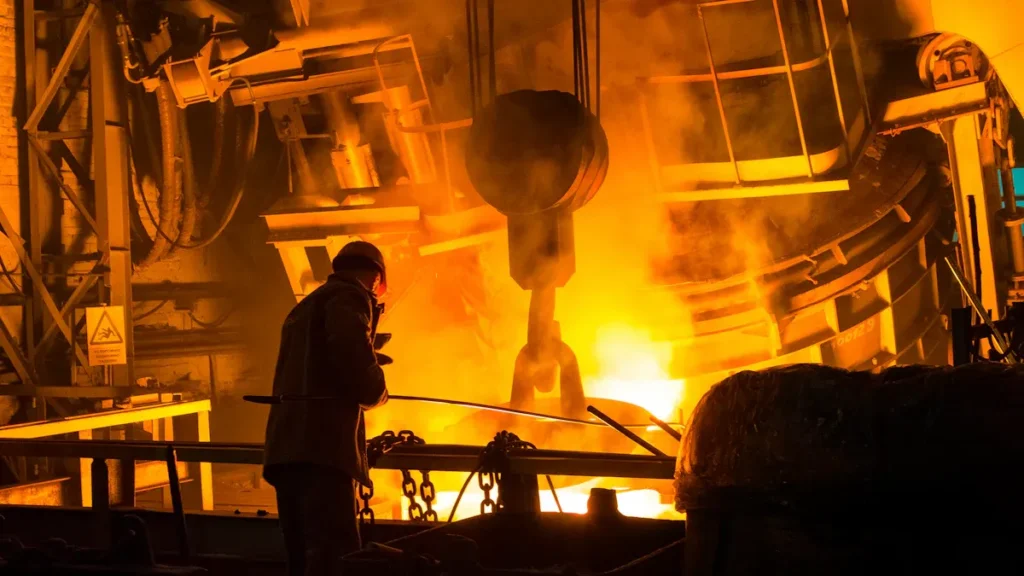
Metal casting uses different ways to make parts for many jobs. Each way has its own steps, good points, and best uses. The main types are shell mold casting, investment casting, permanent mold casting, and sand or plaster mold casting.
Shell Mold Casting Overview
Shell mold casting makes a thin shell around a hot pattern with sand and resin. This gives a smooth surface and close sizes. Workers use this for small or medium metal parts that need to be very exact. Shell mold casting is good for making gears, valve bodies, and pump housings. Many car and machine parts use this way.
Shell mold casting is special because it makes a smoother surface than sand casting and needs less extra work.
Investment Casting
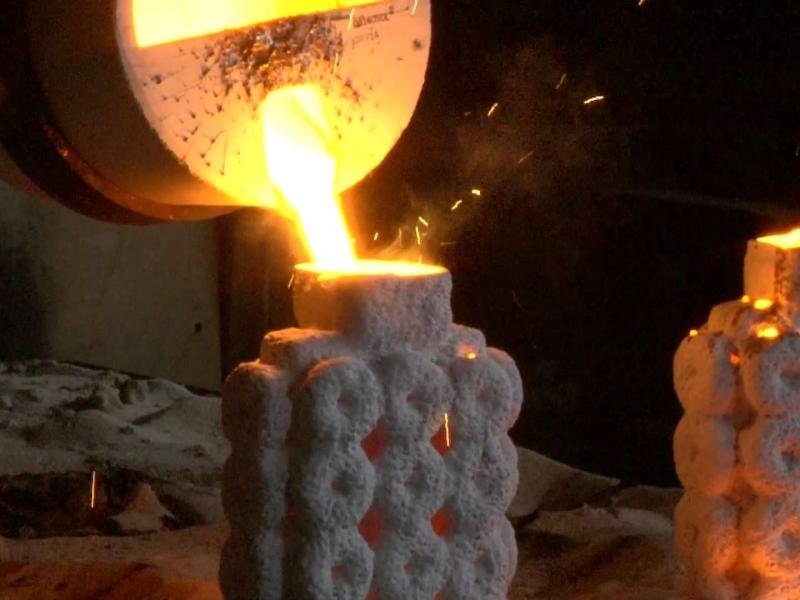
Investment casting is also called lost wax casting. It starts with a wax pattern. Workers cover the pattern with ceramic to make a shell. They melt out the wax, then pour hot metal into the shell. This way lets workers make very detailed and tricky shapes in metal. KEMING does investment casting for carbon steel, stainless steel, and iron. They meet tough industry rules.
| Casting Method | Description | Best Use Cases |
|---|---|---|
| Investment Casting | Wax pattern, ceramic shell, high precision | Aerospace, automotive, machinery |
| Shell Mold Casting | Sand-resin shell, smooth finish, tight tolerances | Gears, valves, pump housings |
Permanent Mold Casting
Permanent mold casting uses metal molds that can be used again. Workers pour hot metal into these molds. The metal cools fast and makes strong, exact parts. This way is good for making lots of parts because it gives the same results and nice surfaces. Permanent mold casting works best for medium to high production volumes requiring consistent quality.
| Benefit | Description |
|---|---|
| Dimensional Accuracy | Strong, less porous, consistent parts |
| Surface Finish | Smoother than sand casting |
| Production Efficiency | Fast cycles, good for large batches |
Sand and Plaster Mold Casting
Sand casting uses sand, clay, and water to make molds. This way costs less and works for big metal parts, but the surface is rougher and not as exact. Plaster mold casting uses plaster instead of sand. It shows more detail but is best for small groups. Both ways help make engine parts, art, and machines. Sand and plaster mold casting are liked because they are flexible and cheap, but they may need more work to make the surface better.
These methods are valued for flexibility and low tooling cost.
Mold Casting Materials
Mold Materials
Mold materials are very important in metal casting. Workers pick the best mold material for each part and metal. Some common mold materials are:
- Plastics
- Ceramics
- Wood
- Foam
Sand is also used a lot in metal casting. It is cheap and easy to shape. Some molds use special metals like zircon or chromite. These can take high heat and keep their shape. Resin-coated sand or sodium silicate bonded sand helps make more exact molds.
Mold materials influence thermal conductivity, dimensional stability, and surface finish, which directly affect casting quality. Workers must think about how the metal melts and flows. Good mold design and picking the right material make better castings.
Casting Metals
Metal casting uses many different metals. Each metal has its own jobs and good points. The table below shows some common metals and where they are used:
| Metal | Common Applications |
|---|---|
| Carbon Steel | Construction components, Machinery parts, Cutting tools, Automotive parts, Wrenches and hammers, Industrial equipment where strength and wear resistance are critical |
| Stainless Steel | Chemical processing equipment, Pumps & valves, Heat exchangers, Bearings, Impellers, Housings, Pressure vessels, Food & beverage equipment, Medical devices, Tool manufacturing |
| Nickel-based Alloys | Turbine engine parts, Aerospace components, Chemical processing equipment, Heat exchanges and industrial furnaces, Calciners, Marine parts, Food & beverage equipment, Medical equipment |
| Copper-based Alloys | Bushings, Bearings, Wear rings, Gears, Pumps & valves, Marine propulsion, Electrical components, Plumbing fittings |
| Grey Iron | Pump housings, Gears and valves, Hydraulic parts, Automotive engine blocks, Manhole covers, Machinery bases |
| White Iron | Crushers, Grinding balls, Coal pulverizers, Mill liners |
| Ductile Iron | Automotive components, Hydraulic parts, Machine tooling, Pipe and pipe fittings, Heavy-duty machinery components, Critical structural and load-bearing components |
| Aluminum Alloys | Automotive parts, Aerospace components, Boat and ship parts, Railway parts, Electronics, Consumer goods |
KEMING specializes in carbon steel, stainless steel, and iron castings, selected based on mechanical requirements, corrosion resistance, and cost efficiency.
Tip: Using the right mold material and casting metal gives better results. Always match the material to the job for the best outcome.
Key considerations and challenges in mold casting
Quality Control
Quality control is very important in metal casting. Workers check each step to make sure parts are good. They use different ways to keep the process safe and avoid mistakes.
Here are some main things for quality control in metal casting:
| Key Factor | Description |
|---|---|
| Assembly Accuracy | Workers make sure parts fit together and surfaces are smooth. |
| Surface Treatment | Polishing and coatings help parts last longer and look nice. |
| Material Selection | Picking the best materials stops problems and keeps casting strong. |
| Proper Handling | Clean work areas and careful storage stop dirt from getting in the metal casting. |
This helps them make sure every casting is what the customer wants.
Common Issues
Metal casting can have many problems. Some problems can make parts weak or break. Workers need to know how to find and fix these problems during mold casting.
| Defect Type | Description | Causes | Remedies |
|---|---|---|---|
| Porosity | Small holes or gas bubbles in the casting. | Gases in metal or mold release agents. | Use degassing and better air flow. |
| Sinks | Dents on the casting surface. | Not enough metal or fast cooling. | Add risers and make a better mold. |
| Slag Inclusions | Dirt inside the casting. | Dirty metal or bad mold design. | Clean molds and use good materials. |
| Dross | Trash stuck in the casting. | Oxidation or not enough flux. | Skim metal and use the right flux. |
| Welding | Parts stick together when they should not. | Bad flow or too hot metal. | Change pouring heat and how you pour. |
| Hot Cracks | Cracks from heat in the casting. | Fast cooling or high heat. | Control water and let air out better. |
Tip: Checking often and good training help workers find problems early in mold casting. This keeps every casting safe and strong.
Mold casting integrates material science, thermal control, and precision engineering to produce reliable components. Picking the right casting type and materials changes how strong and useful the metal part is. The temperature for pouring, the mold material, and the metal you use are all important for good results.
When you choose a company for metal casting, think about these things:
- They should have good quality checks and certificates.
- They need lots of experience and a good history.
- They must use strong quality control and follow ISO rules.
- They should deliver parts quickly and on time.
- They need to make parts that fit your needs.
- They must talk clearly and help you when needed.
- They should know a lot about special metal casting.
If you work with skilled companies like KEMING, you get metal parts that meet high standards. Careful planning and paying attention to details help stop problems and give you good results.
FAQ
What is the main benefit of mold casting?
It enables scalable production with consistent dimensional accuracy and mechanical performance.
Which metals work best for mold casting?
| Metal | Common Use |
|---|---|
| Carbon Steel | Machinery, tools |
| Stainless Steel | Food, medical parts |
| Iron | Engine blocks |
These metals offer strength and durability.
How do workers check for casting defects?
Workers use tests like X-rays, hardness checks, and visual inspections. These tests help find cracks, holes, or weak spots in the metal.
Can mold casting make complex shapes?
Yes, mold casting can create very detailed and complex shapes. Investment casting is especially suitable for components requiring intricate geometry, thin sections, and tight tolerances.