EN
EN  DE
DE  ES
ES  FR
FR 
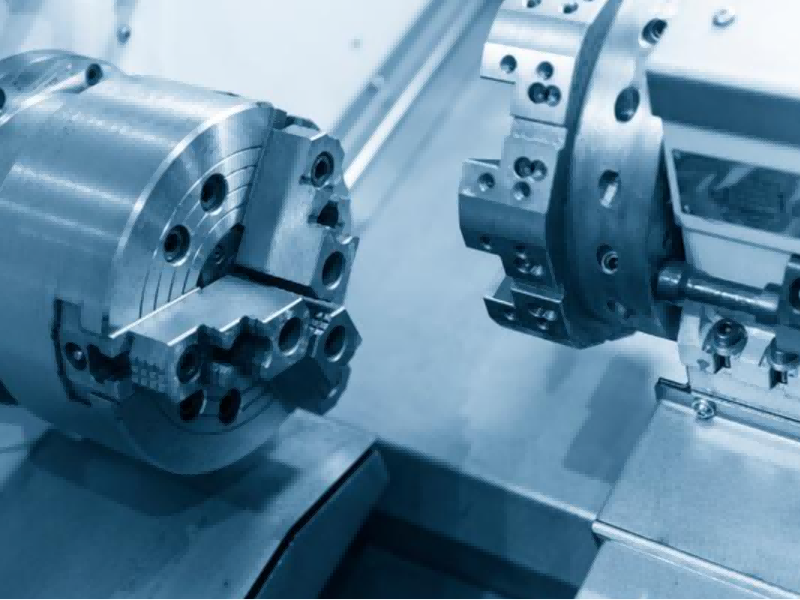
The turning process shapes materials into cylindrical workpieces through the act of cutting. Specifically, this process utilizes cutting tools to remove excess material from a workpiece rotating at high speed, thereby achieving the desired form. Turning holds a pivotal position in modern manufacturing due to its capacity to produce components with exceptional precision. Computer Numerical Control (CNC) lathes employ computer systems to govern tool movements, rendering the entire machining process significantly more precise and highly repeatable.
Key Takeaways
- The turning process transforms raw materials into cylindrical shapes of precise dimensions by cutting material away from a rotating workpiece.
- CNC lathes facilitate high-precision component machining and significantly boost production efficiency; concurrently, they effectively minimize scrap rates and ensure product quality consistency.
- Operators must execute a specific series of preparatory steps to ensure that both the machine tool and the cutting tools are in optimal working condition; this is critical for guaranteeing the superior quality and dimensional accuracy of the machined parts.
- Turning encompasses various specific techniques—including external turning, facing, taper turning, grooving, and thread turning—each possessing its own distinct function and application context.
- Selecting the most appropriate materials and cutting tools is paramount, as this helps ensure that the final machined workpiece meets the anticipated standards regarding both surface finish and performance.
Overview of the Turning Process
What Is Turning?
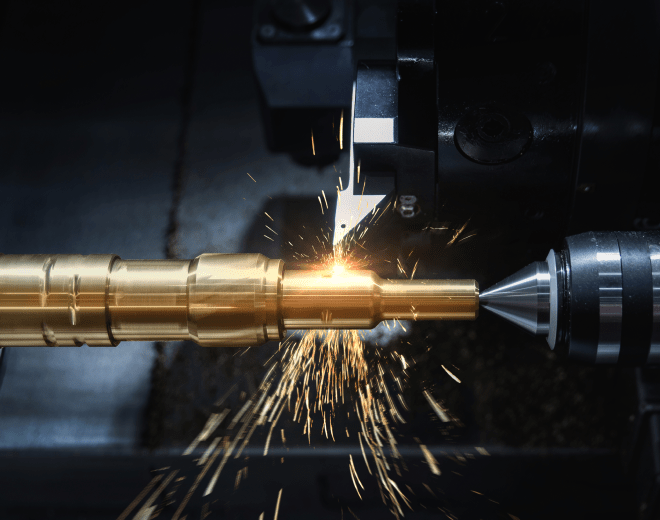
Turning is a machining process that removes material through cutting. It utilizes a cutting tool applied to a rotating workpiece to shape its surface, rendering it round and smooth. Most turning operations are performed on a lathe. The lathe drives the rotation of the workpiece, while the cutting tool moves along the workpiece’s axial direction. This machining method enables the production of high-precision cylindrical workpieces using metals, plastics, or other materials. The turning process is renowned for its exceptional machining accuracy, capable of producing precision parts with extremely tight tolerance requirements. Numerous industries widely employ turning technology to manufacture robust and reliable components.
| Tolerance Range | Measurement Units |
|---|---|
| ±0.0001 inches | ±0.0025 mm |
| ±0.02 mm to ±0.10 mm | |
| ±0.025–0.125 mm | ±0.001–0.005″ |
How the Process Works
The turning process follows a series of established steps to ensure the precision and high quality of the finished parts. Operators are responsible for setting up the machine tool and cutting tools, and for removing material through a method of incremental, layer-by-layer cutting. Each step is designed to ensure that the final machined part fully meets all precise technical specifications.
The turning process precisely controls both the dimensional accuracy and surface finish of a workpiece. Before actual cutting begins, the operator carefully inspects the cutting edge of the tool for any signs of damage. Based on the material properties of the workpiece and the required surface finish specifications, they make appropriate adjustments to the spindle speed and feed rate. After each cutting pass is completed, the operator measures the diameter of the workpiece and, as necessary, makes fine adjustments to the tool position. It is precisely through this rigorous and meticulous approach that the final machined parts are able to fully meet all technical specifications.
Fundamentally, turning is a subtractive manufacturing process that transforms a larger block of raw material into a desired component by removing excess material. Compared to additive manufacturing (i.e., 3D printing), turning may generate a greater amount of waste material. However, turning is capable of achieving extremely high dimensional accuracy and exceptionally smooth surface finishes. Thanks to the application of automation technologies—as well as emerging systems such as Artificial Intelligence (AI) and the Internet of Things (IoT)—operators can effectively minimize human error and significantly boost operational efficiency during the machining process. These advanced auxiliary tools make the turning process both more efficient and more reliable.
Turning Process Steps
Workpiece Mounting
The operator’s first priority is to ensure that the workpiece is securely fastened. Typically, they use a three-jaw chuck to clamp the workpiece onto the lathe spindle. This clamping method ensures that the workpiece remains stable and secure while rotating at high speeds. To guarantee both machining safety and precision, the workpiece must be clamped firmly. If the workpiece were to loosen or shift during the machining process, the resulting part would fail to meet the required precision standards. Before cutting officially begins, the operator carefully verifies all centering and alignment conditions. They strictly adhere to established industry operating protocols and standards to ensure that the workpiece remains in its designated position throughout the entire machining process.
Tool Setup
The operator begins by preparing the cutting tools, ensuring everything is ready for the actual turning operation. To guarantee machining precision, they adhere to a series of critical steps:
- They verify that both the machine tool and the workpiece are securely clamped and properly aligned. For workpieces supported at only one end, they maintain a length-to-diameter ratio of 2:1; for longer workpieces, they utilize a tailstock to provide auxiliary support.
- They ensure that the tool overhang—the length of the tool extending beyond its holder—is not excessive. Based on the characteristics of the workpiece material, they select the appropriate insert geometry and cutting speed. They also plan ahead to replace the cutting inserts promptly, doing so before any signs of surface roughness appear on the workpiece.
These steps help prevent tool breakage while simultaneously ensuring that the metal workpiece achieves a smooth surface finish.
Material Removal
Next, the cutting tool traverses along the workpiece to remove excess material. The operator controls the depth of cut and feed rate for each pass, thereby shaping the workpiece into the required form. Through the turning process, surfaces that are straight, tapered, or grooved can be generated. The operator closely monitors the condition of both the tool and the workpiece to prevent issues such as surface roughness or vibration; if necessary, they adjust the machining parameters to ensure the workpiece maintains high quality standards.
Quality Inspection
Upon completion of the machining process, the operator inspects the finished workpiece for dimensional accuracy. Depending on the specific precision requirements of the part, they employ the appropriate inspection tools and methods:
| Inspection Condition | Typical Tool | Sampling Method | Application Scenario |
|---|---|---|---|
| Low precision requirement | Micrometer / Caliper | ~10% sampling | General CNC turned parts |
| Medium precision, small batch | Micrometer + Dial indicator | Increased sampling | Functional mechanical parts |
| High precision, large batch | Pneumatic gauge + custom fixture | In-process or 100% check | CNC precision turned parts |
| Critical dimensional control | Coordinate Measuring Machine (CMM) | Periodic validation | Customer-critical features |
For parts requiring extremely high precision, advanced inspection tools—such as Coordinate Measuring Machines (CMMs) or laser scanners—are typically utilized to verify the workpiece by comparing it against its corresponding CAD model. Integrating inspection processes synchronously during the turning operation helps ensure product quality consistency and facilitates compliance with rigorous quality standards.
Types of Turning Operations
Turning operations are designed to alter the geometric shape of a workpiece. Each turning process involves cutting on a lathe; by removing excess material, the workpiece is ultimately brought to the specific form required by the design. Turning encompasses a wide variety of distinct types; it is precisely through this diverse array of machining methods that machinists are able to manufacture parts featuring a broad spectrum of complex shapes and features.
| Operation | Description |
|---|---|
| Straight Turning | Takes off material along the workpiece’s length. This lowers the diameter and makes a smooth, straight surface. |
| Facing | Cuts across the end of a workpiece. It makes the end flat or sets it to a certain length. |
| Taper Turning | Makes a sloped area between surfaces with different diameters. The tool moves at an angle. |
| Grooving | Makes grooves or thin cuts of a set depth. These can be inside or outside the workpiece. |
| Thread Turning | Cuts a spiral groove with a certain pitch. This goes along the surface of a round workpiece. |
Equipment and Materials in Turning
Lathe Machines
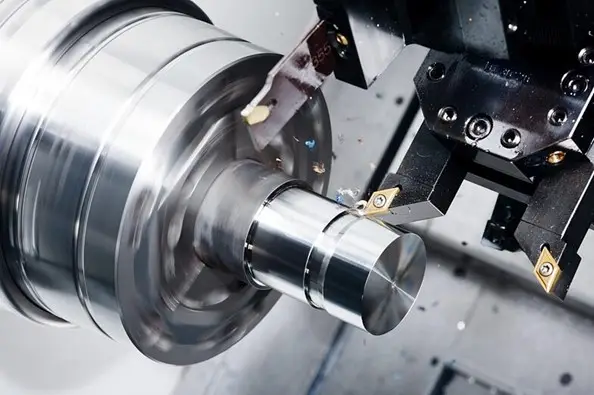
A lathe is a machine tool designed to rotate a workpiece. By means of a cutting tool, the rotating workpiece is shaped into the desired form. Various types of lathes are available to suit different machining tasks. Common types include:
- Conventional Lathes: Suitable for a wide variety of machining tasks.
- CNC Lathes: Suitable for tasks requiring high speed and high precision.
- Turret Lathes: Suitable for the batch production of parts.
- Bench Lathes: Suitable for small workpieces or precision machining tasks.
Each type of lathe assists operators in performing a wide range of machining operations, such as facing, grooving, cutoff, threading, drilling, boring, knurling, and tapping. KEMING utilizes advanced CNC lathe equipment to ensure that every component meets precise manufacturing standards.
Cutting Tools
Cutting tools play a pivotal role in the turning process. Selecting the appropriate tool not only makes the machining process more efficient and seamless but also effectively extends the tool’s service life. The following are some key points regarding cutting tools:
| Feature | Impact on Performance | Examples / Notes |
|---|---|---|
| Tool Material | Changes how hard, tough, or heat-proof the tool is | Tungsten carbide, high-speed steel, ceramics |
| Coating | Makes the tool last longer and cut faster | TiAlN, TiN, AlN |
| Grinding Angle & Arc | Changes how much force is needed and how smooth the part is | Rake angle, relief angle, tool tip curve |
| Chip Relief Design | Helps chips move away and keeps the tool cool | Shape and size depend on the workpiece material |
| Speed and Feed | Changes how smooth the part is and how long the tool lasts | Must match tool and workpiece material |
Suitable Materials
The turning process is suitable for a wide variety of materials. Materials commonly utilized by machinists include:
- Metals like steel, aluminum, brass, titanium, and zinc
- Plastics like nylon, ABS, polycarbonate, and PEEK
- Composites and some ceramics
The material you select directly influences the ease of machining and determines the final quality of the finished part. KEMING specializes in the investment casting and CNC machining of carbon steel, stainless steel, cast iron, aluminum, and zinc alloys. These materials are widely utilized across the automotive, marine, and aerospace sectors.
Turning Process Advantages and Disadvantages
Key Benefits
The turning process offers numerous benefits, which is why it is widely utilized across various manufacturing facilities. Its primary advantages include:
- The turning process is compatible with a wide range of materials—including metals, plastics, and wood—enabling companies to manufacture a diverse array of components.
- This process is capable of producing precision parts with extremely tight tolerances. It allows for the machining of intricate micro-structures while maintaining strict dimensional accuracy—a critical requirement for key components where precision is paramount.
- CNC turning utilizes computer-controlled machine tools to ensure consistent machining accuracy and highly repeatable results, even when processing parts with complex geometries.
- The turning process features relatively short production cycles (lead times). Factories can rapidly complete part machining and ship orders promptly; efficiency can be further enhanced through the integration of automatic bar feeders.
- Operators do not require specialized professional skills to operate CNC machine tools; for most machining tasks, basic training is sufficient to perform the job competently.
- Cutting speeds can be adjusted according to specific requirements, allowing the machining process to be perfectly tailored to the unique characteristics of different materials and the specific demands of individual parts.
- For cylindrical or rotational parts, the turning process is typically more efficient and cost-effective than other machining methods, such as milling.
- The turning process enables companies to manufacture high-strength, high-precision components that are widely utilized in the automotive, aerospace, and general industrial sectors.
Common Limitations
While the turning process is practical, it does present certain limitations:
- The process involves shaping parts by cutting away material from a larger raw stock, which often generates a significant amount of waste—particularly in the case of parts with complex geometries or when utilizing expensive materials.
- For materials of high hardness—such as titanium alloys—the process typically necessitates the use of specialized cutting tools and requires extended machining times. This not only accelerates tool wear but also leads to a further increase in material waste.
- The setup costs associated with implementing CNC turning operations can be quite substantial, particularly when producing customized parts or components with intricate designs.
- The process consumes energy and utilizes cutting fluids during machining, which can have a negative impact on the environment. Consequently, the resulting material waste and worn-out cutting tools must undergo proper disposal or recycling procedures.
- Certain specific geometric shapes are difficult—if not impossible—to form solely through the turning process. For parts with highly complex designs, it is often necessary to supplement turning with additional machining operations.
The turning process transforms raw materials into precision-engineered circular components. Across a wide range of applications, this technique plays a pivotal role in enhancing both the strength and durability of parts.Turning makes parts stronger and helps them last longer.
- Turning serves to bolster the structural integrity of components while simultaneously extending their operational lifespan.
- It ensures seamless and smooth interfaces between materials, thereby endowing the parts with superior overall toughness.
- Leveraging innovative machining techniques not only facilitates effective cost savings but also leads to a substantial reduction in material waste.
FAQ
What is the primary objective of turning in the manufacturing process?
The turning process transforms raw materials into cylindrical parts. It serves to smooth the surface of the part and ensure precise, error-free dimensions. Many businesses utilize turning technology to manufacture components that are robust, durable, and deliver superior performance.
How does CNC turning enhance precision?
CNC turning employs computer systems to control the movement of cutting tools. This helps eliminate errors that may arise from manual operation, while simultaneously ensuring that every manufactured part adheres to identical dimensional specifications.
What materials can be used for turning?
Machinists typically perform turning operations on metal materials such as steel, aluminum, and brass. Additionally, plastics and certain composite materials can also be turned. The specific choice of material depends on the required function and intended application of the part.
What is automated turning?
Automated turning refers to the use of automated machine tools for processing—equipment that requires minimal human intervention. These machines are capable of automatically executing the entire process—including part loading, cutting, and finishing—based on pre-programmed instructions. This approach not only significantly boosts operational efficiency but also ensures the stability and consistency of the manufacturing process.
Why do various industries prioritize CNC technology for turning operations?
Industries across the board opt for CNC technology in their turning operations due to its exceptionally high processing speeds and outstanding precision. CNC machine tools are capable of manufacturing parts with complex geometries while simultaneously ensuring a high degree of consistency across every single unit produced during mass manufacturing.