EN
EN  DE
DE  ES
ES  FR
FR 
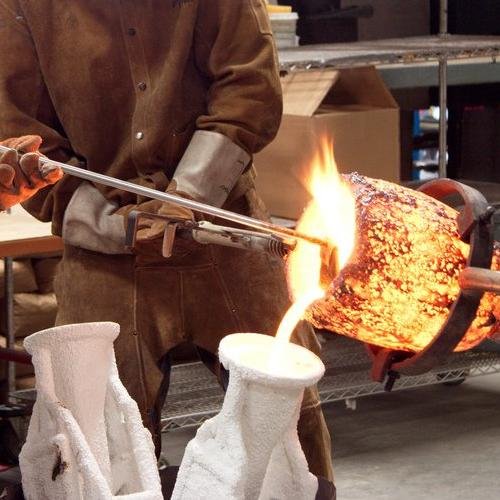
Lost foam process casting is a modern method used to produce highly precise metal parts. In this process, a foam pattern is first created and coated with a special refractory material. When molten metal is poured into the mold, the foam pattern vaporizes, leaving behind a detailed metal casting. Compared with traditional casting methods, lost foam casting offers higher dimensional accuracy, usually within ±0.1% of the part size, while traditional casting typically achieves about ±0.3%. This process is especially suitable for manufacturing parts with complex shapes and intricate designs, and it often reduces the need for additional finishing work. Due to these advantages, the global demand for lost foam casting continues to grow.
Key Takeaways
- Lost foam casting is very accurate. It can make parts within ±0.1% of the size. This is good for making complicated shapes.
- This process saves money by about 30%. It also makes less waste. It does not need sand cores or parting lines.
- Lost foam casting is good for the environment. It uses less energy and makes fewer emissions than old methods.
- KEMING gives trusted lost foam casting services. They make sure the quality is high and production is fast for many industries.
- The technique can be used for many metals like aluminum, cast iron, and ductile iron. It is useful for cars, planes, and factories.
Lost foam process casting steps
Foam pattern creation
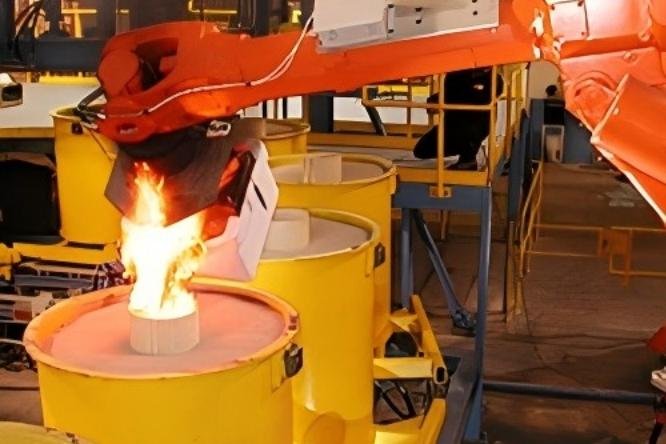
The first step is making a foam pattern. KEMING uses expandable polystyrene foam. Workers carve the foam to match the part’s shape. The foam is easy to cut and comes in different densities. This material disappears when hot metal touches it. Polyurethane foam can also be used for more detail and strength.
Quality control is very important. Workers look at the foam to find surface defects. They use machines to check the size. X-ray checks help find problems inside the foam. These checks make sure the foam is correct and strong.
| Foam Material | Properties |
|---|---|
| Expandable Polystyrene (EPS) | Easy to carve, comes in different densities, disappears without much residue. |
| Polyurethane Foam | Gives more detail and strength than EPS foam. |
Pattern coating and assembly
After making the foam pattern, workers coat it with a special material. This coating protects the foam and makes the casting smoother. KEMING uses a mix of calcined alumina, graphite powder, and phosphate binder. The coating stops hot metal from getting into the foam and helps make a smooth part.
Workers glue pieces together for tricky shapes. They spread the coating evenly and let it dry. Drying takes away water and makes the coating stronger. The coating must be even to stop sand from getting in and causing problems.
| Component | Function | Weight Percentage Range (%) | Key Property Influenced |
|---|---|---|---|
| Calcined Alumina | Main Refractory | 55 – 65 | Heat resistance, Stability |
| Graphite Powder | Extra Refractory/Lubricant | 15 – 20 | Shock resistance, Stops metal from getting in |
| Inorganic Phosphate Binder | High-Temp Binder | 3 – 7 | Strength in heat, Stops erosion |
Tip: The coating quality is very important. It stops metal from getting in and makes the surface smooth.
Mold preparation and metal pouring
Workers put the coated foam pattern in a sandbox. They fill the box with dry sand to hold the shape. Vibrating the mold packs the sand and keeps it stable. Packing the sand right stops the mold from breaking and makes the casting better.
KEMING uses dry sand with no extra stuff. The sand process is simple and works well. Workers put the foam in the mold and pack the sand.
When the mold is ready, workers pour hot metal into the space. The metal’s temperature depends on what metal is used. For ductile iron, the best temperature is between 1,350°C and 1,400°C. The hot metal makes the foam disappear and fills the space to make the part. This step is also called evaporative pattern casting.
- Mold Preparation Steps:
- Put the coated foam pattern in a sandbox.
- Fill the box with dry sand.
- Vibrate the mold to pack the sand.
- Pour hot metal at the right temperature.
Casting removal and finishing
After the metal cools and gets hard, workers take the casting out of the sand. The foam is gone, leaving a detailed metal part. This process is also called lost-foam casting or evaporative pattern casting.
Finishing makes the surface better. KEMING uses CNC machines to improve the casting. Workers pick good foam and use even coatings to lower defects. They control how fast and hot the metal is poured to stop bubbles and holes. Annealing and quenching make the metal stronger. Not much machining is needed because lost foam casting makes parts very accurate.
| Technique | Description |
|---|---|
| Precision Machining | CNC machines make foam patterns very accurate. |
| Material Selection | Picking good foam with even density lowers defects and keeps things consistent. |
| Pattern Assembly | Putting together tricky shapes with few joints and smooth parts makes them stronger. |
| Refractory Coatings | Even coatings stop sand from getting in and make the surface better. |
| Drying and Curing | Drying the coating well makes it stronger and stops defects. |
| Sand Compaction | Packing sand around the foam pattern keeps it stable. |
| Controlled Pouring Rate | Pouring metal at a steady rate stops bubbles and lowers defects. |
| Temperature Control | Pouring metal at the best temperature makes the foam disappear completely. |
| Degassing | Taking out gases from the metal stops holes and makes it better. |
| Directional Solidification | Controlling how the metal gets hard lowers stress and makes it stronger. |
| Cooling Rates | Changing how fast the metal cools helps get the right structure and properties. |
| Use of Chills | Using chills cools some parts faster. |
| Annealing | Lowers stress inside and makes the metal bend easier. |
| Quenching and Tempering | Makes the metal harder and stronger. |
| Solution Treatment | Gets rid of bad stuff and makes the metal resist rust. |
| Aging | Controls how new parts form, making the metal stronger. |
Lost foam casting makes parts with tricky shapes and high accuracy. The process needs little finishing. KEMING’s lost-foam casting works well for aluminum, cast iron, and ductile iron parts.
Advantages of lost foam process casting
Precision and net shape capability
Lost foam casting makes parts very accurate. KEMING uses special ways to match each part to the design. Workers make foam patterns that look like the final part. This process lets them create tricky shapes and smooth surfaces. Lost-foam casting can reach tight tolerances. Thin-walled ductile iron parts can be within +/- 0.0015 inches. Most parts are within +/- 0.003 inches for every inch. The table shows the grades you can get:
| Tolerance Grade | Achievable Tolerances |
|---|---|
| DCT Grade | CTG9 ~ CTG13 |
| GCT Grade | CTG5 ~ CTG8 |
Lost-foam casting works well for aluminum, cast iron, and ductile iron. These metals keep their shape and size during casting. The result is parts that are very accurate and need less machining.
Cost and material efficiency
Lost foam casting saves money and materials. The process does not need sand cores or parting lines. This means less waste and fewer steps. KEMING’s lost-foam casting lowers costs by about 30%. Workers reuse more than 90% of the sand. The process uses less energy, about 10–15 kWh per ton. This is lower than investment casting. The table compares features:
| Feature | Lost Foam Casting | Traditional Casting (e.g., Sand Casting) |
|---|---|---|
| Cores | Not required | Required |
| Parting Lines | Not needed | Necessary |
| Material Usage | Minimizes waste | Higher waste due to cores and parting lines |
| Dimensional Accuracy | High | Variable |
| Sand Reclamation Rate | Exceeds 90% | Lower than lost foam casting |
| Energy Consumption | Reduced by approximately 15% | Higher than lost foam casting |
| Overall Cost | Lowered by around 30% | Generally higher |
Lost-foam casting makes lightweight and strong parts. Aluminum parts are strong and resist rust. Cast iron and ductile iron parts are tough and flexible.
Environmental benefits
Lost foam casting helps the environment. The process uses less energy and makes fewer emissions. KEMING’s lost-foam casting saves up to 30% in energy. It also uses 7% less material. Workers do not need sand cores, so fewer harmful gases are made. The process does not make soot or triethylamine tail gas. The table shows the improvements:
| Benefit | Percentage Reduction/Improvement |
|---|---|
| Energy Savings | 25%-30% |
| Labor Productivity Savings | 46% |
| Material Usage Reduction | 7% |
| Production Cost Reduction | 20%-25% |
| Particulate Emissions | Less than traditional processes |
| Greenhouse Gas Emissions | Less than traditional processes |
Note: Lost-foam casting helps make factories cleaner. It helps industries reach their environmental goals.
Challenges and limitations
Pattern fragility and porosity
Foam patterns in lost foam casting can break easily. Workers must be gentle with them. The foam can bend or change shape during work or moving. This means workers need to be careful at all times. If the foam breaks, the final part may have problems. Porosity is also a problem. Sometimes, the foam does not disappear all the way. Wet sand can make tiny holes in the metal part. These holes can make the part weaker. Quality checks help stop these issues.
Die cost and process control
Lost foam casting needs special dies to make foam patterns. Each die costs between $100 and $300. Steel dies for investment casting can cost much more, from $15,000 to $60,000. Ceramic materials add $3 to $8 for each kilogram. These costs can make the project more expensive. Good process control is needed to keep quality high. Workers use different tools to check every step.
| Process Control Technology | Description |
|---|---|
| Foam Pattern Inspection | Checks the foam pattern with visual, dimensional, and X-ray inspections. |
| Refractory Coating Quality Control | Measures thickness, tests adhesion, and checks surface roughness. |
| Sand Mold Compaction | Monitors pressure, density, and permeability of the sand mold. |
| Metal Pouring and Solidification Control | Controls pouring temperature, flow, and cooling rates. |
| Post-Casting Inspection and Testing | Includes visual checks, dimensional tests, and mechanical testing of the final casting. |
Surface finish concerns
Surface finish can change in lost foam casting. Gas porosity can make small round holes. These holes can make the part less strong. Sand erosion can cause marks and extra bits on the surface. If the mold does not fill right, it can make empty spaces inside. The table below shows common problems and how to fix them.
| Issue | Cause | Impact | Mitigation |
|---|---|---|---|
| Gas Porosity | Incomplete vaporization or moisture in sand | Voids up to 3 mm, lowers strength by 20% | Pre-dry patterns; use vacuum degassing systems. |
| Sand Erosion | High-velocity metal entry into loose sand | Surface blemishes, needs up to 1.5 mm machining | Increase sand compaction; use grain-graded silica sand. |
| Incomplete Fill | Rapid cooling in large sections | Shrinkage cavities, affects part function | Optimize gating design; control pouring temperature. |
Lost foam casting often gives smooth surfaces. The foam pattern’s finish shows up on the metal part. This means less extra work is needed. Sometimes, the surface depends on the foam and coating quality. Workers may need to do more finishing if the surface is rough.
Applications of lost foam process casting
Automotive industry
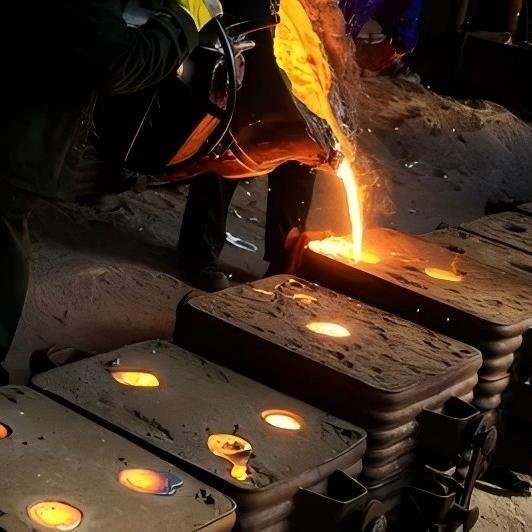
The automotive industry uses lost foam casting to make strong, light parts. KEMING makes engine blocks and cylinder heads for cars and trucks. They also make lightweight aluminum engine parts. This method lets engineers design parts with thin walls. Thinner walls mean each part weighs less. Lighter parts help cars use less fuel and go faster. Lost foam casting also means less machining is needed. This saves time and materials during production.
- Lost foam casting makes engine blocks and cylinder heads lighter.
- The process shapes parts with thin walls and better designs.
- Less machining is needed, so workers save material.
Automotive companies pick lost foam casting because it makes tough parts. These parts resist rust and wear. Aluminum castings are strong but not heavy. Cast iron and ductile iron castings are very tough and last a long time.
Aerospace sector
Lost foam casting helps the aerospace sector by making light, strong parts. KEMING makes turbine blades and engine parts for planes. They also make structural parts. These parts need to be exact and handle high stress.
| Aerospace Component | Characteristics |
|---|---|
| Turbine Blades | Lightweight, high-strength |
| Aircraft Engine Components | Lightweight, high-strength, precise details |
| Structural Elements | Lightweight, high-strength |
Aerospace engineers like lost foam casting because it makes tricky shapes. The process makes sure each part meets strict safety rules.
Construction and consumer electronics
Lost foam casting is used for construction equipment and electronics. KEMING makes brackets, housings, and frames. Aluminum castings do not rust, so they are good for outside. Cast iron and ductile iron castings are strong and last long. Electronics makers use lost foam casting for cases and connectors. These parts have smooth surfaces and exact sizes.
Note: Lost foam casting makes products better and helps them last longer in construction and electronics.
Industrial machinery
Industrial machines use lost foam casting for gears, pumps, and valves. KEMING makes parts that can handle heavy work and do not wear out fast. Cast iron and ductile iron castings work well in tough places. Aluminum castings keep machines light and easy to move. Lost foam casting lets workers make custom parts for each machine.
Manufacturers trust lost foam casting to give them good parts. These parts work well even when used a lot. The process helps industries that need strong, long-lasting parts.
Comparison with other casting methods
Lost foam vs sand casting
Lost foam casting and sand casting both make metal parts. They use different materials and steps. Lost foam casting uses foam patterns. Sand casting uses sand mixed with binders. In lost foam casting, the foam disappears when hot metal is poured. This makes a space for the metal. In sand casting, workers build a mold from sand and pour in the metal. Lost foam casting gives more accurate parts. The foam pattern matches the final part closely. Sand casting can have problems with surface finish and size.
| Aspect | Lost Foam Casting | Sand Casting |
|---|---|---|
| Pattern Material | Foam (EPS, EPMMA) | Sand mixed with binders |
| Process Characteristics | Foam vaporizes during pouring | Mold created from sand |
| Quality Control | Precision tied to foam pattern | Issues with dimensional stability |
| Environmental Impact | Lower due to absence of binders | Higher due to binder usage |
| Automation and Cost | High automation, reduced costs | Lower tooling costs, more labor-intensive |
Lost foam vs investment casting
Lost foam casting and investment casting both make detailed parts. They are different in some ways. Lost foam casting is good for big, tricky shapes. It works well with small draft angles. Investment casting is best for small, thin parts with fine details. Lost foam casting usually has a rougher surface. Investment casting gives a smoother finish. Lost foam casting uses foam patterns. These cost less and are faster to make. Investment casting uses wax patterns and ceramic molds. These cost more but give tighter tolerances.
| Feature | Lost Foam Casting (LFC) | Investment Casting (IC) |
|---|---|---|
| Design Flexibility | Complex shapes, minimal draft angles | Intricate, thin-walled parts |
| Dimensional Tolerances | ±0.5–1.0 mm | ±0.1–0.3 mm |
| Surface Finish | Ra 3.2–6.3 µm | Ra 0.8–3.2 µm |
| Pattern Creation | Rapid, low tooling costs | Precise, higher tooling costs |
| Material Compatibility | Aluminum, iron alloys | Many alloys |
| Production Scale | Large, single-piece castings | Small, intricate parts |
Unique features of lost foam process casting
Lost foam casting is special because it is efficient. It can make tricky shapes in one step. This method needs less extra machining and finishing. It also uses less labor and energy. This saves money and time. Lost foam casting is good for making many parts at once. It helps make lots of parts that are all the same.
| Feature Description | Benefit |
|---|---|
| Produces complex shapes in a single step | Reduces need for multiple processes |
| Lowers machining and post-processing needs | Saves time and resources |
| Reduces labor and energy requirements | Lowers overall production costs |
| Streamlines production | Increases efficiency and speed |
| Suitable for mass production | Enhances output consistency and quality |
Lost foam process casting gives accurate and fast results. It helps make parts with tricky shapes. Manufacturers get strong parts that last a long time. KEMING is a trusted company for this process. Picking the right materials and designs makes parts better. Casting methods also help parts stay strong. Engineers care about fire safety and how materials act. They also want to keep workers safe. Some important things are:
- How the venting system is made
- Making sure the coating dries well
- Planning how to pour metal
Using lost foam casting helps companies save money. It also helps them make good parts and protect the environment.
FAQ
What is lost foam process casting best used for?
Lost foam process casting is good for making tricky metal parts. Many companies use it for engine blocks and machine parts. It also makes light parts for cars and other things. This way helps workers make shapes with lots of detail and high accuracy.
How does lost foam casting help the environment?
Lost foam casting makes less waste and uses less energy. Workers can use most of the sand again. The process makes fewer bad gases. This makes it a cleaner choice for factories.
Can lost foam casting work with different metals?
Yes, lost foam casting works with aluminum, cast iron, and ductile iron. Each metal has its own special features. This helps many companies make better products.
Why do manufacturers choose lost foam casting?
Manufacturers like lost foam casting because it is very exact and saves money. The process needs less extra work after casting. It is also good for making lots of parts at once. Many people think it is an important way to make metal parts.
What makes KEMING’s lost foam casting reliable?
KEMING checks quality carefully and uses modern machines. Their team follows rules used around the world. Customers trust KEMING to make strong and accurate castings.