EN
EN  DE
DE  ES
ES  FR
FR 

The three main types of casting are sand molds casting, investment casting—including lost foam castings suppliers—and die casting. Each type utilizes a different method to create parts and caters to specific needs. Sand molds casting is the most widely used, accounting for about 45.6% of the global metal casting market in 2024. Various industries employ these methods due to their unique advantages:
Sand molds casting supports construction machinery, cars, mining, and energy sectors. It is versatile and cost-effective.
Die casting holds 55% of the market for aluminum parts in the automotive industry, allowing for rapid production of complex shapes.
Investment casting is essential for industries such as aerospace, defense, agriculture investment castings, and rail investment casting, providing high detail and precision.
Casting Method | Common Industries | Market Share |
|---|---|---|
Sand Molds Casting | Construction machinery, automotive, mining, energy | 45.6% (2024) |
Die Casting | Automotive | 55% (2024) |
Investment Casting | Aerospace, defense, agriculture, rail | Growing |
Key Takeaways
Sand molds casting is flexible and saves money. It works well for big parts in building, cars, and energy.
Investment casting gives very accurate shapes and smooth surfaces. It is good for things like planes and medical tools.
Die casting makes many detailed shapes quickly. It is best for making lots of car parts.
Picking the right casting method depends on size, shape, material, and how many you need. This helps you choose what works best for your project.
Every casting method has its own good and bad points. Knowing these helps you pick the right one for your manufacturing work.
Sand Casting Process and Applications
How Sand Casting Works
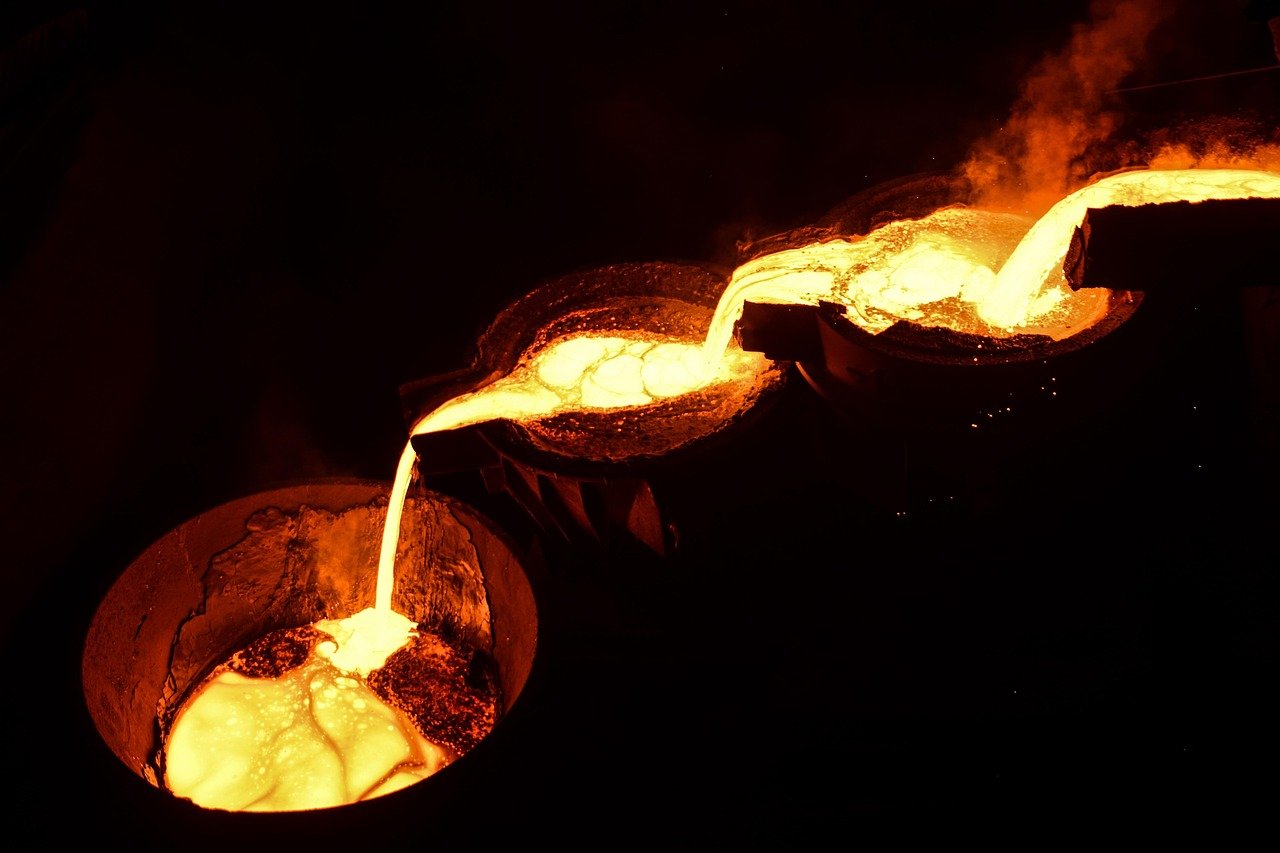
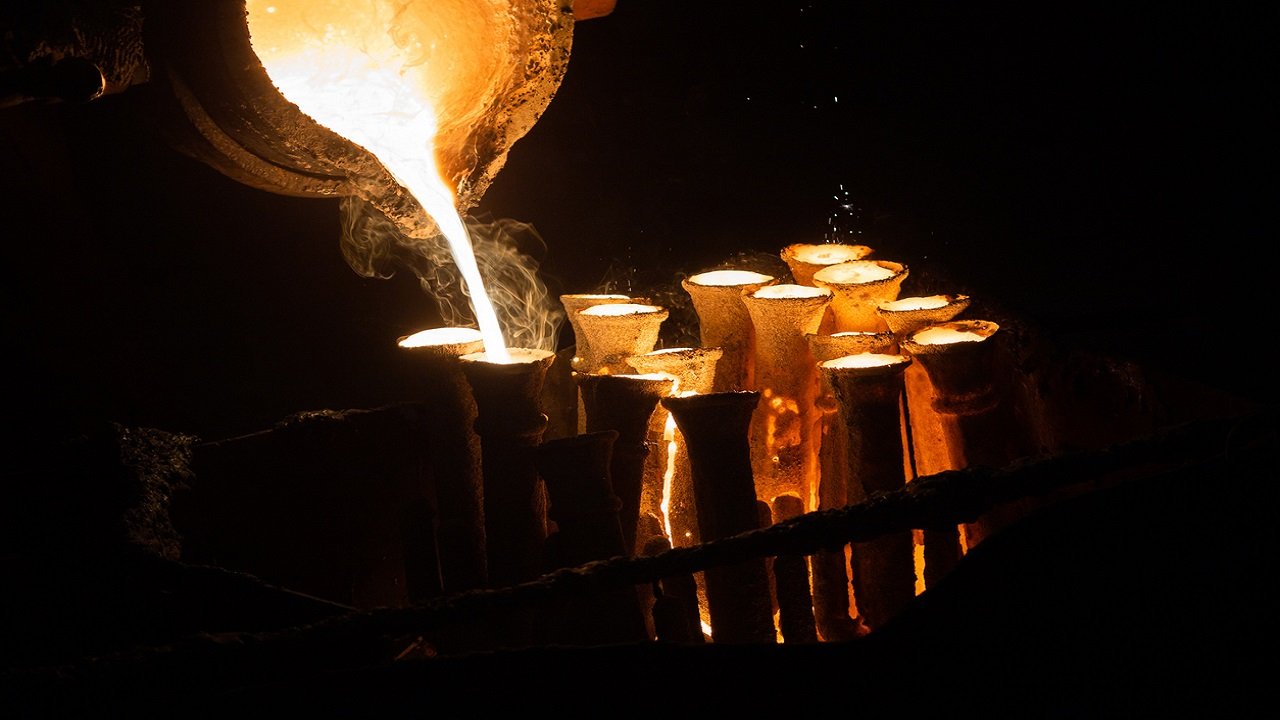
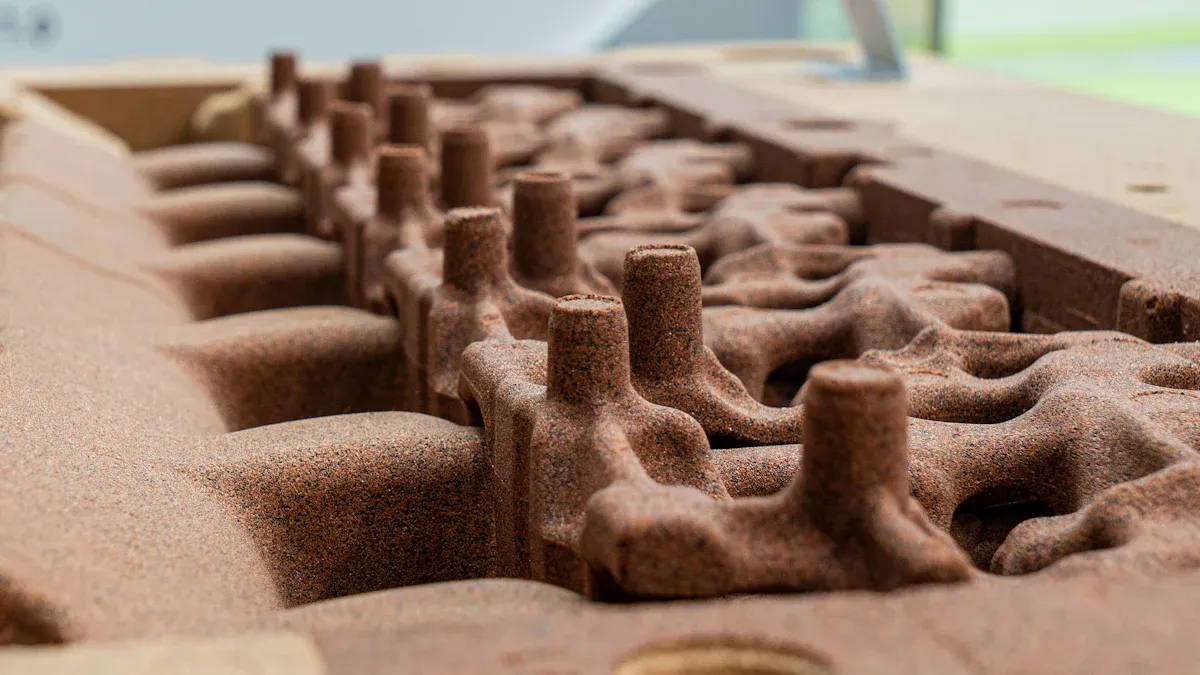
Sand molds casting is a simple way to make metal parts. First, workers gather sand, binders, additives, molten metal, a pattern, and tools. They make a pattern that looks like the final part. The pattern can be wood, plastic, or metal. Workers press the pattern into sand to make a mold. The mold has two halves called cope and drag. They take out the pattern and pour in molten metal. The metal cools and gets hard inside the sand. When the metal is solid, workers break the mold to get the part out. The sand is often used again for more castings.
Sand Casting Pros and Cons
Sand molds casting has many good points. It is great for making big or tricky shapes. Many companies use it for test parts and small batches because it saves money. This process lets parts bend more before breaking. But, sand molds casting can make rough surfaces because of the sand. Sometimes, the parts have tiny holes that make them weaker. This method is not the best for parts that need to be very smooth or strong.
Note: Using special sands can make the surface smoother, but it costs more.
Typical Uses for Sand Casting
Many industries use sand molds casting for lots of products. Some examples are flywheels for boats, boat fittings, and barbecue grills. It is also used for engine blocks, brake discs, and door handles. Heavy machine tools and fancy ends for aluminum shapes are made this way too. Even jewelry makers use sand molds casting for both expensive and regular metals.
Investment Casting and Lost Foam Casting
Investment Casting Process Overview
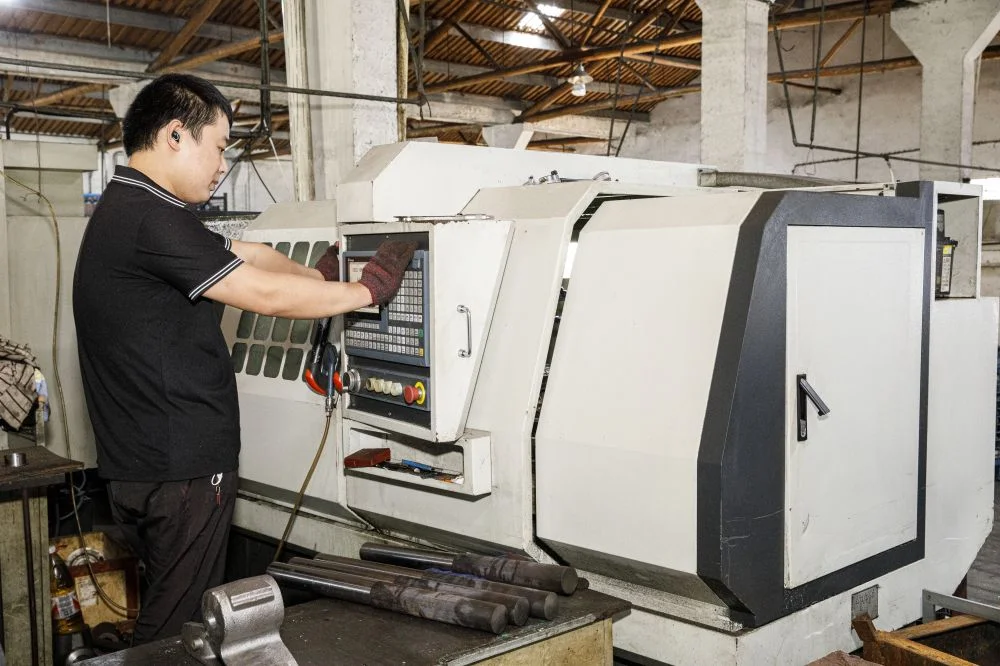
Investment casting makes parts with lots of detail and smooth surfaces. Workers first make a wax pattern that looks like the final part. They dip this wax pattern in a wet ceramic mix and let it dry. They do this step many times until the shell is thick. Then, they melt the wax out and heat the shell. Hot metal is poured into the shell. When the metal cools, workers break the shell to get the part out. KEMING uses this way to make special parts from carbon steel, alloy steel, and other metals. Their team uses advanced CNC machines to check that every part is made right.
Investment casting gives very exact sizes (±0.1 mm) and a smooth finish (1.6–3.2 µm Ra).
Lost Foam Casting Explained
Lost foam casting is like investment casting but uses foam instead of wax. Workers shape foam to match the part’s design. They cover the foam with sand and pour hot metal into the mold. The foam melts away, leaving the metal part. This way can make tricky shapes and needs less extra cutting. Lost foam casting gives good accuracy (±0.25 mm) and a nice finish (3.2–6.3 µm Ra).
Investment and Lost Foam Pros and Cons
Casting Method | Benefits | Limitations |
|---|---|---|
Investment Casting | Great finish, tight sizes, works with many metals, bigger parts | Costs more, molds are hard to make, takes longer |
Lost Foam Casting | Good accuracy, tricky shapes, less cutting needed | Finish not as smooth as investment casting, best for some metals |
Applications for Investment and Lost Foam Casting
Many industries use investment casting and lost foam casting. Investment casting is good for aerospace, cars, medical, and art parts. It uses metals like stainless steel, alloy steel, brass, and aluminum. Lost foam casting is used in cars, big machines, and boats. It uses alloy steel, aluminum, and iron. KEMING offers investment casting for these industries, giving custom help and careful checks for every project.
Die Casting: Process, Benefits, and Applications
Die Casting Process Steps
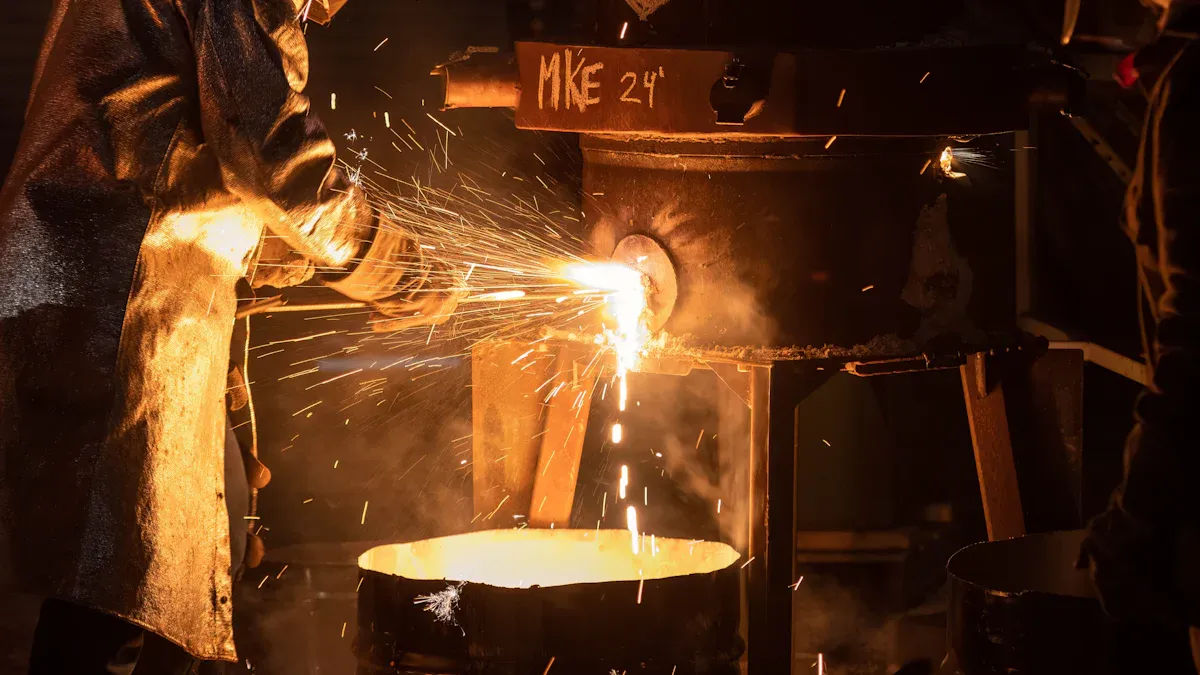
Die casting uses strong pressure to shape hot metal. Here are the main steps:
Workers spray lubricant inside the mold. This keeps the mold cool and helps the part come out.
They push hot metal into the mold very fast and hard.
The metal cools and gets hard quickly. Ejector pins push the part out of the mold.
Workers remove extra metal from the part. They use special tools or a trim die for this.
People use metals like zinc, aluminum, magnesium, copper, lead, and tin. Ferrous metals are not used much in die casting.
Tip: Die casting is great for making lots of parts fast and all the same.
Die Casting Advantages and Disadvantages
Die casting is fast and makes good parts. The table below shows how die casting is different from sand casting and investment casting:
Casting Method | Advantages | Disadvantages |
|---|---|---|
Die Casting | Makes many parts fast, good quality, saves money | Costs more after making the parts |
Investment Casting | Very exact sizes, smooth parts, less extra cutting | Costs more than sand casting |
Sand Casting | Cheaper, good for big parts | Not as exact, rougher parts |
Die casting can make thousands or millions of parts. Sand casting makes 1 to 5,000 parts. Die casting can make 5,000 to over 1,000,000 parts.
Common Die Casting Applications
Many industries use die casting for important parts. Here are some examples:
Automotive: Airbag cases, brake parts, engine parts, and car bodies.
Aerospace: Motor cases, fuel parts, and airplane brackets.
Electronics: Connectors, heat sinks, and device covers.
Consumer Products: Kitchen tools and power tools.
Construction: Hinges, window frames, and hardware.
Medical Devices: Small parts that must be very clean.
Industrial Equipment: Strong parts for HVAC systems.
Robotics & Automation: Light and exact parts.
Die casting helps companies make strong and detailed parts. This process lets them make parts fast and with good quality for many uses.
Comparing Sand, Investment, and Die Casting
Process and Material Differences
Casting methods are different in how molds are made and what materials are used. The table below lists the main steps and materials for each type:
Casting Type | Process Steps | Materials Used |
|---|---|---|
Sand Casting | Sand molds can be reused or broken, sometimes need extra work | Silica sand, green sand, chemically bonded sand |
Die Casting | Hot metal is pushed into strong steel molds, two ways to do this | Metals that melt at lower temperatures |
Investment Casting | Wax shapes are covered in ceramic, wax melts away, metal is poured in | Wax, ceramic, special low-ash plastics |
Sand molds casting uses sand to shape big and heavy parts. Die casting uses tough steel molds and works best with metals like aluminum and zinc. Investment casting uses wax and ceramic to make parts with lots of detail.
Cost and Production Considerations
Each casting method has its own cost and speed. Sand molds casting is cheapest for small orders and custom shapes. Die casting costs more at first because the molds are expensive, but it is cheaper when making many parts. Investment casting costs more but makes parts with smooth surfaces and fine details.
Sand molds casting: Fast to set up, cheap tools, good for big parts.
Die casting: Makes lots of parts quickly, best for small pieces, molds cost a lot.
Investment casting: Takes longer, works for tricky shapes, not as fast as others.
Tip: Sand molds casting is good for projects that need to be cheap and flexible. Die casting is best when you need to make many parts. Investment casting is great for parts that need to be very exact.
Selecting the Best Casting Method
The best casting method depends on size, shape, number, and material. Sand molds casting is good for big, custom parts and small batches. Die casting is great for making lots of parts that must be very exact. Investment casting is best for parts with tricky shapes and high detail.
Factor | Recommendation |
|---|---|
Application | Use die casting for lots of exact parts; sand casting for big parts |
Cost Considerations | High-precision ways cost more at first but save money when making many parts |
Material Requirements | Sand casting works for many metals; die casting is for non-ferrous metals |
Design Complexity | Investment casting for tricky shapes; sand or permanent molds for simple ones |
Volume | Die casting for big orders; sand or investment casting for small orders |
Sand molds casting is still popular because it is flexible and can make big parts. Die casting is fast and makes the same part over and over, good for cars. Investment casting is best for parts that need lots of detail and are hard to make.
Picking the best casting method depends on what the project needs. The table below shows the main differences:
Casting Method | Mold Material | Surface Finish | Shape Complexity | Cost |
|---|---|---|---|---|
Sand Casting | Sand | Rough | Limited | Low |
Investment Casting | Ceramic | Smooth | High | Higher |
Die Casting | Metal | Very Smooth | Very High | Moderate-High |
Manufacturers need to choose the right process for each part. They should think about the size, material, and how many parts they need. Sand casting is good for big parts that are not too detailed. Investment casting is better for small or medium parts with lots of detail. Die casting is best when making many parts from non-ferrous metals.
KEMING is known for investment casting. Their team gives exact parts, is dependable, and helps customers in many fields.
FAQ
What is the main difference between sand casting and die casting?
Sand casting uses sand molds to shape metal. Die casting uses metal molds and strong pressure. Sand casting is good for making big parts. Die casting is better for making many small, detailed parts fast.
When should someone choose investment casting?
Investment casting is best for parts with tricky shapes and small details. It makes parts with smooth surfaces and exact sizes. Many companies use it for custom or very exact parts.
Which metals can each casting method use?
Casting Method | Common Metals Used |
|---|---|
Sand Casting | Iron, steel, aluminum |
Investment Casting | Steel, stainless, brass |
Die Casting | Aluminum, zinc, magnesium |
How does KEMING help with custom casting projects?
KEMING gives custom help using drawings or samples. Their team uses advanced CNC machines and careful checks. They help many industries by making exact and strong castings.