EN
EN  DE
DE  ES
ES  FR
FR  PT
PT  RU
RU 
Stainless steel is one of the most versatile materials for investment casting (lost-wax casting). Its chromium content — a minimum of 10.5% by mass — forms a self-healing passive oxide layer that delivers corrosion resistance unmatched by carbon steels and most aluminum alloys. When combined with nickel, molybdenum, and other alloying elements, cast stainless steel achieves tensile strengths from 450 MPa to over 1,200 MPa depending on grade and heat treatment.
But “is stainless steel good for casting?” isn’t a yes-or-no question. The real question is: which stainless steel grade, for which casting process, under which service conditions?
This guide covers:
- The stainless steel grades most commonly investment-cast — 304 (CF8), 316 (CF8M), 17-4PH, and duplex 2205 — with their mechanical properties and castability characteristics.
- How investment casting compares to other stainless steel forming methods (sand casting, machining from billet, MIM).
- Common casting defects, their root causes, and foundry-side solutions.
- When stainless steel outperforms carbon steel, aluminum, and bronze — and when it doesn’t.
Stainless Steel Casting: Pros & Cons
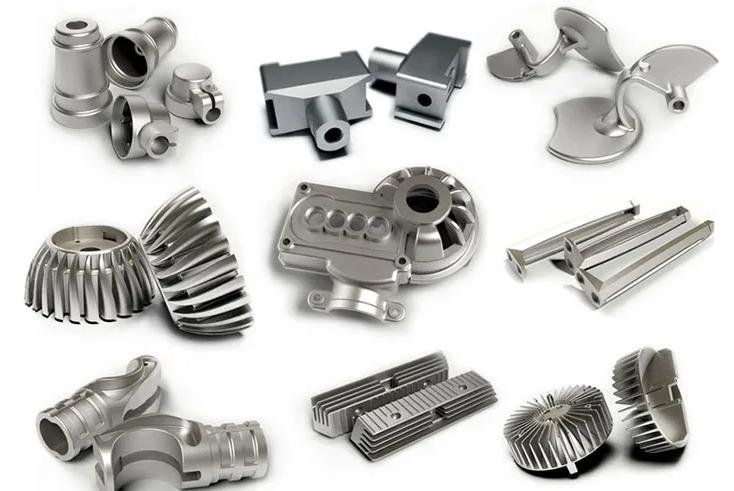
Why Stainless Steel Resists Corrosion
Stainless steel’s defining characteristic is its chromium content (≥10.5%). In the presence of oxygen, chromium forms a nanometer-thin passive Cr₂O₃ layer on the surface. If scratched, this layer spontaneously reforms — a property known as self-passivation. This is why stainless steel resists rust, pitting, and crevice corrosion far better than carbon steel, which forms loose, non-protective iron oxide (rust) that flakes off and exposes fresh metal.
Corrosion Resistance by Grade
| Grade | Corrosion Type | Performance | Key Alloying Element |
|---|---|---|---|
| 304 (CF8) | General atmospheric | Good — suitable for indoor and mild outdoor | 18% Cr, 8% Ni |
| 316 (CF8M) | Chloride / marine | Excellent — resists pitting in saltwater | 2–3% Mo added |
| 17-4PH | General + stress corrosion | Very good — plus high strength | Precipitation hardening Cu |
| 2205 Duplex | Stress corrosion cracking | Superior — best for chloride SCC | Dual-phase austenite/ferrite |
For comparison, carbon steel offers no meaningful corrosion resistance without coatings (paint, galvanizing, plating), which add cost and maintenance. Aluminum’s natural oxide layer provides moderate protection but is vulnerable to galvanic corrosion when in contact with dissimilar metals in wet environments.
Strength & Versatility
Cast Stainless Steel Grades: Mechanical Properties Comparison
| Grade (Cast/ASTM) | Type | Tensile (MPa) | Yield (MPa) | Hardness | Castability | Best For |
|---|---|---|---|---|---|---|
| 304 / CF8 (A743) | Austenitic | 485–655 | 205 min | ~140 HB | Good | General corrosion resistance, food equipment |
| 316 / CF8M (A743) | Austenitic | 485–655 | 205 min | ~150 HB | Good | Marine, chemical, pharmaceutical |
| 17-4PH / CB7Cu-1 | Precipitation Hardening | 1,030–1,310 (H900) | 965–1,170 | ~35–44 HRC | Good | Aerospace, high-strength structural |
| 2205 / CD3MN | Duplex | 620–795 | 450 min | ~290 HB | Moderate | Offshore, stress-corrosion environments |
| 410 / CA15 | Martensitic | 620–795 | 450 min | ~200 HB | Moderate | Wear parts, moderate corrosion |
All values in as-cast condition per ASTM A743 / A957 unless noted. 17-4PH values shown for H900 precipitation-hardened condition. Actual properties vary with section thickness and heat treatment.
Casting Challenges & Cost
Common Stainless Steel Casting Defects and How Foundries Address Them
| Defect | Root Cause | Foundry-Side Solution |
|---|---|---|
| Shrinkage Porosity | Inadequate feeding during solidification; stainless steel’s high solidification shrinkage (~6–8% volumetric) | Proper gating and riser design; directional solidification; simulation software validation (MAGMA / ProCAST) |
| Gas Porosity | Dissolved hydrogen or nitrogen in the melt; moisture in shell or ladle refractories | AOD (Argon Oxygen Decarburization) refining; vacuum degassing; pre-heated and dry ceramic shells |
| Hot Tearing | Restrained contraction during final solidification; especially common in austenitic grades (304/316) | Modified gating to reduce constraint; controlled cooling rate; alloy modification within spec (e.g., small ferrite content in austenitic welds) |
| Inclusions | Slag, dross, or eroded refractory entrapped in the melt | Ceramic foam filters in the gating system; clean melting practice; regular ladle relining |
| Dimensional Distortion | Non-uniform cooling; residual stress from rapid shell removal | Post-cast straightening (hydraulic press); controlled shell knock-out temperature; stress-relief heat treatment |
NDT Inspection Methods for stainless steel investment castings: Radiography (X-ray/CT, ASTM E94) for internal defects; Liquid Penetrant Testing (ASTM E165) for surface cracks; Ultrasonic Testing (ASTM A609) for wall thickness and internal soundness; Hardness Testing (ASTM E18 Rockwell / ASTM E10 Brinell).
Cost Factors in Stainless Steel Investment Casting
| Cost Driver | Impact | Mitigation |
|---|---|---|
| Material (ingot cost) | 304/316 ingot: ~$3–5/kg vs. carbon steel ~$0.8/kg | Use secondary (recycled) stainless where spec allows |
| Shell complexity | More layers = more labor + material (typically 6–9 ceramic coats) | Part consolidation: cast as one complex part vs. welding multiple simple parts |
| Volume | Tooling amortization is the largest fixed cost | Minimum 500–1,000 units to justify investment casting tooling |
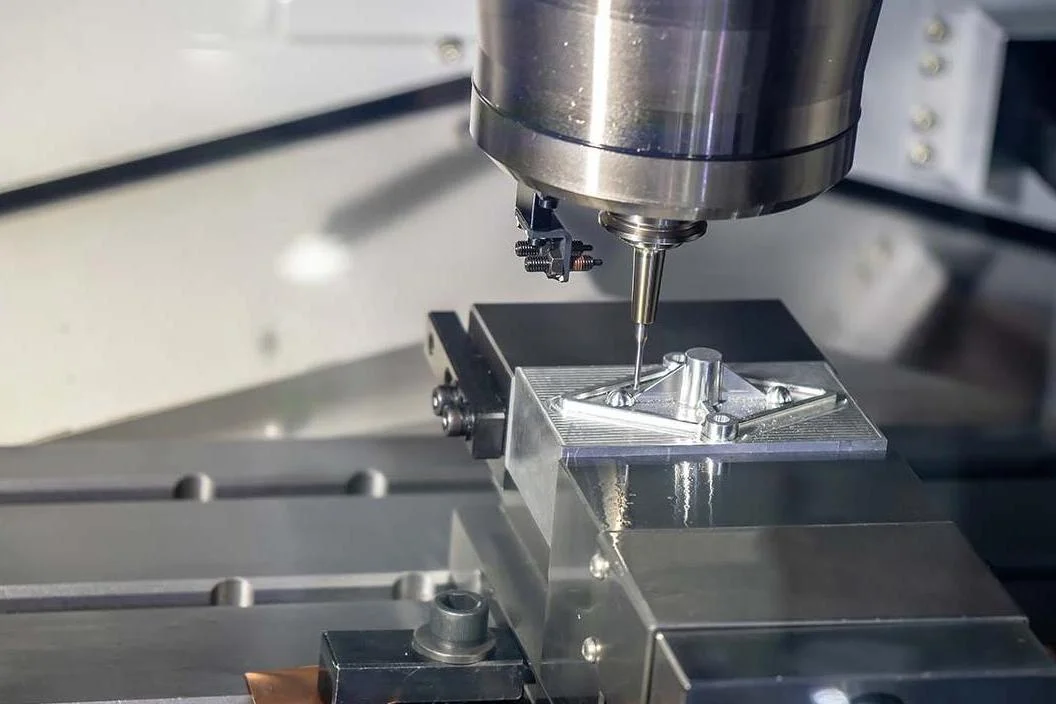
| Post-processing | Heat treatment, straightening, machining add cost | Design for as-cast condition where possible; minimize machining stock |
Stainless Steel vs. Other Metals
Stainless Steel Casting vs. Alternatives: When Each Material Wins
| Property | Stainless Steel (304 CF8) | Carbon Steel (WCB) | Aluminum (A356-T6) | Bronze (C83600) |
|---|---|---|---|---|
| Density (g/cm³) | 7.8 | 7.8 | 2.7 | 8.8 |
| Tensile (MPa) | 485–655 | 450–620 | 230–280 | 240–310 |
| Corrosion Resistance | Excellent (self-passivating) | Poor (requires coating) | Moderate (oxide layer) | Excellent (marine grade) |
| Casting Temp (°C) | 1,450–1,550 | 1,500–1,550 | 680–750 | 1,000–1,150 |
| Tooling Life (cycles) | 5,000–15,000 | 10,000–50,000 | 50,000–100,000+ | 10,000–30,000 |
| Relative Cost (per kg) | $$$ | $ | $$ | $$$$ |
| Weldability | Good (304/316) | Excellent | Moderate (requires skill) | Good |
| Typical Cycle | Investment casting | Sand / investment | Die / sand / investment | Sand / investment |
Decision Framework: When to Choose Each Material for Casting
Choose stainless steel when: Corrosion resistance is non-negotiable, the part operates above 200°C, or hygiene/sanitary standards (FDA, 3-A) apply. Typical applications: food processing equipment, surgical instruments, chemical plant valves, marine hardware above the waterline.
Choose carbon steel when: Corrosion is managed via coatings or the part operates in dry environments, and cost is the primary constraint. Typical applications: construction brackets, machinery frames, non-corrosive pipe fittings.
Choose aluminum when: Weight reduction is critical (aerospace, automotive) and strength requirements are moderate. Also preferred when part volume exceeds 50,000 units due to much longer tooling life. Typical applications: engine blocks, electronic enclosures, lightweight brackets.
Choose bronze when: The part will be submerged in seawater or continuous wet conditions. Bronze’s natural resistance to marine biofouling and galvanic corrosion outperforms even 316 stainless in submerged saltwater service. Typical applications: ship propellers, seawater pump impellers, underwater valve bodies.
Stainless Steel Casting Uses
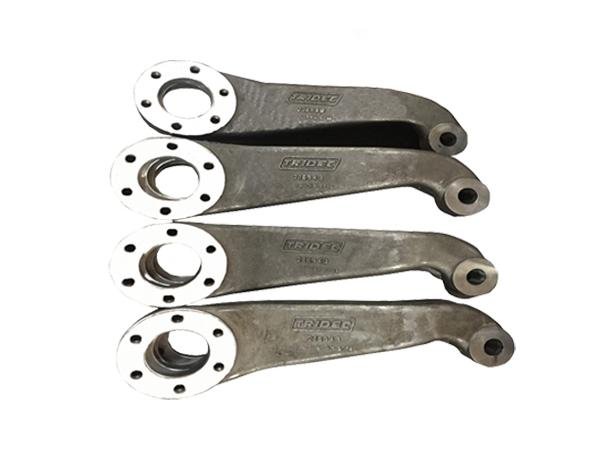
| Industry | Typical Cast Parts | Common Grades | Key Standards |
|---|---|---|---|
| Food & Beverage | Pump housings, valve bodies, mixer blades, filler nozzles | 304 (CF8), 316 (CF8M) | NSF/ANSI 51, 3-A Sanitary |
| Medical & Pharmaceutical | Surgical instrument bodies, implant tooling, autoclave components | 316L (CF3M), 17-4PH | ISO 13485, ASTM F899 |
| Marine & Offshore | Pump impellers, valve bodies, deck hardware | 316 (CF8M), 2205 Duplex | NORSOK M-650 |
| Automotive | Turbocharger housings, exhaust manifolds, brackets | 304, 347 (CF8C) | IATF 16949 |
| General Industrial | Pump casings, compressor parts, mining wear plates | 304, 410 (CA15) | ASTM A743 |
Investment Casting Design Guidelines for Stainless Steel
Designing Parts for Stainless Steel Investment Casting
If you’re designing a part to be investment-cast in stainless steel, the following guidelines can reduce defects, shorten lead time, and lower per-unit cost:
- Wall thickness: Minimum achievable wall thickness in stainless steel investment casting is 1.5 mm. However, walls below 2.5 mm in 304/316 grades risk misrun (incomplete filling) due to the higher viscosity of stainless steel melt compared to aluminum. Ideal range: 3–6 mm for small-to-medium parts.
- Uniformity matters: Avoid sharp transitions in wall thickness. A taper of at least 3:1 length-to-thickness ratio prevents hot spots and shrinkage porosity at the junction.
- Draft angles: Not required for investment casting (the ceramic shell is broken away rather than the part being ejected), which is a key advantage over die casting. However, internal cavities accessed by soluble cores or ceramic cores may need 1–2° of relief.
- Radii & fillets: Internal corners should have a minimum radius of 1.5 mm. Sharp internal corners create stress concentration and are more prone to hot tearing in austenitic grades like 304 and 316.
- Surface finish: As-cast surface roughness for investment casting is typically 2.5–5.0 µm Ra. Specify 1.6 µm Ra or finer only if functionally required — achieving it adds cost (vibratory finishing, electropolishing).
- Tolerances: Standard linear tolerance is ±0.5% of dimension, with a practical minimum of ±0.13 mm for dimensions under 25 mm. Tighter tolerances require secondary machining.
FAQ
What is investment casting?
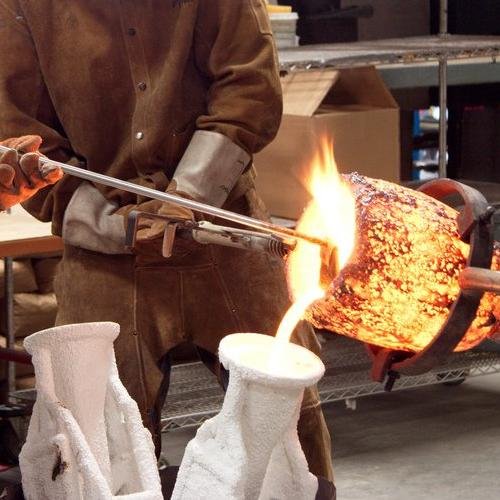
Investment casting (lost-wax casting) is a precision manufacturing process that produces near-net-shape metal parts with complex geometry and fine surface detail — often eliminating the need for secondary machining. The process involves: (1) injecting wax into a metal die to form a pattern, (2) assembling multiple wax patterns onto a “tree,” (3) repeatedly dipping the tree into ceramic slurry to build a refractory shell, (4) melting out the wax (dewaxing) and firing the shell, (5) pouring molten stainless steel into the pre-heated shell, and (6) breaking away the shell to reveal the cast part. For stainless steel, shell pre-heating to 800–1,100°C is critical to prevent thermal shock and ensure complete cavity filling. Investment casting achieves tolerances of ±0.5% of dimension and surface finishes of 2.5–5.0 µm Ra as-cast.
Why do manufacturers choose stainless steel for casting?
Stainless steel is chosen for investment casting when the application demands a combination of corrosion resistance, mechanical strength, and temperature performance that carbon steel, aluminum, or plastics cannot provide. Key advantages: self-passivating corrosion resistance (no coatings needed), high-temperature capability (304/316 retain strength to ~500°C), biocompatibility for medical and food-contact applications, and excellent as-cast surface finish via investment casting. The primary trade-off is higher material cost (~3–5× carbon steel) and more demanding foundry control (higher pour temperatures, controlled shell pre-heating).
How does KEMING ensure quality in stainless steel castings?
Quality assurance for stainless steel investment castings involves multiple inspection stages: chemical composition verification via optical emission spectroscopy (OES) on each heat, non-destructive testing (radiography per ASTM E94 for internal soundness, liquid penetrant per ASTM E165 for surface defects), mechanical testing (tensile per ASTM E8, hardness per ASTM E18), and dimensional inspection (CMM or 3D scanning). For critical applications, additional testing may include pressure testing, magnetic particle inspection (for martensitic grades only), and metallographic examination of microstructure. Reputable foundries maintain ISO 9001 certification at minimum, with IATF 16949 required for automotive and AS9100 for aerospace supply.