DE
DE  EN
EN  ES
ES  FR
FR 
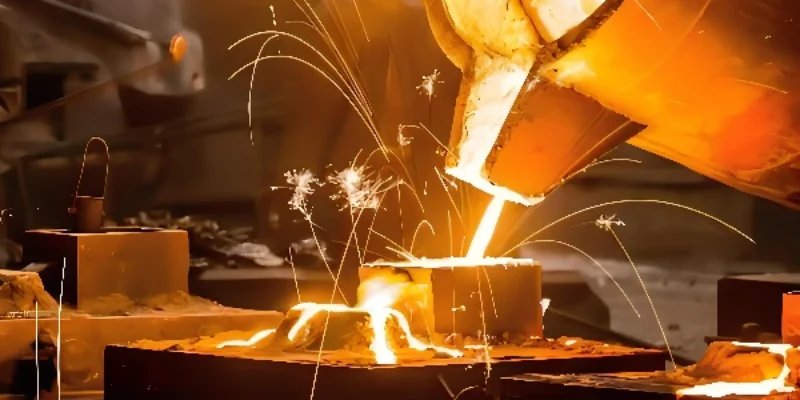
Feinguss Formen sind entscheidend für die Herstellung hochpräzise Teile. Branchen wie die Luft- und Raumfahrt und die Automobilindustrie stellen extrem hohe Anforderungen an die Präzision ihrer Teile. Mit Präzisionsguss können komplex geformte Teile mit sehr geringen Fehlern hergestellt werden. Die Website Präzisionsguss Prozess nutzt neue Technologien wie Robotik und 3D-Druck, um eine perfekte Konsistenz in der Präzision und Detailgenauigkeit jedes Teils zu gewährleisten. KEMING ist ein zuverlässiges Unternehmen mit strengen Qualitätskontrollen und bietet maßgeschneiderte Lösungen für verschiedene Branchen. Ihre harte Arbeit hilft den Herstellern, jedes Mal die höchsten Standards zu erreichen.
Wichtigste Erkenntnisse
- Mit Präzisionsgießformen können Teile mit extrem hoher Präzision hergestellt werden, mit Fehlern von nur ±0,1 mm. Dies ist entscheidend für Produkte wie Flugzeuge und medizinische Geräte.
- Der Materialabfall beim Präzisionsguss ist minimal, nur 5-10%, im Vergleich zu bis zu 60% bei herkömmlichen Verfahren. Dies hilft, Zeit und Kosten zu sparen.
- KEMING setzt neue Technologien wie 3D-Druck und Maschinen ein, um den Gießprozess präziser und effizienter zu gestalten.
- Die Wahl des richtigen Formmaterials ist entscheidend. Es verändert die Festigkeit und Glätte des Teils und macht es für eine Vielzahl von Anwendungen geeignet.
- KEMING hält sich konsequent an strenge Qualitätskontrollen und Industriestandards, um die Sicherheit und Zuverlässigkeit der Teile zu gewährleisten und die Anforderungen der Kunden zu erfüllen.
Präzision mit Feingussformen
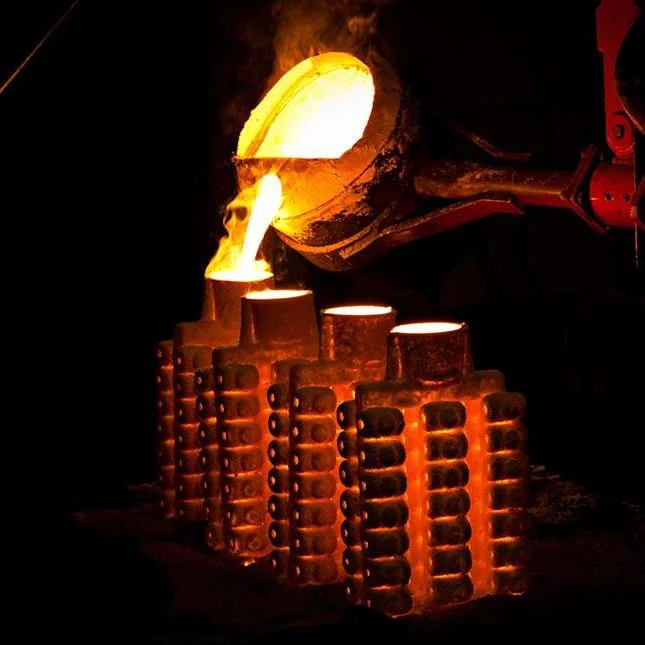
Überblick über das Feingussverfahren
Präzisionsfeinguss ist das bevorzugte Verfahren zur Herstellung hochpräziser Teile. Dieses Verfahren umfasst mehrere Schritte, die jeweils streng überwacht werden. Jeder Schritt ist entscheidend, um die Genauigkeit und Konsistenz jedes Gussteils zu gewährleisten. KEMING setzt neue Technologien und strenge Prüfverfahren ein, um bei jedem Gussteil höchste Qualität zu gewährleisten.
Präzisionsfeinguss ermöglicht es Unternehmen, Teile mit vielen Details und minimalen Fehlern herzustellen. Das bedeutet weniger zusätzliche Arbeitsschritte, was Zeit und Kosten spart.
Im Folgenden werden die wichtigsten Schritte des Präzisionsfeingussverfahrens beschrieben:
| Schritt Nummer | Schritt Name | Beschreibung |
|---|---|---|
| 1 | Formenbau | Der Bau spezieller Formen hilft bei der Herstellung hochpräziser Produkte. |
| 2 | Wachs-Injektion | Das Wachs wird in die Form gespritzt, um ein Modell in der gleichen Größe wie das endgültige Teil zu schaffen. |
| 3 | Shell-Beschichtung | Das Wachsmodell wird wiederholt in eine keramische Beschichtung getaucht, um eine harte Außenschale zu bilden. |
| 4 | Dewax | Die äußere Schale wird erhitzt, um das Wachs zu schmelzen und zu entparaffinieren und die Form für den Metallguss vorzubereiten. |
| 5 | Gießen oder Gießerei | Das heiße geschmolzene Metall wird in die Form gegossen; dies ist ein entscheidender Schritt. |
| 6 | Entfernen der Schale | Die harte Außenschale wird entfernt, um das neue Teil freizulegen, und überschüssiges Metall wird entfernt. |
| 7 | Wärmebehandlung | Das neue Teil wird verschiedenen Wärmebehandlungen unterzogen, um seine Festigkeit zu erhöhen. |
| 8 | Oberflächenveredelung | Das Teil wird durch Sandstrahlen gereinigt, um eine glattere Oberfläche zu erhalten. |
| 9 | Anti-Rost-Behandlung | Um Rost zu verhindern, wird Öl oder Farbe auf das Teil aufgetragen. |
| 10 | Qualitätskontrolle | Alle Teile werden vor dem Verlassen des Werks sorgfältig geprüft, um die Qualität sicherzustellen. |
Das Know-how von KEMING im Bereich der Präzisionsgießformen bedeutet, dass bei jedem Schritt auf jedes Detail geachtet wird. Die Mitarbeiter setzen CNC-Werkzeugmaschinen und moderne Anlagen ein, um die Konsistenz jedes Teils für alle Anwendungen zu gewährleisten.
Formenbau und Genauigkeit
Die Formgestaltung ist für Präzisionsgussteile von grundlegender Bedeutung. Die Art und Weise, wie die Form hergestellt wird, bestimmt die Form, die Glätte und die Maßgenauigkeit des Endprodukts. Die Ingenieure von Comming wenden ausgeklügelte Methoden an, um Formen zu entwickeln, die den strengen Anforderungen in Bezug auf Abmessungen und Form entsprechen.
- Hochwertige Wachsmodelle helfen, die Maßhaltigkeit des endgültigen Teils zu gewährleisten.
- Hochwertige Keramikschalen gewährleisten gleichbleibende Abmessungen für jedes Teil.
- Die Kontrolle des Metallgießprozesses verbessert die Qualität des fertigen Teils.
Mit Präzisionsgießformen können Unternehmen Teile mit Toleranzen von nur ±0,1 mm herstellen. Dies ist für Produkte wie Flugzeuge und medizinische Geräte von entscheidender Bedeutung, da selbst kleinste Fehler ernsthafte Probleme verursachen können. Dieses Verfahren bedeutet auch, dass weniger zusätzliche Arbeit erforderlich ist, was Zeit und Geld spart.
| Toleranzbereich | Maßeinheiten |
|---|---|
| ±0,002 bis ±0,010 Zoll | ±0,05 bis ±0,25 mm |
| Die meisten Standardfunktionen | ±0,003-0,005 Zoll/±0,08-0,13 mm |
KEMING Präzisionsgießformen helfen den Kunden, diese winzigen Fehler zu kontrollieren und komplex geformte Teile herzustellen. Dank ihrer umfangreichen Erfahrung mit verschiedenen Gießverfahren, wie Feinguss und Schalenguss, können sie die spezifischen Anforderungen der Kunden erfüllen.
Auswirkungen der Materialauswahl
Die Wahl des richtigen Formstoffs wirkt sich auf die Glätte und Festigkeit des Gussteils aus.
- Glatte Keramikformen ermöglichen saubere Oberflächen, manchmal mit einer Rauheit von 125 RMS oder noch höher.
- Dies bedeutet, dass weniger nachfolgende Bearbeitungsschritte für das Teil erforderlich sind.
- Keramik ermöglicht auch die Herstellung komplexer Metallteile mit hoher Präzision und glatten Oberflächen.
Beim Feinguss können Unternehmen aus einer breiten Palette von Metallwerkstoffen wählen. Komin kann eine Vielzahl von Metallen verarbeiten, z. B. Edelstahl, Kohlenstoffstahl, Nickelbasislegierungen, Kupferbasislegierungen, Aluminium und Titan. Jedes Metall ist für unterschiedliche Anwendungen geeignet:
| Metall Typ | Gängige Legierungen | Anwendungen |
|---|---|---|
| Legierungen aus nichtrostendem Stahl | 304, 316, 17-4PH | Medizinische Geräte, Automobilteile und Elektronik |
| Kohlenstoffstahl und niedrig legierter Stahl | AISI 4140, AISI 8620 | Hochfeste Teile, Werkzeuge und hochbelastbare Halterungen |
| Nickel-Basis-Legierungen | Inconel 625, 718 | Flugzeuge, Gasturbinen und Hochdrucksysteme |
| Legierungen auf Kupferbasis | Bronze, Messing | Klempnerarbeiten, Dekorationen und Bootsteile |
| Aluminium-Legierungen | A356, 319 | Elektroautos und andere Produkte |
| Titan-Legierungen | Ti-6Al-4V | Luftfahrzeuge und medizinische Anwendungen |
KEMING Präzisionsgießformen und raffinierte Verfahren helfen den Kunden, optimale Ergebnisse zu erzielen. Sie verstehen die Bedürfnisse ihrer Kunden genau. Mit einem tiefgreifenden Verständnis von Werkstoffen und Gießverfahren stellen sie sicher, dass jedes Teil präzise und maßhaltig ist und eine außergewöhnlich gute Leistung erbringt.
Wer sich für KEMING entscheidet, hat einen Partner, der weiß, wie wichtig Präzision ist. Ihr Engagement für Innovation und kontinuierliche Qualitätsverbesserung macht sie zu einem führenden Unternehmen in der Präzisionsgussindustrie.
Garantierte Qualität und Integrität
Prozesskontrolle und Inspektion
KEMING wendet eine strenge Prozesskontrolle und Inspektion an, um sicherzustellen, dass jedes Gussteil den Standards entspricht. Das Team verwendet spezielle Werkzeuge, um jeden Schritt zu überprüfen. Diese Kontrollen tragen dazu bei, Probleme frühzeitig zu erkennen und so die Festigkeit und Sicherheit jedes Teils zu gewährleisten. Die Röntgeninspektion ist beim Präzisionsguss von entscheidender Bedeutung. Sie kann innere Risse und Poren im Metall aufspüren, die mit dem bloßen Auge nicht sichtbar sind. Die Röntgeninspektion zeichnet alle Probleme auf. Dieses Verfahren gewährleistet die Sicherheit und Festigkeit des Gussteils.
| Prüfverfahren | Zweck | Angewandte Normen |
|---|---|---|
| Härteprüfung | Stellen Sie sicher, dass das Metall stark genug ist | K.A. |
| Magnetische Partikelprüfung (MPI) | Risse auf oder nahe der Oberfläche finden | K.A. |
| Prüfung der Materialzusammensetzung | Prüfen Sie, woraus das Metall besteht | K.A. |
| Röntgenprüfung | Suche nach versteckten Problemen im Inneren | K.A. |
| Prüfung der Abmessungen | Prüfen Sie, ob die Größe korrekt ist | ASTM, DIN, JIS |
| Oberflächenrauhigkeit | Sehen Sie, wie glatt das Teil ist | Ra 1,6-6,3 μm typisch |
| Mechanische Eigenschaften | Stellen Sie sicher, dass das Teil stabil ist | Angaben zum Material |
| Visuelle Inspektion | Suche nach Problemen an der Oberfläche | Industrienormen |
Erfüllung von Industriestandards
KEMING hält sich an strenge globale Industrienormen. Diese Normen tragen dazu bei, sichere und hochwertige Teile zu produzieren. Das Unternehmen erfüllt die Normen für das Qualitätsmanagementsystem nach ISO 9001:2008 und die IATF 16949-Normen für die Automobilherstellung. Außerdem werden ASTM- und DIN-Normen zur Festlegung von Abmessungen und Werkstoffen verwendet. Diese Spezifikationen gewährleisten, dass jedes Gussteil den Anforderungen von Produkten wie Flugzeugen und Automobilen entspricht.
| Standard | Beschreibung |
|---|---|
| ASTM B83 | Legt die Spezifikationen für hochwertigen Feinguss fest. |
| AMS 4610 | Gibt die Materialien an, die in Gussteilen verwendet werden sollen. |
| ISO 8062 | Legt die Anforderungen an die Maßhaltigkeit fest. |
- Für die beim Gießen verwendeten Metalle gibt es strenge Vorschriften.
- Auch für das Wachs, das zur Herstellung von Modellen verwendet wird, gibt es entsprechende Vorschriften.
Kohärenz und Verlässlichkeit
Mit Hilfe von Präzisionsgießformen stellt KEMING jedes Mal Teile von gleichbleibend hoher Qualität her. Die strengen Regeln und Prüfverfahren gewährleisten die Maßhaltigkeit. Jedes Teil passt perfekt zum Entwurf. Das Unternehmen setzt sich dafür ein, dass jedes Gussteil eine optimale Leistung erbringt. KEMINGs unermüdliches Streben nach Qualität und Integrität hebt das Unternehmen in der Fertigungsindustrie hervor.
Die Präzisionsgussformen und Prüfverfahren von KEMING geben den Kunden Sicherheit. Jedes Produkt erfüllt strenge Anforderungen an Festigkeit und Zuverlässigkeit.
Vorteile des Feingussverfahrens
Weniger Bearbeitungen und Abfall
Die Hersteller bevorzugen den Präzisionsguss, weil er Kosten und Zeit spart. Die mit diesem Verfahren hergestellten Teile sind von Anfang an nahezu perfekt geformt. Das bedeutet, dass die Arbeiter kein übermäßiges Material abtragen müssen. Die Teile passen gut, so dass die Unternehmen nicht viel Zeit für Reparaturen aufwenden müssen. Dünne Teile, die mit diesem Verfahren hergestellt werden, müssen nur minimal nachbearbeitet werden. Außerdem fällt im Vergleich zu herkömmlichen Gussverfahren weniger Ausschuss an.
- Durch den Präzisionsguss entstehen passgenaue Teile, so dass weniger Reparaturen erforderlich sind.
- Dieses Verfahren ermöglicht die Herstellung komplexer Formen und glatter Teile und spart Zeit und Kosten.
- Der Materialabfall beträgt nur 5-10%, verglichen mit bis zu 60% bei herkömmlichen Gießverfahren.
| Gießverfahren | Materialabfälle (%) |
|---|---|
| Traditioneller Guss | Bis zu 60% |
| Feinguss | 5-10% |
Komplexe Formen und Flexibilität
Mit Feingussformen können Unternehmen Formen schaffen, die mit anderen Verfahren nur schwer zu erreichen sind. Mit diesem Verfahren können die Mitarbeiter detaillierte Entwürfe erstellen und sie auf jedes Projekt zuschneiden. Unternehmen können je nach Bedarf verschiedene Materialien wählen, z. B. in Bezug auf Festigkeit oder Lebensdauer. Die Dicke, das Gewicht und die Dichte der Teile sind flexibel steuerbar. Die Formen sind kostengünstig, und die Teile haben eine glatte, leistungsfähige Oberfläche.
| Merkmal | Beschreibung |
|---|---|
| Hohe Präzision | Mit Feinguss lassen sich hochpräzise und komplexe Formen herstellen. |
| Material-Optionen | Es gibt eine Vielzahl von Materialien, die flexible Gestaltungsmöglichkeiten zulassen. |
| Produktionsvolumen | Geeignet für die Herstellung großer Mengen von Teilen auf einmal, mit hoher Geschwindigkeit. |
| Flexibilität bei der Gestaltung | Ermöglicht es den Arbeitern, spezielle Formen und Muster zu erstellen. |
| Nachhaltigkeit | Die Materialien können wiederverwendet werden und tragen so zum Umweltschutz bei. |
Feinguss ist äußerst flexibel und eignet sich daher ideal für Arbeiten, die präzise und robuste Teile erfordern.
Branchenübergreifende Anwendungen
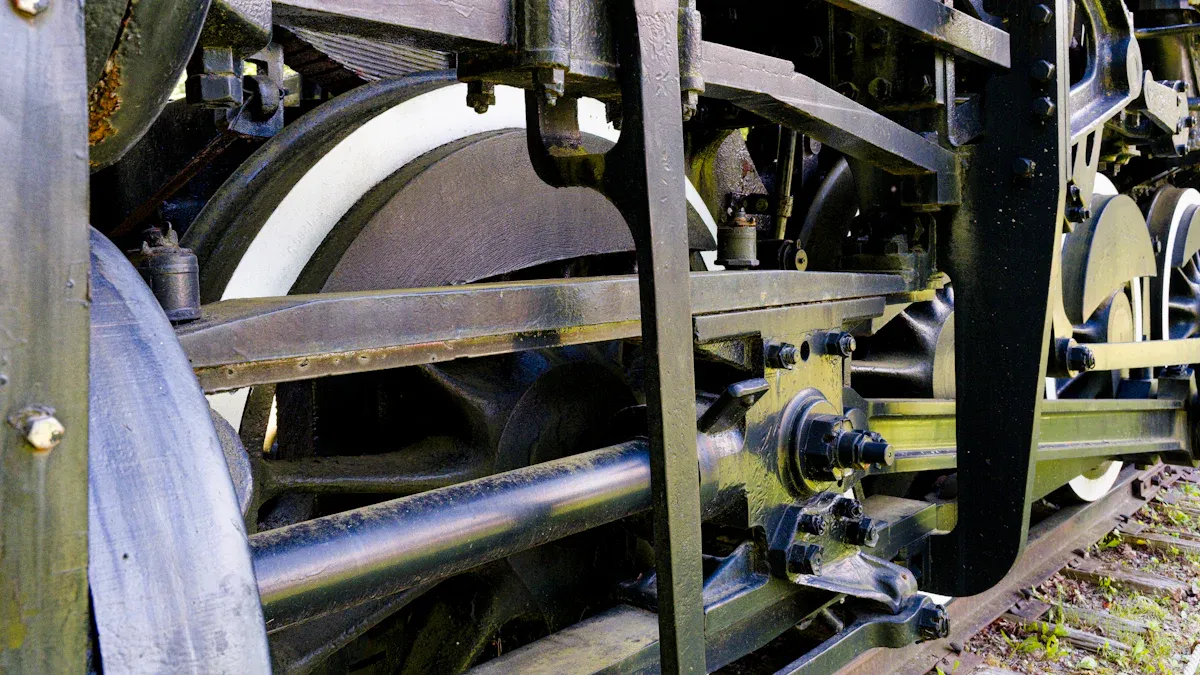
Feinguss wird aufgrund seiner Effektivität in vielen Branchen eingesetzt. KEMING wendet dieses Verfahren in der Automobil-, Eisenbahn-, Bau-, Bergbau- und Schiffbauindustrie an. Bei der Herstellung von Zügen verwendet KEMING Kohlenstoffstahl und niedrig legierten Stahl, um robuste Teile mit den richtigen Abmessungen herzustellen. Dieses Verfahren eignet sich auch für Branchen wie Öl und Gas, Marine, Elektronik, Energie, Medizin und Verteidigung.
- Öl und Gas: Bohrer, Düsen, Werkzeugzubehör, Stabilisatoren.
- Schifffahrt: Propeller, Pumpen, Motorenteile.
- Elektronik: Kleine Metallteile, Antennenhalterungen, Sensoren.
- Energie: Turbinenschaufeln, Ventilteile, Pumpengehäuse.
- Medizinisch: Chirurgische Instrumente, Prothesen.
- Verteidigung: Gehäuse, Halterungen, Waffenteile.
Die Hersteller verlassen sich auf den Feinguss, weil er die Herstellung qualitativ hochwertiger Teile in jedem Fall gewährleistet. Dieses Verfahren ermöglicht die Herstellung von maßgenauen und komplex geformten Teilen, was für neue Fertigungsmethoden von entscheidender Bedeutung ist. Der Feinguss hat sich durchgesetzt, weil immer mehr Branchen nach Möglichkeiten suchen, stärkere und präzisere Teile herzustellen.
Herausforderungen und Innovationen im Feinguss
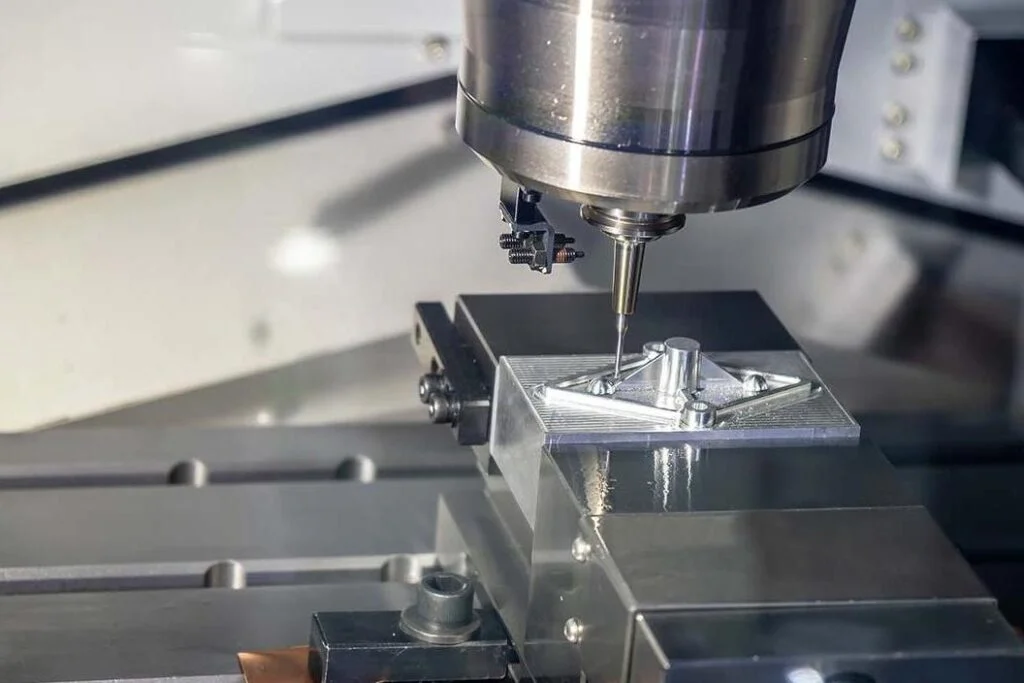
Häufige Defekte und Lösungen
Die Hersteller stoßen beim Feingussverfahren auf verschiedene Probleme. Diese Probleme können zu einer geringeren Genauigkeit oder Zuverlässigkeit der Teile führen. Manchmal kann es sogar schwierig sein, die geforderten genauen Abmessungen zu erreichen. In der nachstehenden Tabelle sind häufige Fehler und ihre Ursachen aufgeführt, und es wird erläutert, wie Experten sie verhindern können:
| Defekt Typ | Verursacht | Strategien der Prävention |
|---|---|---|
| Porosität | Lufteinschlüsse, schlechte Gleichmäßigkeit des Wachsmusters | Verbessern Sie die Qualität durch die Einrichtung von Entlüftungskanälen, Vakuumentgasung und die Kontrolle der Wachsmuster. |
| Schrumpfung Hohlräume | Unzureichender Metallguss, schlechte Anschnittgestaltung | Verbessern Sie das Design der Anschnitte, die Werkzeugsimulation und die Steuerung der Kühlung. |
| Irrfahrten | Gießtemperatur zu niedrig, Form zu eng | Formen vorheizen, Gießgeschwindigkeit und Temperatur steuern |
| Oberflächenrisse | Thermische Belastung, Schale zu dünn | Langsame Abkühlungsgeschwindigkeit, Schalenmaterial zu flexibel |
| Einschlüsse | Schimmelschäden, Metallkontamination | Verwendung hochwertiger Schalen, Aufrechterhaltung einer sauberen Verarbeitungsumgebung |
| Gaslöcher | Übermäßige Feuchtigkeit in der Form, zu hohe Gießgeschwindigkeit | Vorwärmschale, Inertgasspülung |
| Maßliche Ungenauigkeiten | Schrumpfung des Wachsmodells, Verformung der Form | Automatische Wachsmodellspritzung, CNC-Bearbeitung |
Fortschritte in der Werkzeugtechnologie
Innovative Konzepte haben das Feingussverfahren dramatisch verändert. Heute nutzen Hersteller den 3D-Druck, um Wachsmodelle oder Kunststoffprototypen zu erstellen, was eine schnellere Produktion komplex geformter Teile ermöglicht. Hochwertigere keramische Werkstoffe führen zu stärkeren, hitzebeständigeren Schalen und helfen, präzise Abmessungen und Formen einzuhalten. Roboter und Maschinen können die Herstellung der Schalen und die Entfernung der Wachsmodelle auf die gleiche Weise durchführen. Die IoT-Technologie ermöglicht es den Mitarbeitern, den gesamten Prozess in Echtzeit zu überwachen, was die Genauigkeit der Teile verbessert und Fehler reduziert.
| Art der Beförderung | Beschreibung |
|---|---|
| 3D-Drucken von Modellen | Direkte Erstellung von Modellen komplexer Geometrien |
| Fortschrittliche keramische Materialien | Erhöhte thermische Stabilität und Festigkeit |
| Automatisierung und Robotik | Erzielen Sie eine konsistente Schalenkonstruktion und die Entfernung von Wachsmustern |
| Verstärkte Metalllegierungen | Hervorragende mechanische Eigenschaften und Temperaturbeständigkeit |
| Prozesssteuerung und -überwachung | Datenanalyse in Echtzeit gewährleistet Genauigkeit |
Diese neuen Technologien helfen KEMING bei der Herstellung hochpräziser und vielseitiger Teile.
Zukünftige Trends in der Präzisionsfertigung
Die Zukunft des Feingusses ist rosig. Die Hersteller verwenden immer hochwertigere Werkstoffe, wie neue Superlegierungen und Spezialverbindungen. Diese Materialien machen die Teile stärker und haltbarer. Die 3D-Drucktechnologie hilft bei der schnellen Herstellung von Gussformen und spart Zeit. Robotik und künstliche Intelligenz helfen, Produktionsprozesse zu optimieren und Probleme frühzeitig zu erkennen. Neue Kühlmethoden verbessern die inneren Bedingungen von Metallen. Dies ist entscheidend für Branchen wie die Luftfahrt und andere, die perfekt gefertigte Teile benötigen. Immer mehr Unternehmen benötigen Präzisionsguss, um grüne Energie und Elektrofahrzeuge herzustellen. Außerdem besteht der Wunsch, die Recyclingraten zu erhöhen und die Umweltverschmutzung zu verringern.
Präzisionsgussformen und strenge Prozesskontrollen helfen den Herstellern, hochpräzise und qualitativ hochwertige Teile zu erhalten. Commin verwendet spezielle Werkzeuge zur Prüfung der Teile und überwacht den gesamten Produktionsprozess. Dies hilft ihnen, zuverlässige Teile zu produzieren. Die folgende Tabelle zeigt, wie diese Schritte eine hohe Qualität gewährleisten:
| Qualitätsfaktor | Beschreibung |
|---|---|
| Maßgenauigkeit | Die Teile werden mit Spezialwerkzeugen vermessen, um die Präzision zu gewährleisten. |
| Röntgeninspektion | Versteckte Probleme werden aufgedeckt und die Produktsicherheit gewährleistet. |
| Abschließende Inspektion | Die Innen- und Außenflächen der einzelnen Teile werden geprüft. |
KEMING ist ein zuverlässiges Unternehmen für Präzisionsguss. Die Feingussindustrie wächst von Jahr zu Jahr stetig:
- Experten sagen voraus, dass der Markt von 2024 bis 2035 jährlich um 6% wachsen wird.
- Bis 2030 könnte der Weltmarkt für Präzisionsguss $27,8 Milliarden erreichen.
Neue Technologien wie der 3D-Druck und intelligente Maschinen werden die Art und Weise, wie Produkte hergestellt werden, verändern. KEMING erforscht kontinuierlich neue Methoden, um nach Spitzenleistungen zu streben.