DE
DE  EN
EN  ES
ES  FR
FR 

Neugierige Menschen fragen sich oft, was die Lost Foam Gießen Verfahren besonders. Die Antwort liegt in der neuen Arbeitsweise und den technischen Vorteilen. Dieses Verfahren unterscheidet sich vom normalen Gießen. Es verwendet Schaumstoffmodelle und benötigt keine Sandkerne. Dadurch ergeben sich mehr Gestaltungsmöglichkeiten und die Arbeit wird schneller. Die nachstehende Tabelle zeigt die wichtigsten Faktoren, die das Lost Foam Gießen anders:
Merkmal | Beschreibung |
|---|---|
Eliminierung von Mustern | Verwendet Schaumstoffmuster anstelle von normalen Mustern und Kernen. |
Flexibilität bei der Gestaltung | Ermöglicht detaillierte Designs und knifflige Formen. |
Kosten-Wirksamkeit | Das senkt die Werkzeugkosten und spart Zeit bei der Herstellung von Dingen. |
Verbesserte Oberflächengüte | Ermöglicht feine Details und glatte Oberflächen. |
Nachhaltigkeit | Es entsteht weniger Abfall und es werden keine Sandkerne oder Bindemittel verwendet. |
Experten meinen Lost Foam Gießen wird stark zunehmen. Der Grund dafür ist die neue Technologie und der Bedarf an leichteren, umweltfreundlicheren Teilen. Die neuen Gusslösungen von KEMING sind Ausdruck dieses Wandels. Sie sorgen dafür, dass jedes Projekt eine gute Qualität und neue Ideen hat.
Wichtigste Erkenntnisse
Beim Lost Foam Casting werden Schaumstoffmodelle und keine normalen Formen verwendet. Dadurch lassen sich leichtere und komplexere Formen herstellen. Bei diesem Verfahren entsteht weniger Abfall und es wird weniger Energie verbraucht. Es ist umweltfreundlicher als Sandguss. Die auf diese Weise hergestellten Teile haben glatte Oberflächen und sind sehr genau. Das bedeutet, dass die Arbeiter nicht viel Nacharbeit leisten müssen. Lost Foam Casting spart Geld, Zeit und Arbeit. Trotzdem werden hochwertige Teile hergestellt. Auto- und Flugzeughersteller verwenden Lost Foam Casting. Sie verwenden es, um starke und leichte Teile herzustellen.
Lost-Foam-Gießverfahren und seine wesentlichen Unterschiede
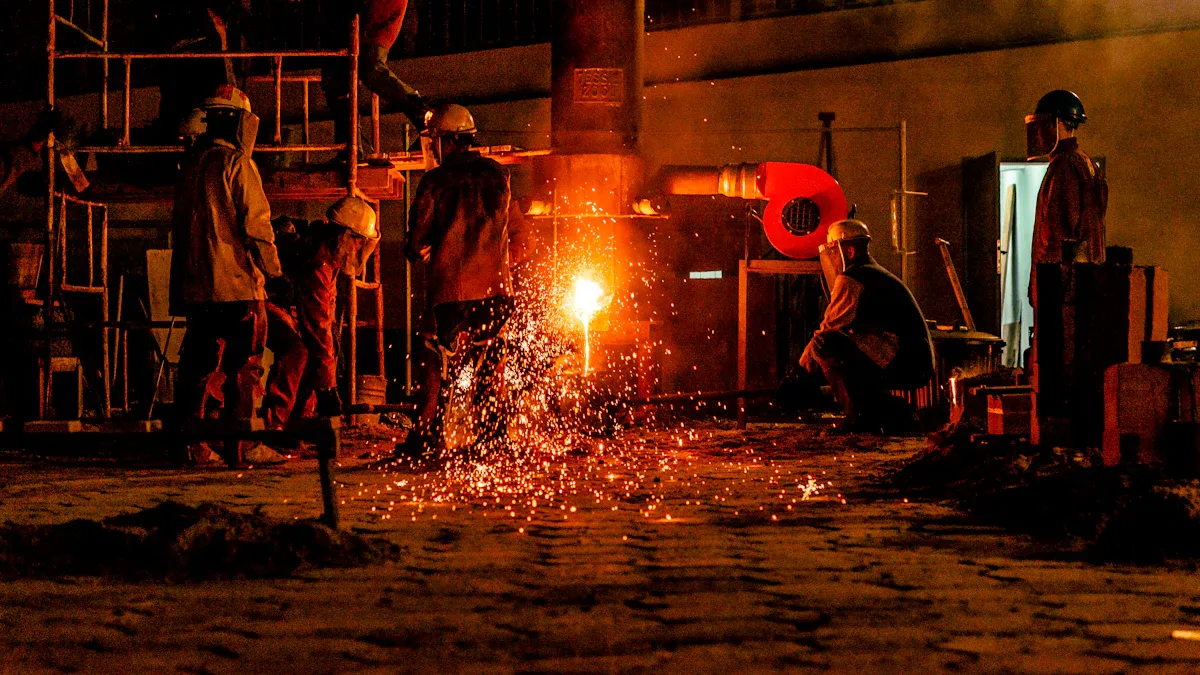
Verwendung von Schaumstoffmustern anstelle von herkömmlichen Gussformen
Das Lost-Foam-Gießen ist etwas Besonderes, weil es mit Schaumstoffmodellen arbeitet. Die Arbeiter stellen ein Schaumstoffmodell her, das dem endgültigen Teil entspricht. Sie verwenden expandiertes Polystyrol (EPS), um diese Modelle zu formen. Jedes Schaumstoffmodell ist leicht und einfach zu bewegen. Mit diesem Verfahren lassen sich sehr knifflige Formen herstellen. Beim Sandguss wird ein festes Modell verwendet und für Hohlräume werden Sandkerne benötigt. Beim Feinguss werden Wachsmodelle verwendet, die schmelzen, aber beim Lost Foam Casting verwandeln sich die Schaumstoffmodelle in Gas, wenn das Metall gegossen wird.
Die Verwendung von Schaumstoffmustern bietet viele Vorteile:
Die Teile können über 40% weniger wiegen als bei alten Formen.
Die Herstellung von Teilen ist über 40% schneller für ähnliche Artikel.
Es sind harte Formen möglich, was mit alten Formen nicht möglich ist.
Diese Methode wird auch als Verdunstungsmodellguss bezeichnet. Die Herstellung detaillierter und leichter Teile gibt den Herstellern mehr Gestaltungsmöglichkeiten.
Direktes Gießen von Metall und Verdampfen von Modellen
Beim Lost Foam Casting legen die Arbeiter das Schaumstoffmodell in einen Kasten und bedecken es mit feinem Sand. Wenn sie heißes Metall hineingießen, verwandelt sich das Schaumstoffmodell sofort in Gas. Das Metall füllt den leeren Raum, den der Schaumstoff hinterlässt. Dieser Schritt ist nicht mit anderen Gießverfahren vergleichbar. Beim Sandguss wird das Modell vor dem Gießen entnommen. Beim Feinguss schmilzt das Wachs aus, bevor das Metall hinzugefügt wird.
Die Umwandlung des Schaums in Gas verändert Qualität und Geschwindigkeit:
Aspekt | Auswirkungen auf die Gussqualität | Auswirkungen auf die Prozesseffizienz |
|---|---|---|
Thermische Zersetzung von Schaumstoff | Ändert, wie schnell sich die Form füllt und das Metall bewegt | Weniger Abfall und bessere Abfüllung |
Gasförmige Abbauprodukte | Ändert den Gegendruck und die Art und Weise, wie sich die Form füllt | Kontrolliert den Gasaustritt, der die Geschwindigkeit verändert |
Gießtemperatur | Verändert die Bildung von Gasen | Erforderlich für gute Verdampfung und keine Fehler |
Die Gießgeschwindigkeit ist wichtig. Wenn sie zu langsam ist, füllt sich die Form möglicherweise nicht. Wenn sie zu schnell ist, können Fehler passieren.
Die Arbeiter müssen die Gießhitze überwachen, um sicherzustellen, dass der Schaum zu Gas wird und das Metall jede Stelle ausfüllt.
Dieser Schritt des Gießens und Verdampfens unterscheidet das Lost-Foam-Gießen. Er trägt zu glatten Teilen bei und bedeutet, dass weniger zusätzliche Arbeit erforderlich ist.
Vergleich mit Feingussverfahren
Sowohl beim Lost-Foam-Gießen als auch beim Feingießen werden Modelle verwendet, die wieder verschwinden. Sie unterscheiden sich jedoch hinsichtlich der Materialien, der Arbeitsschritte und der Kosten. Die folgende Tabelle zeigt die wichtigsten Unterschiede:
Schritt/Aspekt | Lost Foam Casting (LFC) | Sandgießen (SC) | Feinguss (IC) |
|---|---|---|---|
Mustererstellung | Schaumstoffkopie des Teils, wichtig für die Genauigkeit. | Festes Muster, das zur Herstellung des Formlochs verwendet wird. | Wachsmodell, das zur Herstellung der Form wegschmilzt. |
Vorbereitung der Form | Feiner Sand, der zur Unterstützung um ein Schaumstoffmuster gepackt wird. | Sand um ein festes Muster gepackt, die Form muss gebrochen werden, um das Teil zu erhalten. | Die Form wird nach einem Wachsmodell hergestellt und dann mit einer Keramikschale überzogen. |
Gießen von geschmolzenem Metall | Heißes Metall wird hineingegossen, der Schaum wird zu Gas und hinterlässt ein Loch. | Heißes Metall wird nach dem Entfernen des Modells eingegossen. | Nach dem Ausschmelzen des Wachses wird heißes Metall eingegossen. |
Abkühlung und Erstarrung | Metall kühlt in der Form ab und behält seine Form gut. | Metall kühlt im Sand ab und erfordert möglicherweise mehr Arbeit für die Genauigkeit. | Das Metall kühlt in einer keramischen Schale ab, die oft sehr genau und glatt ist. |
Oberfläche | Glatte Teile, oft keine zusätzliche Arbeit erforderlich. | Grobe Teile, die in der Regel nachbearbeitet werden müssen. | Sehr glatte Teile, fast keine zusätzliche Arbeit erforderlich. |
Kosten und Werkzeugbau | Höhere Anfangskosten für Schaumstoff, aber gut für viele Teile. | Geringere Anfangskosten, aber mehr Arbeit und mehr Abfall. | Höhere Anfangskosten für Keramikschalen, aber gut für harte Formen. |
Materialeignung | Gut für Metalle wie Aluminium und Magnesium. | Funktioniert bei fast allen Metallen, auch bei solchen, die heiß schmelzen. | Gut für exakte Teile, funktioniert mit vielen Metallen wie Stahl. |
Bei der Betrachtung von Lost Foam Casting und Feinguss fallen einige Dinge auf:
Kostenfaktor | Lost Foam Gießen | Feinguss |
|---|---|---|
Materialkosten | Geringer, weil weniger Abfall | Höher, weil die Materialien mehr kosten |
Werkzeug- und Einrichtungskosten | Niedriger, weil die Muster einfach sind | Höher, weil die Herstellung von Formen schwieriger ist |
Arbeits- und Verarbeitungskosten | Braucht weniger Arbeit | Braucht mehr Arbeit |
Beim Lost-Foam-Gießen wird weniger Material verbraucht und es entsteht weniger Abfall.
Das Verfahren ist schneller und erfordert weniger Arbeitskräfte.
Feinguss ist besser für sehr genaue und glatte Teile, kostet aber mehr und dauert länger.
KEMING kennt sich sowohl mit dem Lost-Foam- als auch mit dem Feingussverfahren bestens aus. Ihr Team weiß, was jedes Verfahren braucht. Sie setzen gute Maschinen und qualifizierte Mitarbeiter ein, um sicherzustellen, dass jedes Schaumstoffmodell richtig ist. Dies hilft den Kunden, großartige Ergebnisse zu erzielen, ganz gleich, ob sie einfache oder harte Teile benötigen.
Tipp: Die Wahl des besten Gießverfahrens hängt von der Form, der Größe und der Ausführung des Teils ab. Die Experten von KEMING können Ihnen helfen, das richtige Verfahren für jede Aufgabe zu wählen.
Designflexibilität beim Lost-Foam-Gießen
Herstellung komplizierter und leichter Komponenten
Mit Lost Foam Casting können Ingenieure Teile mit harten Formen herstellen. Diese Teile können auch leicht sein. Viele Unternehmen nutzen dieses Verfahren, weil sich damit Modelle herstellen lassen, die auf andere Weise nicht möglich sind.
Beim Lost Foam Casting werden Metallteile mit vielen Details hergestellt.
Es hält die Maße sehr genau ein, was für viele Arbeiten erforderlich ist.
Die Teile werden glatt, so dass weniger Nacharbeiten erforderlich sind.
Integration von internen Durchgängen und Baugruppen
Mit dem Lost-Foam-Gießen können Ingenieure Kanäle und andere Teile in ein einziges Stück einbauen.
Sie können Kühlkanäle, Ölleitungen und stabile Stützen in einem Schritt hinzufügen.
Das Verfahren funktioniert mit Wänden, die ihre Dicke ändern, und harten Kernformen.
Dadurch wird das Gewicht ausgeglichen, die Kühlung verbessert und die Teile werden stabiler.
Ein Auspuffkrümmer für ein Auto kann 10 kg wiegen und hat komplizierte Strömungswege in einem Guss. Dies kann die Montagekosten um 15% senken.
Mit diesem Verfahren können Hersteller gekrümmte Innenformen in Pumpen gießen. Dadurch funktionieren die Pumpen besser und halten länger.
Reduzierung des Bearbeitungs- und Nachbearbeitungsbedarfs
Das Lost-Foam-Gießen hilft Herstellern, Zeit und Geld zu sparen. Bei diesem Verfahren werden die Teile nahezu in der richtigen Form hergestellt, so dass weniger Korrekturen erforderlich sind.
Das Schaumstoffmuster und die Sandform sorgen für eine glatte Oberfläche.
Enge Größen bedeuten weniger zusätzliche Arbeit.
Das Verfahren verbraucht weniger Material und weniger Energie, so dass die Kosten sinken.
Hinweis: Lost-Foam-Gießen ist etwas Besonderes, weil man damit harte Modelle herstellen, den Abfall reduzieren und die Arbeit erleichtern kann.
Effizienz und Kosten beim Lost Foam Casting
Weniger Arbeit und Energie beim Lost Foam Casting
Das Lost-Foam-Gießen hilft, Arbeit und Energie zu sparen. Die Arbeiter müssen keine Sandkerne herstellen oder herausnehmen. Das bedeutet, dass weniger Arbeitsschritte erforderlich sind. Es ist weniger Arbeit erforderlich, und die Gießerei verbraucht weniger Energie. Die folgende Tabelle zeigt, wie viel mit Lost Foam Casting eingespart werden kann:
Metrisch | Prozentuale Einsparung |
|---|---|
Energieeinsparung | 25% – 30% |
Einsparungen bei der Arbeitsproduktivität | 46% |
Reduzierung des Materialverbrauchs | 7% |
Senkung der Produktionskosten | 20% – 25% |
Diese Zahlen bedeuten, dass Unternehmen mehr Teile mit weniger Arbeit herstellen können. Weniger Energie zu verbrauchen ist auch besser für den Planeten.
Rationalisierte Produktion und schnellere Durchlaufzeiten beim Lost Foam Casting
Das Lost Foam Casting ist eine einfache Methode, um Dinge herzustellen. Arbeiter können mit CNC-Maschinen oder 3D-Druck schnell Schaumstoffmodelle herstellen. So können Projekte schneller beginnen. Bei diesem Verfahren werden viele Schritte in einem einzigen zusammengefasst. Die Arbeiter gießen Metall und stellen gleichzeitig harte Formen her. Das spart Zeit für jedes Teil. Die Unternehmen können ihre Produkte schneller fertigstellen und ihren Kunden schneller helfen.
Tipp: Ein einfaches Verfahren hilft Fabriken, knappe Fristen und neue Aufträge einzuhalten.
Vorteile der Massenproduktion durch Lost Foam Casting
Lost Foam Casting eignet sich für die Herstellung vieler Teile auf einmal. Fabriken stellen damit große Getriebegehäuse und schwere Graugussteile her. Die Teile sind stabil und weisen nur wenige Fehler auf. Das Verfahren eignet sich für große und schwierige Teile, wie z. B. einen 8,6 Tonnen schweren Querträger einer Hochgeschwindigkeitspresse. Die Ergebnisse bleiben jedes Mal gleich. Das macht Lost Foam Casting zu einer guten Wahl für die Herstellung einer großen Anzahl von Teilen. Unternehmen können Geld sparen und erhalten gute Qualität, selbst bei schwierigen Aufgaben.
Vorteile bei Oberflächengüte und Maßhaltigkeit
Glatte Oberflächen mit weniger Problemen erhalten
Beim Lost Foam Casting werden Teile mit sehr glatten Oberflächen hergestellt. Schaumstoffmodelle hinterlassen auf dem Metall eine besondere Perlenoptik. Die meisten Teile haben eine Oberfläche zwischen 3 und 6 μm. Dies ist glatter als beim Sandguss. Beim Sandguss muss oft mehr geschliffen oder gestrahlt werden. Lost Foam Casting hat auch weniger Probleme. Es gibt keine Sandkerne, so dass Sandprobleme seltener auftreten.
Tipp: Glattere Teile bedeuten weniger Zeitaufwand für Reinigung und Nachbearbeitung.
Hohe Genauigkeit bei kniffligen Formen
Lost Foam Casting eignet sich gut für die Herstellung komplizierter Formen mit hoher Genauigkeit. Das Verfahren hält die Größen sehr nahe an dem, was benötigt wird. Die Dichte des Schaumstoffmodells und die Gießhitze bestimmen, wie genau das Teil ist. Die nachstehenden Tabellen zeigen, wie diese Faktoren eine Rolle spielen:
Schaumstoff Dichte (kg/m³) | Oberfläche | Maßgenauigkeit | Energieverbrauch |
|---|---|---|---|
16 | Mäßig | Mäßig | Niedrig |
20 | Hoch | Hoch | Mäßig |
24 | Sehr hoch | Sehr hoch | Hoch |
Metall Typ | Optimale Ausgießtemperatur (°C) | Oberfläche | Maßgenauigkeit |
|---|---|---|---|
Aluminium-Legierungen | 650-750 | Hoch | Hoch |
Stahl-Legierungen | 1400-1500 | Mäßig | Hoch |
Kupfer-Legierungen | 1000-1100 | Hoch | Mäßig |
Mit Lost Foam Casting lassen sich sowohl Aluminium- als auch Stahlteile sehr genau herstellen. Aus diesem Grund wird es in vielen Branchen für Teile verwendet, die genau passen müssen.
Weniger zusätzliche Arbeit nach dem Gießen
Beim Lost-Foam-Gießen werden Teile nahe an ihrer endgültigen Form hergestellt. Die Arbeiter müssen nicht so viel bearbeiten, schleifen oder strahlen. Glatte Schaumstoffmodelle und feiner Sand bedeuten weniger Linien und weniger Grat.
Hinweis: Hohe Genauigkeit und glatte Oberflächen helfen Unternehmen, Geld zu sparen und Teile schneller fertigzustellen.
Umweltverträglichkeit des Lost-Foam-Gießens
Weniger Abfall und Emissionen im Vergleich zum Sandguss
Lost-Foam-Gießen ist besser für die Umwelt. Die Gießereien können den Gusssand wiederverwenden. Dies trägt zur Verringerung der Abfallmenge bei. Beim normalen Sandguss wird Sand mit Chemikalien verwendet. Diese Chemikalien verursachen mehr Abfall und können schwer zu beseitigen sein. Beim Lost-Foam-Gießen werden diese Chemikalien nicht verwendet. Es entstehen weniger feste Abfälle. Allerdings können bei diesem Verfahren schädliche Gase in der Luft entstehen. Fabriken brauchen eine gute Luftzirkulation und Sicherheitsvorschriften. Diese Maßnahmen dienen dem Schutz der Arbeiter und der Natur.
Viele Unternehmen entscheiden sich für das Lost Foam Casting. Es hilft ihnen, die strengen Umweltvorschriften einzuhalten und mehr Abfall von den Mülldeponien fernzuhalten.
Geringeres Erderwärmungspotenzial (GWP)
Lost Foam Casting kann dazu beitragen, die globale Erwärmung zu verringern. Das Verfahren verbraucht weniger Energie. Das liegt daran, dass keine Sandkerne benötigt werden. Weniger Energie zu verbrauchen bedeutet, dass weniger Treibhausgase in die Luft gelangen. Fabriken, die das Lost-Foam-Verfahren anwenden, befolgen wichtige Regeln. Diese Vorschriften tragen dazu bei, Umweltverschmutzung und Abfall zu kontrollieren. In der folgenden Tabelle sind einige wichtige Regeln für das Lost-Foam-Gießen aufgeführt:
Verordnung | Zweck |
|---|---|
Gesetz über saubere Luft | Kontrolliert die Luftverschmutzung. |
Gesetz zur Erhaltung und Wiedergewinnung von Ressourcen | Verwaltet den Abfall. |
Gesetz über Energiepolitik und -einsparung | Fördert das Energiesparen. |
KEMING befolgt diese Regeln. Sie stellen sicher, dass ihr Guss sicher für Menschen und den Planeten ist.
Verwendung von recycelbaren Materialien im Prozess
Beim Lost Foam Casting werden Materialien verwendet, die die Umwelt schonen. Viele Fabriken verwenden Schaumstoffe, die sich abbauen, und Legierungen, die recycelt werden können. Diese Materialien tragen dazu bei, die Umwelt zu entlasten und Ressourcen zu sparen.
KEMING arbeitet hart daran, den Guss besser für die Umwelt zu machen. Das Unternehmen nutzt neue Wege und gute Materialien. Das Team versucht, weniger Abfall zu produzieren, Energie zu sparen und die Natur für die Zukunft zu schützen.
Lost-Foam-Gießen ist etwas Besonderes, weil es genau ist und Energie spart. Es entstehen Teile, die gut passen und glatte Oberflächen haben. Das Verfahren verursacht auch weniger Abfall und verbraucht weniger Energie. Aus diesen Gründen verwenden viele Unternehmen das Lost Foam Casting:
Industrie | Anwendungen |
|---|---|
Automobilindustrie | EV-Motorgehäuse, leichte Fahrwerkskomponenten |
Industrielle Maschinen | Pumpen, Ventile, Halterungen und Gehäuse |
Luft- und Raumfahrt und Verteidigung | Komplexe Motorteile |
Landwirtschaftliche Geräte | Langlebige, komplizierte Komponenten |
KEMING hilft Unternehmen bei der Herstellung harter und starker Teile. Ihre Gusslösungen sind gut für den Planeten und verursachen weniger Abfall.
FAQ
Welche Materialien eignen sich am besten für das Lost Foam Casting?
Aluminium- und Magnesiumlegierungen sind die erste Wahl. In Fabriken werden auch Gusseisen und einige Stähle verwendet. Das Verfahren funktioniert am besten mit Metallen, die bei geringerer Hitze schmelzen. Jedes Metall hat eine andere Festigkeit und Oberflächenbeschaffenheit.
Wie trägt das Lost Foam Casting zur Abfallvermeidung bei?
Beim Lost Foam Casting werden Modelle verwendet, die sich in Gas verwandeln. Die Arbeiter können immer wieder denselben Sand verwenden. Bei diesem Verfahren fallen weniger Metallreste an. Die Fabriken benötigen keine chemischen Bindemittel, so dass weniger Abfall anfällt.
Können mit Lost Foam Casting große Teile hergestellt werden?
Ja, mit Lost Foam Casting können kleine und große Teile hergestellt werden. Fabriken verwenden es für Motorblöcke und Pumpengehäuse. Es wird auch für schwere Maschinen verwendet. Das Verfahren eignet sich für schwierige Formen, auch für große Gussteile.
In welchen Branchen wird das Lost Foam Casting am häufigsten eingesetzt?
In der Automobilindustrie, im Maschinenbau und in der Luft- und Raumfahrt wird das Lost Foam Casting häufig eingesetzt. Diese Branchen benötigen starke, leichte und detaillierte Teile. Auch die Landwirtschaft und die Schifffahrt nutzen dieses Verfahren.